The rise of generative AI is reshaping how tennis players prepare for matches and handle everyday tasks, with some embracing the technology and others rejecting it. Emma Raducanu, Jessica Pegula, Bianca Andreescu, Daniil Medvedev, Coco Gauff and several other players describe using ChatGPT and similar tools in ways that range from opponent scouting to writing emails and choosing colours.
For many players, the debate is not only about whether AI can help on court, but also whether it is useful, trustworthy or even healthy to rely on in daily life.
How are players using AI to prepare for opponents?
Some players think AI can offer a competitive edge. Pegula, whose husband sometimes makes AI-generated reports on her opponents for his own amusement, said she had recently learned that someone on the tour, whom she declined to name, was using ChatGPT and similar tools to scout future opponents.
“I don’t know if they fully, 100% listen to it, but I think maybe they cross-reference to see how accurate it is,” she says. “It’s not bad. It just summarises everything and you can make it maybe very simplified or make it complicated.”
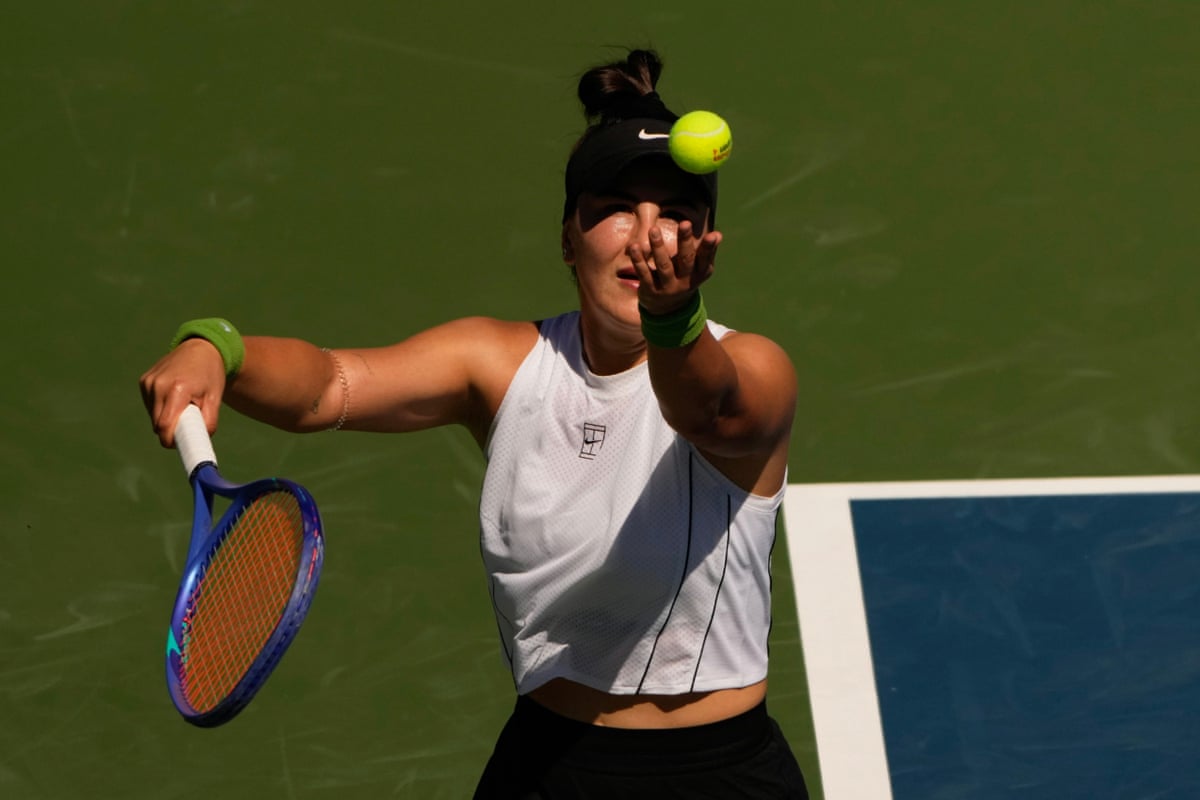
Andreescu said she turned to ChatGPT before a match against an unfamiliar opponent after dropping down to compete on the lower-level ITF circuit, where there were few videos available.
“There weren’t many videos on her,” she says. “So I was curious. Because Chat will scout other sources, right? And I was like: ‘Please be specific. Please do your research.’ And I think it worked out well.”
AI has already been used quietly in the sport for some time. The ATP has developed a platform called IQ that processes a large amount of in-match data to define a player’s performance rating and shot quality. But in a sport where athletes spend significant sums on coaches, some players view direct use of generative AI with scepticism.
Zizou Bergs, the top-ranked Belgian male, reacted sharply when asked about it.
“I heard of someone [scouting with ChatGPT], and he showed me the result of it,” he says. “It was like two or three years ago and I thought it was completely trash.”
What do the top players think AI can and cannot do?
Daniil Medvedev has used ChatGPT with friends and team members as they joke about the problem of beating Jannik Sinner and Carlos Alcaraz. He described AI as a kind of armchair coach that can explain things but does not show how to apply them.
“[It] says some things [about Sinner and Alcaraz] and I’m like: ‘OK great, how do I do it?’ Like: ‘OK, I see what you mean and it’s not bad things, but how do I go on court and do it?’”
Coco Gauff said she once asked an AI platform for the best strategy for playing herself, but found nothing new in the response.
“It didn’t say anything I didn’t already know,” she says. Then she comically rolls her eyes. “Newsflash: everybody plays me the same way – hit to my forehand and hope I double-fault.”
Raducanu said she uses ChatGPT for a wide range of questions and described the tool as surprisingly accurate when she asked it to analyse her own habits in a “Chat Wrapped” style prompt.
“I use Chat a lot,” Raducanu says, laughing. “Every small thing I do it and I got this idea. So, you know how Spotify do a Spotify Wrapped? I asked ChatGPT to make me a Chat Wrapped, and it was giving me a rundown on my personality.
“I was like: ‘It’s a little bit too accurate.’ It was very clear, very concise. No nonsense, straight into the question. I was like: ‘OK, I can relate maybe. Some of that is true.’”
She said her questions are random and range from history to art, random facts and translations.
“It’s as random as my brain. One minute it’s history. One minute it’s art. One minute it’s some random fact. One minute it’s translations. So different questions.”
Why are some players resisting generative AI?
Others in the locker room remain cautious or openly opposed. Frances Tiafoe said he avoids GenAI altogether and still relies on Google searches.

“I don’t have ChatGPT. I don’t have the other one. I haven’t used much AI-generated stuff. I’m going against the grain. I’m still Google searching,” he says.
Jelena Ostapenko said her doubts were shaped by a story she had heard about someone getting stuck at an airport after believing ChatGPT’s advice on visa requirements.
“Somebody came to some country, they thought they didn’t need a visa. Then they came and they were stuck in the airport because ChatGPT told them they didn’t need a visa even though they did need a visa. So no offending ChatGPT, but I still think you still have to check stuff yourself. Because it’s making us lazy. It’s not a good thing.”
She does use ChatGPT, but only when she is too lazy to search for things herself.
“I don’t have the plus version, because I don’t want to pay €20,” she says, laughing. “Not because I … obviously I can pay that. Just to push myself to do more than using ChatGPT to do stuff for me.”
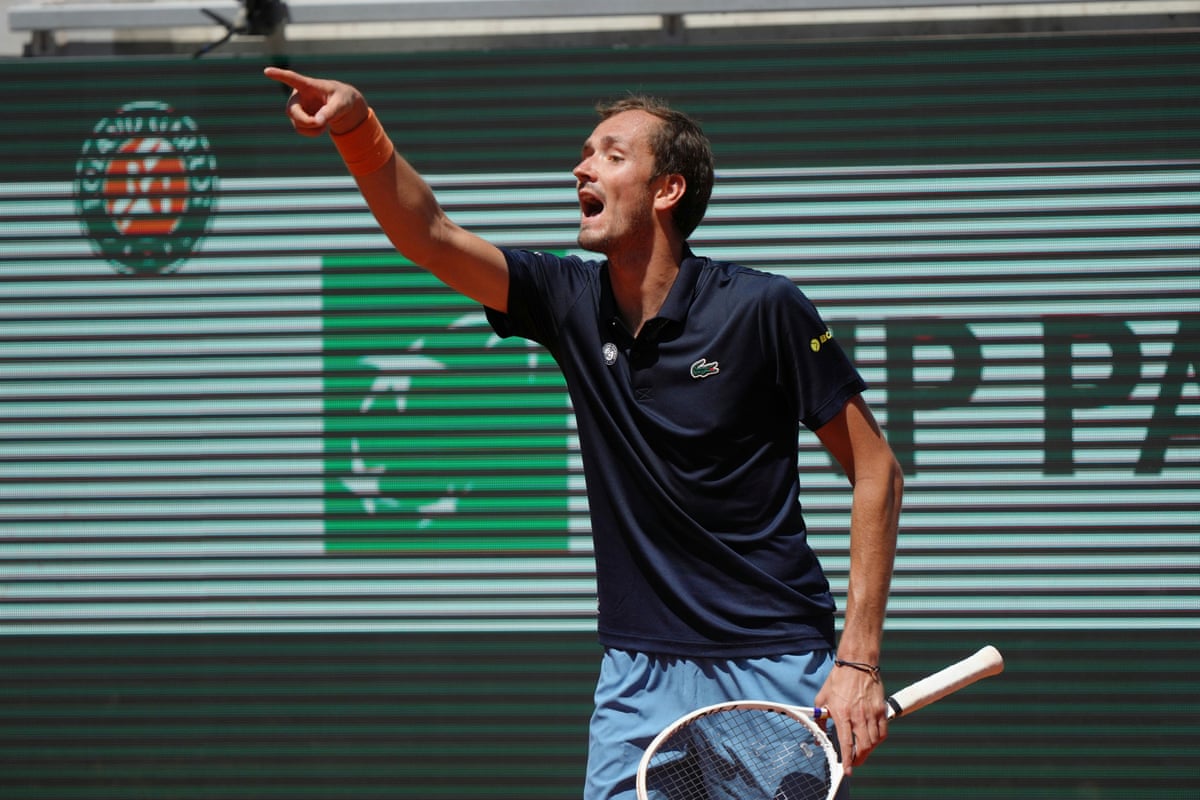
Medvedev also said laziness is one of his main concerns about AI.
“In general I don’t like AI,” he says. “Because even if I’m someone who can be a bit lazy sometimes, I do believe we need to do something sometimes. With AI it feels like so many people are going to just stay on the sofa and make their life through AI. I don’t think it is nice.”
Naomi Osaka said the environmental cost gives her pause.
“I just heard it takes up a lot of water, and I like the water we have on Earth,” she says.
Gauff agreed that AI is interesting but said its environmental impact stops her from using it much.
“AI, I think it is cool, but also I don’t like what it does to the environment, so I don’t think I’m going to waste my clicks on that.
“The last time I had to use AI was for an emergency because we had to go to the hospital,” she says, smiling, before urgently clarifying her statement. “But not for me! It was for my friend.”
Where does AI fit into players’ lives off the court?
For some players, ChatGPT has become part of ordinary off-court life as much as match preparation. Andreescu said she has listened to countless AI-related podcasts and is interested in the subject, though she is also wary of becoming too dependent on it.
“I’m trying not to become too obsessed with it because it can control our life,” she says. “You can ask him anything, talk about anything, won’t talk back. It’ll ask you questions and seem interested in what you’re talking about.”
Iga Swiatek said she sometimes uses AI to draft emails.
“He’s writing emails for me sometimes,” she says.
Elina Svitolina laughed while describing her latest ChatGPT prompt.
“What colours are suiting me the most,” she says, cackling. “It was pastel colours. Cold summer.”
Raducanu’s remarks about using ChatGPT for broad, everyday queries reflected the same pattern seen among several players, who use AI less as a specialist tool than as a conversational assistant for random questions.
Yet across the locker room, uncertainty still dominates. Even Tiafoe, known for his relaxed outlook, sounded sceptical when talking about the technology and the speed with which it has entered daily life.
“I just can’t get with it. I’m looking outside. In my backyard, there’s a golf course there and no one’s sitting in the seat [while it is] lawn mowing the whole course. I’m struggling, like, this can’t be reality,” he says, theatrically shaking his head. “At one point I will [embrace AI] but I don’t like so much information. It’s just crazy.”
For now, the generation gap in tennis appears to be less about age than attitude. Some players see AI as a useful shortcut, some as an unreliable crutch and others as a threat to effort, privacy or the environment.
The emergence of generative AI has led to a shift in society and changed the way many people seek information. Like everyone, this generation of tennis players must figure out its place in their lives.