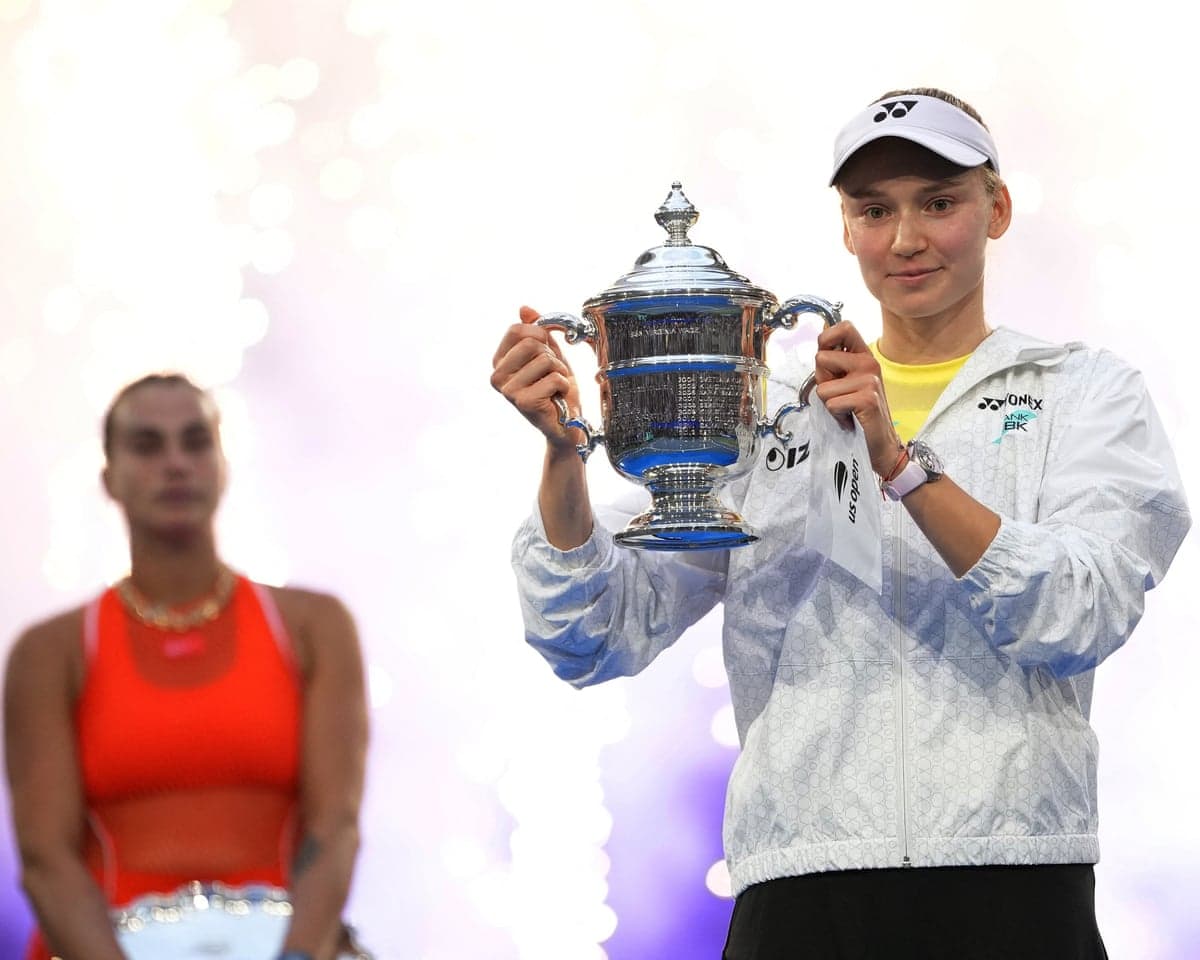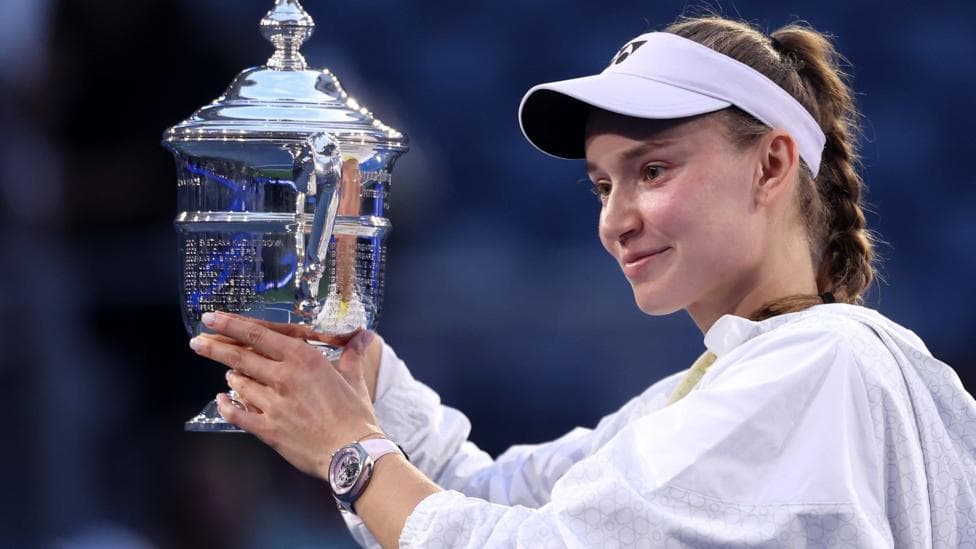
Elena Rybakina has captured two of the four Grand Slam singles titles contested in 2026, cementing her status as one of tennis's dominant forces. The Kazakhstani champion arrived in New York struggling with a foot injury that made walking painful, yet departed as the US Open champion and newly crowned world number one.
Rybakina delivered a commanding performance on Saturday to defeat two-time defending champion Aryna Sabalenka 6-4 5-7 6-2 in the final, repeating her Australian Open victory over the same opponent from January. According to the Women's Tennis Association, Rybakina had reached the final by defeating Coco Gauff 3-6, 6-4, 6-4 in the semifinals on September 11, a match lasting 2 hours and 8 minutes. Sabalenka, meanwhile, was pursuing her fourth consecutive US Open final appearance after defeating Jessica Pegula 7-5, 6-2 in her semifinal on the same day.
Holding the trophy that evening, Rybakina reflected on her improbable journey.
Some magic is happeningshe said, acknowledging the difficult circumstances leading into the tournament.
The injury that nearly derailed her campaign
Rybakina's path to New York was complicated by a foot injury sustained during her Cincinnati quarter-final against Iga Swiatek in August, just over a week before the year's final Grand Slam began. The 27-year-old faced a difficult decision: continuing to compete risked serious consequences for the remainder of the season, yet stepping back meant forfeiting the opportunity to claim the top ranking that was within reach.
She chose to push forward.
I was so upset. I didn't know actually how it was going to be day by day,Rybakina explained.
We arrived in New York and did an MRI. It didn't look that great. I couldn't even walk for the next few days without pain.
Recovery proved challenging but methodical.
I was lucky enough to have a very good doctor in Australia. She was on the phone with us all the time and somehow, with the team, we made a plan.Rybakina abstained from on-court training for an entire week, instead focusing on daily gym-based recovery sessions. She also made deliberate efforts to mentally reset, taking trips for dinner and cinema visits to
switch the mindaway from the injury.
The strategy worked. Rybakina won her opening four matches at Flushing Meadows without surrendering a set, including a victory over four-time major champion Naomi Osaka. Her subsequent run proved extraordinary: she defeated Olympic champion Zheng Qinwen in the quarter-finals—a win that secured her the world No. 1 ranking—outlasted third seed Gauff in the semifinals, and outplayed top seed Sabalenka in the championship match.
I was so unlucky with the injury, but I'm very proud,Rybakina said afterward.

A composed performance under pressure
Rybakina had already been confirmed as world number one by reaching the semifinals. The fact that her final opponent was Sabalenka, the player she would replace atop the rankings, added significant weight to Saturday's championship match. According to the Women's Tennis Association, this marked the third Grand Slam final between the two players, with Sabalenka leading their head-to-head record 10-7 before the match.
The opening set showcased Rybakina's resilience despite technical struggles. She landed only 27% of her first serves during the opener, yet still won 22 of 30 points behind her serve and faced no break points as she claimed the set. Sabalenka eventually broke serve in the 12th game of the second set to force a decider, but Rybakina dominated the third set as her opponent grew increasingly frustrated.
Throughout the match, Rybakina maintained remarkable composure. Former British number one Annabel Croft observed on a national broadcaster's coverage:
The way she quietly walks around, she doesn't really lift her head up and she gives no emotion away whatsoever. Rybakina is like a machine out there. You never know what's going on in her head.
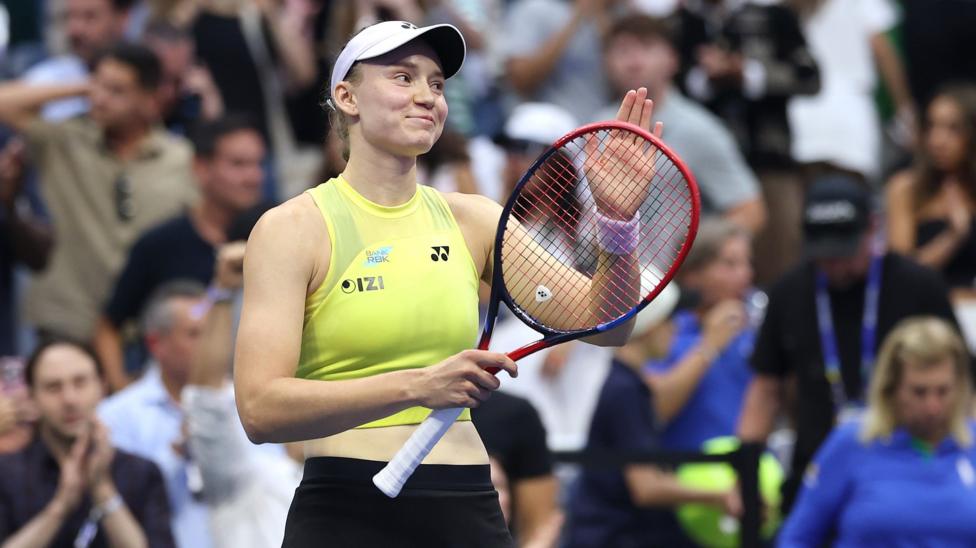
Nerves did surface momentarily when Rybakina produced two double faults while serving for the title. At 40-30 with the trophy in sight, she could have faltered. Instead, she calmly delivered her 12th ace of the match to secure victory. The second seed produced her most expansive celebration of her three major wins—a smile and both arms raised as she acknowledged the applause.
Rybakina has now won two of her three Grand Slam finals against Sabalenka, with all three meetings occurring on hard courts, their shared surface of preference.
What lies ahead for the new world number one
On Monday, Rybakina became the 30th different woman to reach the world number one ranking. She represents a different personality from Sabalenka, who held the position for the previous 99 weeks, yet Croft believes she possesses the temperament to manage the role successfully.
There are going to be a lot of players around her nipping at her heels. She can fluctuate with her levels, but when it really matters, we've seen her be able to bring it to the table. It's not going to be easy to hang onto it. I think women's tennis is really exciting right now.
Rybakina has completed three parts of the career Grand Slam, with only a French Open title missing from her collection. After winning Wimbledon in 2022, she did not claim her second major until January's Australian Open, and has now added a third in New York. She has never previously advanced beyond the quarter-finals at Roland Garros, though she did capture a WTA 1000 event on clay in Rome in 2023.
Former British number one Laura Robson offered an optimistic assessment:
She is an all-surface player—clay is the worst one, but when you get her on something that's quite lively or quick, she's unplayable at times. I genuinely think she will win many more Slams. I just don't see, when her serve and return are on, how pretty much anyone can beat her on a hard court.
Key Facts
- Rybakina defeated Sabalenka 6-4 5-7 6-2 in the US Open final on September 12, claiming her second Grand Slam title of 2026
- The victory elevated her to world number one, replacing Sabalenka who had held the ranking for 99 weeks
- Rybakina competed through a foot injury sustained in Cincinnati, managing recovery through gym work and mental breaks rather than on-court training
- She won her first four matches at Flushing Meadows without dropping a set, then defeated Zheng Qinwen, Gauff, and Sabalenka consecutively
- This marked the third Grand Slam final between Rybakina and Sabalenka, with all three contested on hard courts