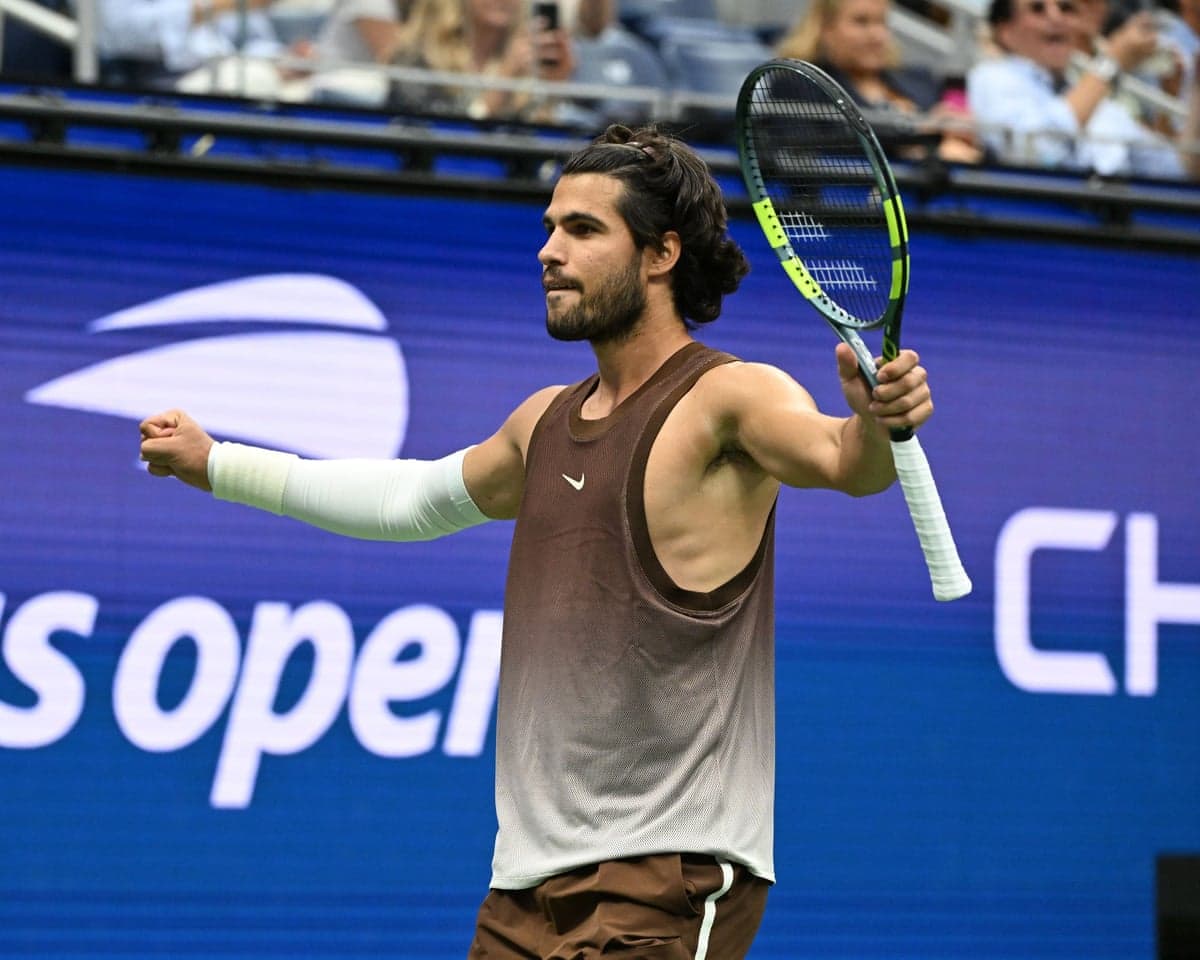
Carlos Alcaraz marked his competitive return after a four-month absence with an authoritative 6-4, 6-4, 6-4 victory over Roman Safiullin on 31 August 2026 at Arthur Ashe Stadium. The Spanish defending champion, seeded No. 2 in the tournament, showed few signs of rust despite facing Safiullin, ranked 98th, in his first singles match since April.
Alcaraz had been sidelined by tenosynovitis, an inflammation of the tendon sheath in his wrist, which first emerged during the Barcelona Open in April and forced him to miss both the French Open and Wimbledon. His comeback at the US Open came after months of careful rehabilitation and only cautious training resumption in July. The decision to return directly to Grand Slam competition without warmup matches added considerable uncertainty about how his wrist would withstand the demands of best-of-five-set tennis.
From the opening moments, Alcaraz dispelled doubts about his physical readiness. He dismantled Safiullin's formidable ball-striking power by dominating baseline exchanges, particularly through his forehand—widely regarded as the finest in professional tennis. Over the course of the match, Alcaraz struck 20 forehand winners against just nine unforced errors, a commanding ratio that reflected his control and precision.
A telling moment arrived at 5-4, 30-15 in the opening set. Alcaraz advanced to the net behind a precisely placed wide serve, and when Safiullin returned with a dipping backhand directly to his feet, the Spaniard executed a delicate half-volley winner. The shot exemplified the creative touch and feel that had been absent throughout his extended layoff, and it drew a wide smile from Alcaraz as he consolidated the set.
How did Alcaraz's wrist respond to the intensity?
The wrist held up remarkably well throughout the match, though Alcaraz remained cautious about its long-term durability.
It's pain-free right now. I felt great. I don't know how it looked from outside but, from inside, my feeling was that I was hitting normal. I was playing pretty normal, playing my style, and the arm, the wrist, everything felt great. I'm going to still take care of it, obviously, these days and before the matches and everything, but I'm just really happy it's pain-free finally.

Despite the encouraging signs, one notable limitation emerged: Alcaraz's serve velocity remained subdued. He averaged just 113 mph on his first serve, a deliberate choice reflecting the need to protect his wrist during the early stages of his comeback. The tape he wore under an arm sleeve in all matches and practices served as a visible reminder of the injury's persistence. While this conservative approach makes tactical sense so soon after returning to competition, the reduced serving power could prove consequential if Alcaraz advances deeper into the tournament, where generating free points becomes increasingly valuable.
What was the emotional weight of this return?
For Alcaraz, the match carried profound psychological significance beyond the scoreline. His parents, brothers, his coaching team, and rapper Travis Scott watched from his box as he took his first competitive steps in months.
It was a difficult day for me, to be honest, but at the same time, a really beautiful one. [I] started the day really nervous. Really, really nervous. Thinking 'I'm going to make it, I'm going to compete again.' I had more nerves than usual, but just happy, because for me, my goal here is to compete, to enjoy, and let's see how my body's going to react after the matches, after the competition again.
Alcaraz acknowledged the uncertainty surrounding his tournament prospects, having no way of predicting how far his body would carry him.
I don't know how far I'm going to go in the tournament. I didn't know if I was going to lose this one, if I'm going to make the second round, final. I don't know how far I'm going to go. But what I just really want to do is enjoy every time that I'm going to walk into the court feeling the energy from the people, feel the competition, walking up, I'm thinking, all right, it's match day. That's what I'm going to do this tournament.
What lies ahead in Alcaraz's title defense?
Alcaraz's path forward depends on how his wrist responds to the accumulated stress of consecutive matches. The tournament continues through the remainder of August and into September, with second-round matches and beyond presenting progressively stiffer opposition. His confidence entering the event had been evident in pre-tournament statements, yet the reality of competing at the highest level after such an extended absence will test both his physical conditioning and mental resilience.
The victory over Safiullin represents a crucial first step, but the seeded draw and tournament structure mean significantly tougher challenges await if Alcaraz is to successfully defend his title. For now, he will take things day by day, monitoring how his wrist recovers between matches while attempting to build momentum and match sharpness as the tournament progresses.