The Laver Cup, a Ryder Cup-style competition pitting Team Europe against Team World, has long struggled to establish itself as a permanent fixture in professional tennis despite its prestigious origins. As the tournament returns to London's O2 Arena for the ninth edition, the event continues to grapple with financial challenges while simultaneously delivering the kind of spectacle that few other competitions in the sport can match.
The competition's founding story remains one of tennis's most compelling narratives. Nine years ago in Prague, during the inaugural 2017 event, Alexander Zverev experienced a moment that perfectly encapsulated what the Laver Cup was designed to achieve. Walking back to the locker room between sets, Zverev found himself flanked by two of the greatest players ever to hold a racket. To his right, Roger Federer, the event's legendary founder and architect, was visibly frustrated with the then-20-year-old's demeanour on court.
"I want a fistpump or a 'Let's go!' every fucking point you win," Federer said. "And every point you lose, you fucking take it like a man. Because the problem is, when you don't have the [result] you want, it's like: 'Ah, I knew it. Fuck, shit.' I don't want … honestly!"As Federer continued his unfiltered critique, shaking his head and even mimicking Zverev's negative body language, Rafael Nadal offered his own version of the same message from the other side.
"Not one negative face," Nadal ordered.The scene captured something rare: an unscripted window into how the sport's greatest competitors actually think and behave when the stakes matter.
That moment validated the entire concept behind the Laver Cup. Federer and his longtime manager Tony Godsick had created an event that would allow the sport's elite to compete in a format unlike anything else on the professional calendar. The ability to witness fierce rivals suddenly working as teammates, and to see the raw competitiveness of the world's best players expressed in a different context, represented genuine innovation in how tennis could be presented to audiences.
Nine years later, the landscape has shifted considerably. The Laver Cup has secured official status on the ATP calendar and has become an established part of the tennis ecosystem, allowing legends like Federer, Nadal, Novak Djokovic and Andy Murray to compete alongside one another. Yet Federer's retirement has left a void that the tournament has struggled to fill, both in terms of its public profile and its financial performance. The current iteration of the competition is now clearly anchored by Carlos Alcaraz, who brings the kind of star power and competitive intensity that the event requires.
The financial picture tells a complicated story about the Laver Cup's viability. The tournament generated operating losses of £1.8 million in Vancouver in 2023, and while 2024's Berlin edition appeared healthier on paper with a £2,000 operating profit, this figure included non-tournament revenue—essentially an injection of external cash. Without that additional funding, Berlin 2024 would have recorded a loss of £1.5 million. By contrast, the event's most successful editions were Chicago in 2021, which produced an operating profit of £4.9 million, and London in 2022, which delivered £4.1 million. These figures suggest that only a limited number of markets can generate genuine profitability for the competition, which is almost certainly why organisers were willing to return to London just four years after the 2022 edition.
The tournament's organisers have long harboured ambitions of establishing the Laver Cup as one of tennis's most important events, comparable in stature to golf's Ryder Cup. However, various structural factors make this unlikely. The decision to return to London, while commercially sensible given the city's previous success, does not address the fundamental question of whether the Laver Cup can ever achieve the kind of universal significance that the sport's major championships command.
Is the Laver Cup really a serious competition?
For nearly a decade, debate has raged about whether the Laver Cup should be classified as an exhibition—a term many in tennis view with disdain, as it implies an unserious, casual affair. These arguments, however, miss the point. The Laver Cup is undeniably a special event: some invitations are discretionary, the rules are deliberately unconventional, and no ranking points are awarded. Yet one defining characteristic of elite tennis players is their intense competitiveness, and the Laver Cup has consistently produced high-quality matches and tightly contested encounters where players are clearly trying their hardest to win.

There are, however, limits to how seriously players can treat the event. Alcaraz will never spend the off-season agonising over a Laver Cup loss, nor will he compromise his preparation for more important tournaments to prioritise this competition. The event simply does not carry the same weight as the Grand Slams, the ATP Finals, or the Davis Cup. That fundamental reality shapes how players approach their participation.
Yet this limitation does not diminish the Laver Cup's value to professional tennis. Since its inception, the competition has been meticulously organised and willing to innovate in how it presents the sport. The sight of longtime rivals suddenly functioning as teammates creates moments that are genuinely incomparable to anything else in professional tennis. Watching players' competitiveness manifest under these different circumstances has proven consistently fascinating for audiences.
The timing of the Laver Cup within the calendar also serves an important function. Held in late September, when most players are fatigued after nine months of competition in the same format week after week, the event provides a welcome change of pace before the final push toward the ATP Finals and Davis Cup Finals. More importantly, it has repeatedly delivered on what should be the most fundamental requirement of any sporting event: genuine entertainment value.
Alcaraz arrives in London as the headline attraction for Team Europe. The Spanish champion is fully healthy and relishing his return to the court, having spent five months away from competition following his US Open title defence. Across his eight previous Laver Cup appearances, Alcaraz has compiled a 6-2 record and earned 8 points for his team. He will be joined by Alexander Zverev, the same player who received Federer's famous dressing-down in Prague, along with Flavio Cobolli, Rafael Jodar, Jakub Mensik, and Casper Ruud as Team Europe attempts to reclaim the trophy after Team World's victory in San Francisco last year.
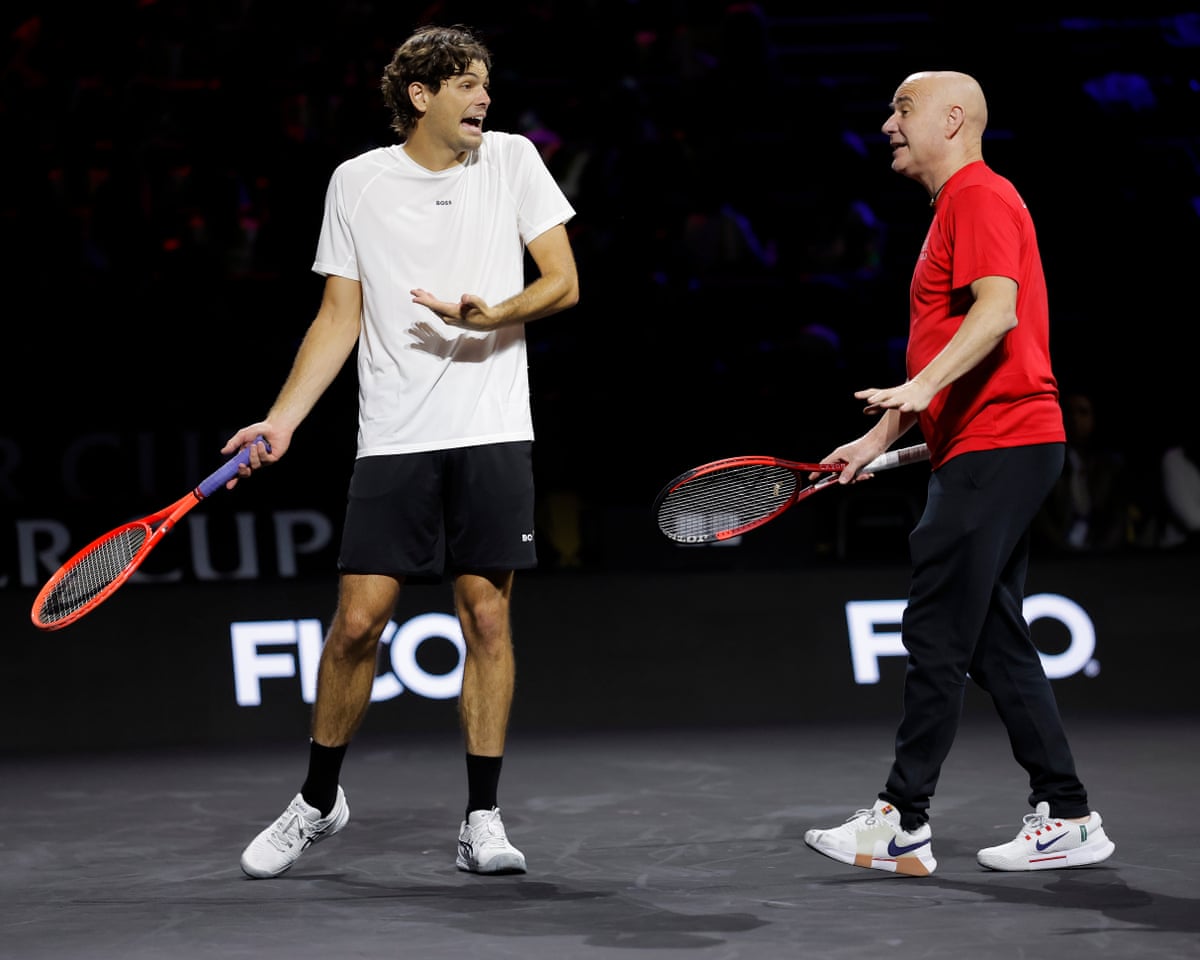
Team World, captained by Andre Agassi, includes world No. 10 Taylor Fritz among its roster. The American contingent will face a European team that notably lacks British representation in its main lineup, though Arthur Fery serves as the team's alternate.

What happens next?
The 2026 Laver Cup opens on Friday, September 25, 2026, at The O2 in London, with sessions scheduled for 1:00 PM and 7:00 PM. Saturday follows the same schedule, while the final day concludes with a noon session on Sunday, September 27. The venue, located at Peninsula Square in the SE10 0DX postcode, will host the competition across the three-day format that has become the event's standard.
The Laver Cup's return to London represents another chapter in the tournament's ongoing effort to prove its worth within professional tennis. Whether this edition can replicate the financial and popular success of 2022 remains to be seen. What is certain is that the event will once again deliver the kind of compelling tennis and unexpected moments that have made it a fixture worth watching, even if its place in the sport's hierarchy remains fundamentally different from the competitions that truly define careers.