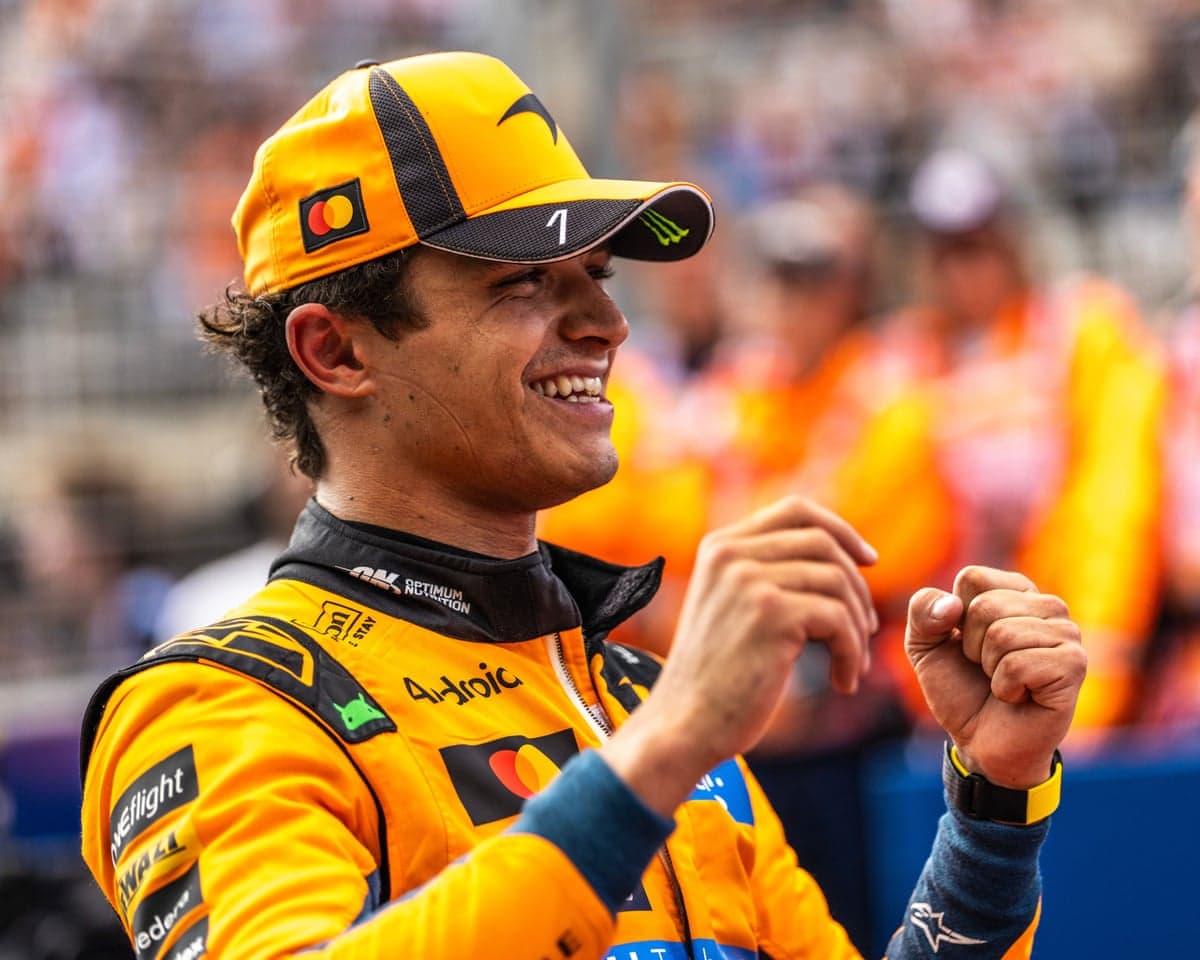
After 12 rounds of the 2026 Formula 1 season, Oscar Piastri sits seventh in the drivers' championship, trailing his McLaren team-mate Lando Norris by 55 points. The gap has widened considerably since the campaign began, and questions about the team's direction have intensified following Norris's recent contract announcement.
On 29 August 2026, McLaren confirmed that Norris has extended his deal until at least the end of 2030, with additional multi-year options beyond that date. The timing of the announcement—coming after Norris claimed the 2025 world championship and as he continues to dominate this season—has raised concerns about Piastri's long-term prospects at the team. This weekend's Italian Grand Prix at Monza, scheduled for 4–6 September 2026, will provide the next opportunity to assess the competitive dynamic between the two drivers.
What does Norris's contract extension mean for Piastri?
The question of tension between the drivers and the implications of Norris's new deal has become unavoidable. Piastri's performance this season has clearly declined compared to 2025, when he appeared positioned for a maiden world title before his campaign unravelled in the final third.
Norris has won two races so far in 2026 and should have claimed a third victory in Miami. By contrast, Piastri has only appeared genuinely competitive for victory on two occasions: at the Japanese Grand Prix, where he led before encountering misfortune with a safety car deployment, and in Hungary, where circumstances conspired against him.
At the Hungarian Grand Prix on 26 July 2026, Norris secured his first victory of the year after Piastri retired with a gearbox failure. Piastri had initially taken the lead when Norris made an error on the opening lap, but lost the advantage when he was delayed while lapping Carlos Sainz's Williams. Piastri acknowledged that Norris's pace on the hard tyres was superior and that holding the lead would have proved difficult regardless, but the retirement made the point academic.
The qualifying head-to-head statistics paint an unflattering picture for Piastri, with Norris ahead 12-4. However, the raw pace differential over a single lap is marginal—Norris averages only 0.071 seconds faster. The real disparity emerges in race conditions, where Norris has been substantially more convincing, a performance gap that directly translates to the 55-point and three-place championship gap.
Why has Piastri's performance dropped?
Several technical and environmental factors explain Piastri's relative underperformance this season. Piastri has traditionally excelled in high-speed corners, but the number of grip-limited high-speed corners has diminished this year because engines are frequently deployed to charge the battery—a complaint shared by all drivers. This removes a potential advantage for Piastri.
Additionally, the cars carry less downforce than in 2025, and Piastri is demonstrably less comfortable than Norris in low-grip conditions. McLaren team principal Andrea Stella addressed this issue after the Dutch Grand Prix, explaining that Piastri requires mental adjustment when the car operates with minimal grip, as he must consciously adapt his natural driving style rather than rely on instinct.
Last year, we had seen already with Oscar that, from a technical driving point of view, when the car has this low level of grip, like we saw last year for instance in Mexico or in Austin, he needs to adapt the way he drives, the way he thinks, the driving, his expectations. This requires a bit of mental effort, which gets him to lose a couple of tenths of a second because you sort of have to process rather than drive through pure instinct because what happens is what you expect.
Stella emphasised that this was purely a technical matter rather than a psychological one. He also noted that the top three teams operate at such similar performance levels that any lack of optimisation produces severe positional losses.
Meanwhile, Norris has consistently elevated his performance throughout the second half of 2025 and has maintained that upward trajectory through 2026. He is unquestionably one of the season's standout drivers.
Is there genuine tension between Piastri and McLaren?
Both McLaren and Piastri have publicly rejected suggestions of tension in their relationship. However, the underlying reality cannot be ignored: McLaren actively pursued Max Verstappen during the summer transfer window, and had they succeeded, Piastri would almost certainly have been the driver displaced.
That possibility has receded for now following Verstappen's new contract with Red Bull. However, Verstappen's deal includes performance clauses, and if Red Bull continues to struggle in 2027, McLaren may well attempt to recruit him again. For the present, Piastri remains contracted to McLaren through at least the end of 2027 and must focus on returning to the performance level he knows he can achieve.

According to , Norris stated he would be happy to finish his career at McLaren, describing the team as his home. McLaren noted that Norris has spent his entire Formula 1 career with the team, making the long-term commitment a natural progression.
Why is Mercedes taking Antonelli's engine penalty at Monza?
Mercedes have confirmed that Kimi Antonelli will receive a new engine for the Italian Grand Prix, incurring a significant grid penalty that will likely result in him starting at the rear of the field. Early-season reliability issues made this penalty—imposed for exceeding the permitted number of engine components—inevitable, and Mercedes have determined that Monza represents the optimal venue to serve it.
The decision was made on analytical grounds rather than emotional ones, despite Monza being Antonelli's home race. Monza's long straights mean that the slight performance advantage of a new engine translates most effectively into lap time gains. Additionally, Mercedes' assessment of how the engines in Antonelli's pool can be deployed most efficiently across the remainder of the season influenced the timing.
Team principal Toto Wolff stated:
With Kimi, we are taking the full thing. In theory, our calculations say that it's the best track to take it. Obviously, algorithms don't take the nationality into consideration. I'm not ready to fight for a championship and get the best PR. That's what we're going to do.
Antonelli's championship lead remains substantial at 59 points, affording him the luxury of absorbing a grid penalty without jeopardising his title prospects. Antonelli himself acknowledged the logic of the decision:
Of course, it's my home race and all that kind of stuff, but, you know, I think it's the best race to do so. So, I think it still will give me a chance to do a great result and bring home good points.
George Russell will also require an engine penalty soon, most likely at the Azerbaijan Grand Prix, for similar strategic reasons.
Is Ferrari allowing emotion to cloud its strategy?
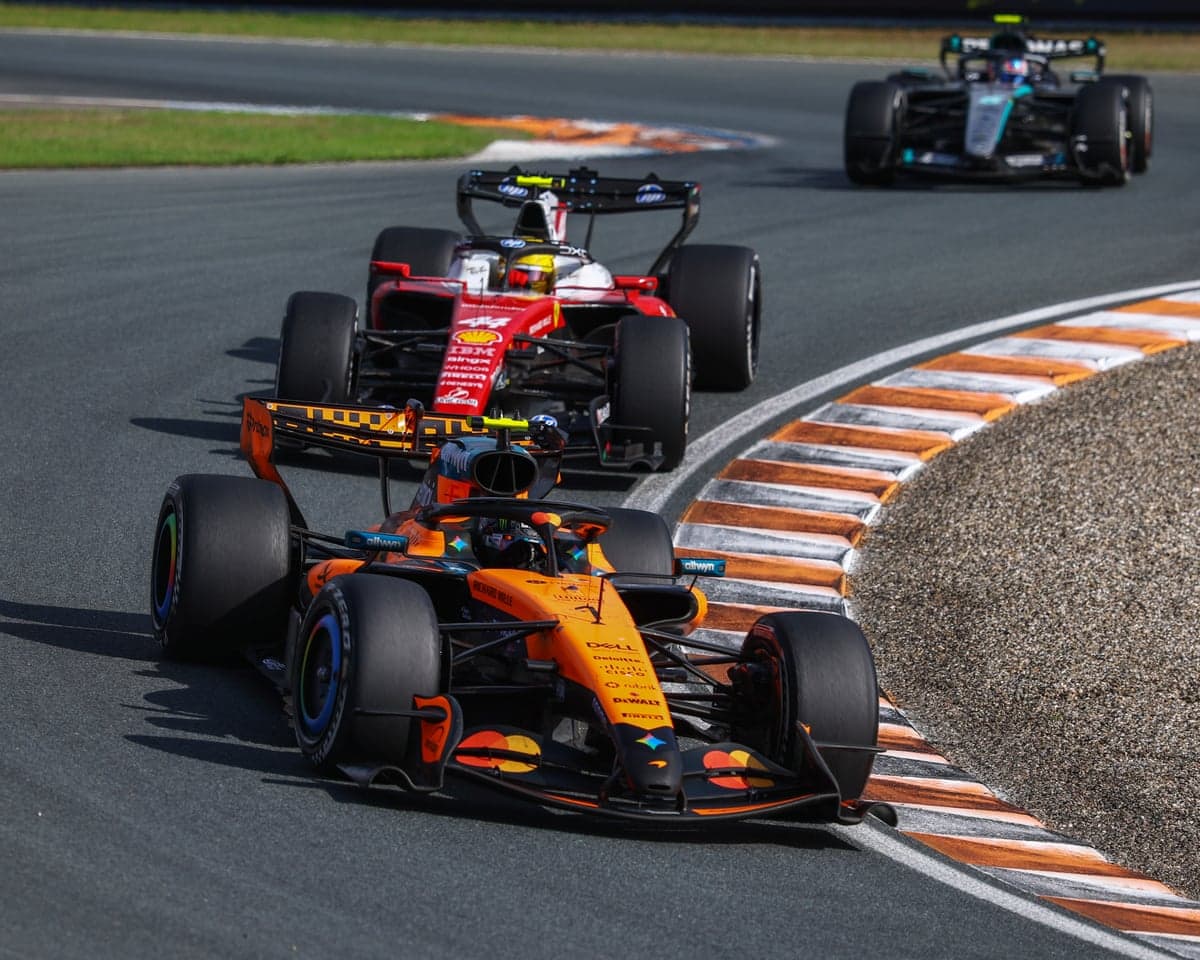
A question has arisen about whether Ferrari's equal-driver policy might be preventing the team from making the ruthless decisions necessary to maximise its championship chances. This appears to reference the brief dispute at the Dutch Grand Prix, when Lewis Hamilton approached Charles Leclerc on fresher tyres mid-race.
In fact, Ferrari did ask Leclerc to move aside to optimise Hamilton's race at Zandvoort. The team operates a formal policy of equality between its drivers, favouring one over the other only when it clearly serves the team's interests—most obviously when a race victory is at stake.
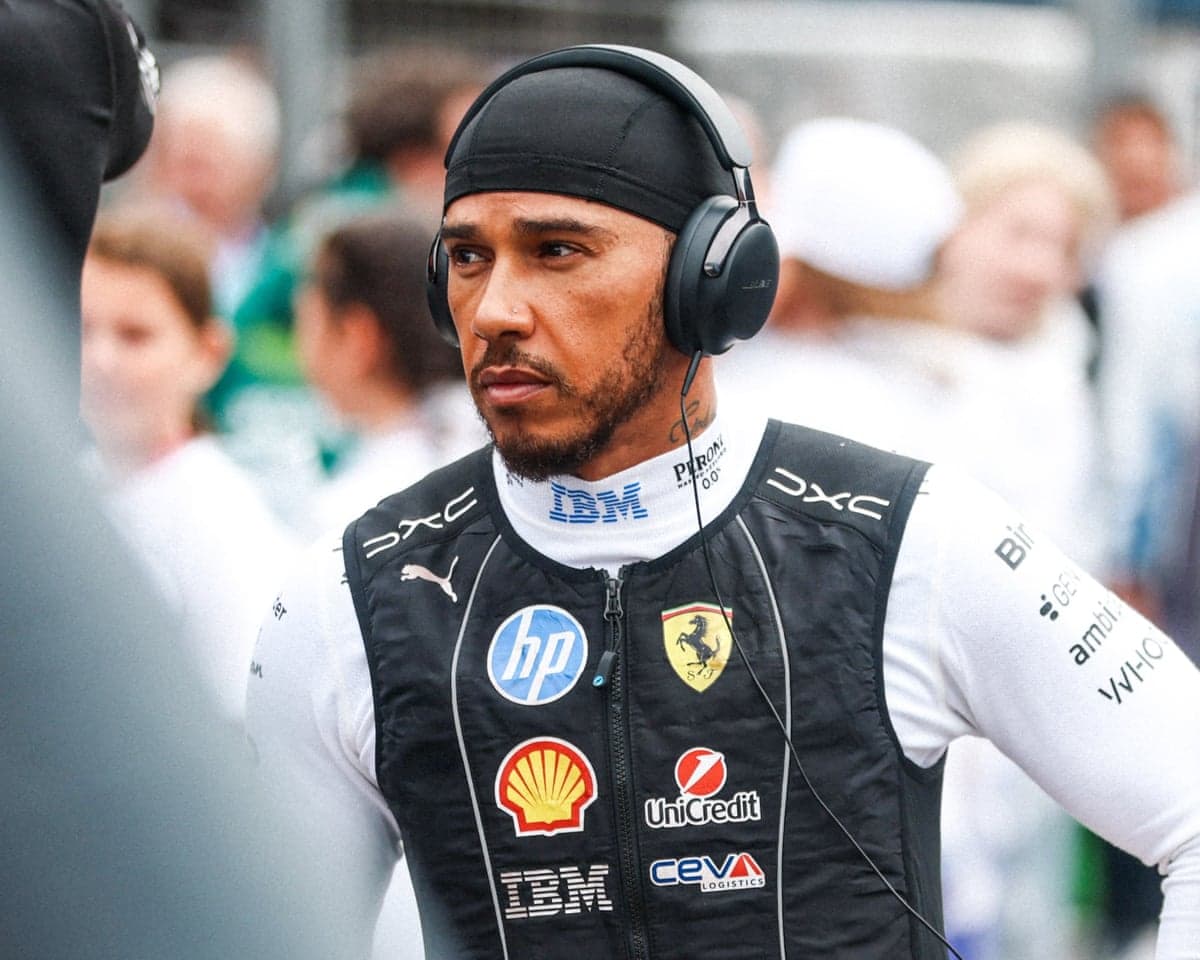
Hamilton currently sits 59 points behind Antonelli in the championship, making him Ferrari's closest challenger. Leclerc trails Hamilton by 28 points, placing him only four points further back than Norris. Both drivers have won one race each, and their qualifying battle is remarkably tight. Hamilton leads the head-to-head in races where fair comparison is possible, 9-7, but Leclerc is marginally quicker on average by 0.053 seconds.
The premise that Ferrari would favour Leclerc for emotional reasons appears unfounded. Team principal Frederic Vasseur, who was instrumental in recruiting Hamilton for 2025, maintains long-standing relationships with both drivers and has no obvious reason to allow sentiment to override strategic decision-making.
What happened to the Dutch Grand Prix?
Zandvoort has withdrawn from hosting the Formula 1 grand prix for a second time, and the prospects of the Dutch Grand Prix returning to the calendar appear remote in the foreseeable future. The race was uniquely dependent on the popularity of one driver—Max Verstappen—and its existence owed almost entirely to his presence on the grid.
The circuit's organisers achieved an impressive feat in hosting a grand prix at a venue with significant logistical challenges relating to both its location and facilities, and they managed to make the event financially viable for an extended period. The race proved highly popular with Dutch supporters, but it operated as a privately run event without government financial backing.
As race fees increased, organisers concluded that the financial risks were becoming unacceptable. A slight decline in interest over the previous two years—an understandable consequence of novelty wearing off—influenced the decision to end the event while it remained profitable rather than risk eventual losses. Formula 1 faces no shortage of alternative venues, with Portugal and Turkey both returning to the calendar in the coming year.
What happens next?
The Italian Grand Prix weekend begins on Friday, 4 September 2026, with practice sessions at Monza. Qualifying takes place on Saturday, 5 September 2026, and the race itself is scheduled for Sunday, 6 September 2026. Antonelli will face the challenge of recovering from a back-of-grid start, while Norris and Piastri will contest the McLaren team battle on a circuit where the long straights may favour their package.