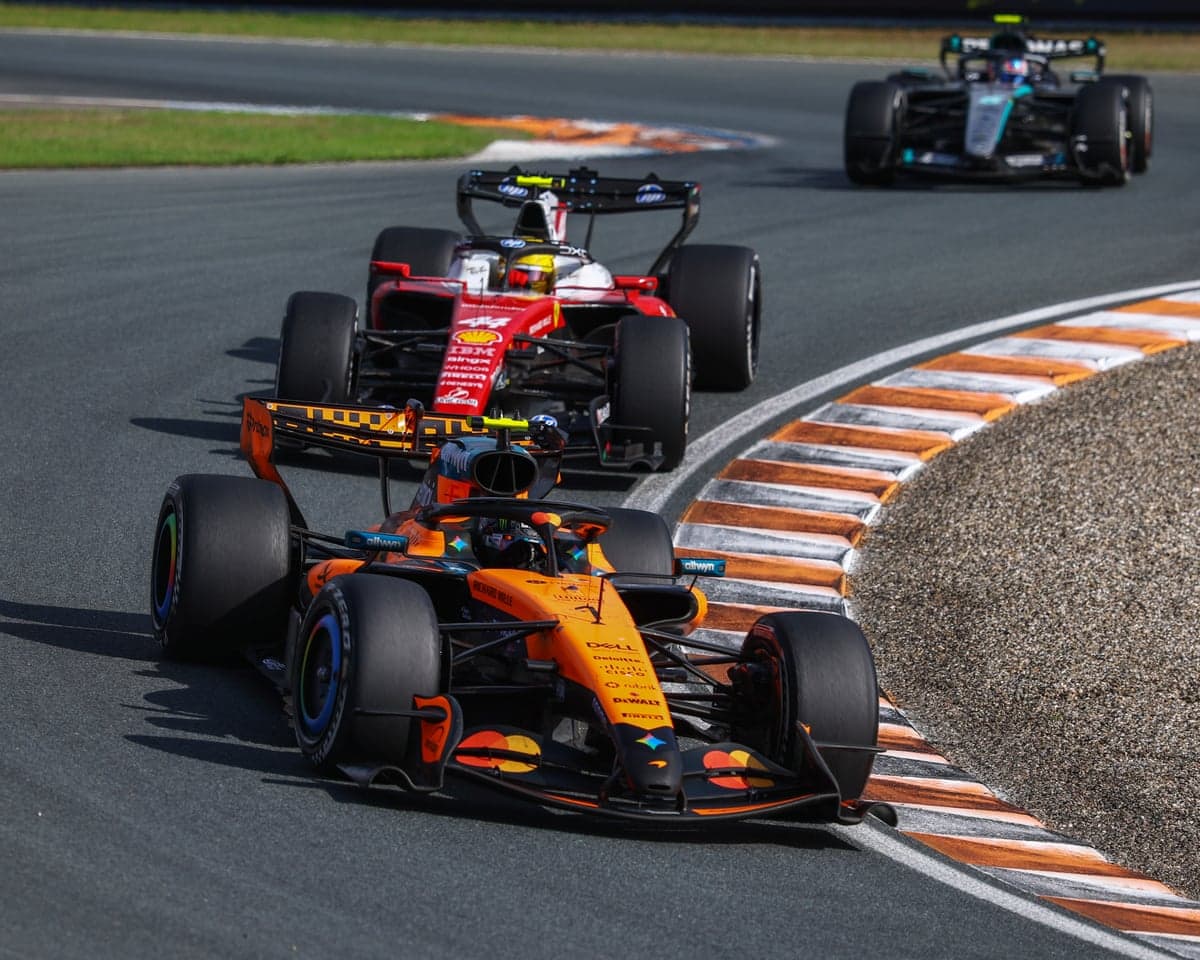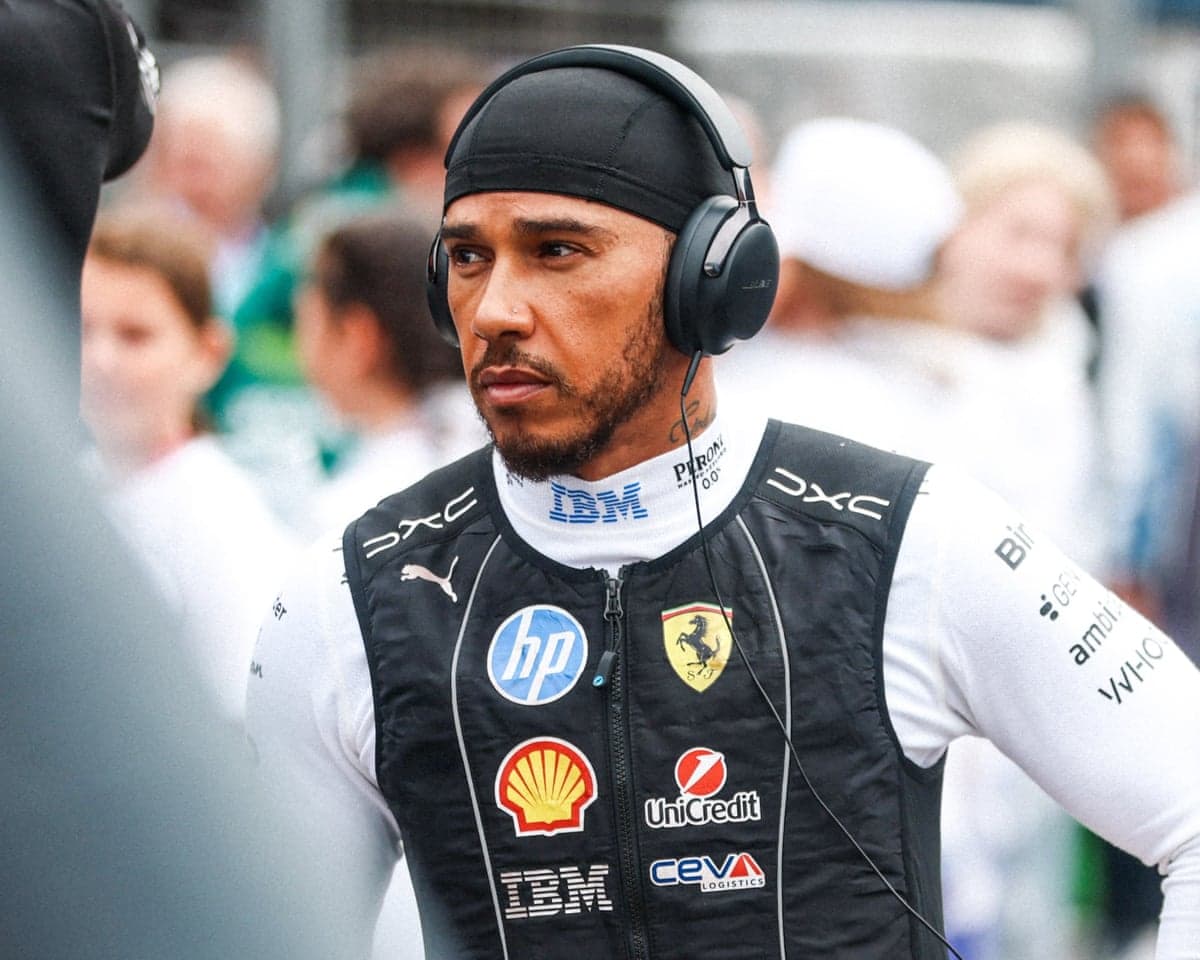
Lewis Hamilton expressed frustration with his Ferrari team's strategic decisions at the Dutch Grand Prix on 23 August, arguing that delayed pit-stop timing for teammate Charles Leclerc cost him a potential podium finish. The British driver finished fourth at Zandvoort, behind McLaren's Lando Norris, Mercedes' Kimi Antonelli and George Russell, and suggested the team had moved too slowly to capitalize on his superior tyre performance compared to Leclerc.
Hamilton's criticism centred on Ferrari's reluctance to pit Leclerc when the Monégasque driver was running slower on older rubber while Hamilton, operating on a different strategy, had gained a pace advantage.
"Great way of wasting time, good job,"Hamilton said sharply when the pit stop finally occurred. He contrasted this with the decisive action Mercedes took in the closing stages, when Russell was instructed to yield to the faster Antonelli without hesitation.
The incident highlighted a broader frustration for Hamilton, who has struggled to mount a consistent title challenge since joining Ferrari. Antonelli now leads the championship by 59 points over both Russell and Hamilton, making every point increasingly critical as the season progresses.
How did Mercedes handle its own team orders?
Mercedes executed a straightforward tactical call when Antonelli, on fresher tyres, was closing on Russell in the final laps. Russell accepted the instruction to move aside, acknowledging that Antonelli would have overtaken him anyway given the pace differential and that preserving points for the team's championship bid took priority over individual position.
"We've always said as a team, when we're on different strategies, we're never going to fight, that's always just been our sort of rules,"Russell explained.
"Kimi was ahead of me anyway, so he deserved to finish ahead. When you're in the race, you want to fight for every single position but with the pace, with a new tyre, he would have overtaken anyway. So it's the right decision."
Mercedes team principal Toto Wolff defended the decision as routine championship management.
"Team orders are always harsh from one drivers' perspective but it is what we always discussed,"he said.
"We are not losing time with each other if there are competitors breathing down our neck. Today wasn't a difficult call."
Why did Ferrari delay pitting Leclerc?
According to reporting on the race strategy, Ferrari team principal Fred Vasseur explained that the team deliberately withheld advance warning to Leclerc about the pit stop timing to avoid revealing its strategic intentions to rival teams monitoring radio communications. This defensive approach, intended to preserve competitive advantage, instead resulted in a delayed response that allowed Hamilton to lose ground.
The Dutch Grand Prix at Zandvoort, held as a sprint weekend from 21 to 23 August, represented a critical moment in Ferrari's season. The team introduced a new floor upgrade at the circuit, part of an aggressive development programme aimed at closing the gap to frontrunners. Additionally, Ferrari deployed an all-new chassis for Hamilton to improve downforce and performance through the twisty sections of Zandvoort.

What did Hamilton say about the team's performance?
Hamilton made clear that Ferrari must improve its decision-making if he is to remain competitive in the title race.
"I think what's clear is I'm looking ahead and seeing Mercedes execute like that,"he said.
"They've got the car, they're fighting for the championship, in the lead and they did it straight away. Here, I'm sitting back, losing seconds. It's something that we need to discuss offline."
He emphasized the cumulative cost of recent setbacks.
"Today was definitely frustrating for me,"Hamilton added.
"I'm here to win and I really believe that this team can win. To win championships you have to pick up every point. The last few races have been difficult with penalties and today I lost several seconds behind Charles which I think ultimately would have made the difference at the end."
Hamilton's frustration reflects a pattern of difficulties since his move to Ferrari. Earlier in the season, a pit-lane speeding penalty at the Hungarian Grand Prix on 26 July dropped him to fifth, while Norris won and Antonelli extended his lead. These recurring issues—whether strategic missteps or penalties—have compounded Hamilton's challenge in closing the 59-point deficit.
"My goal is to try and lead this team to the championship and we've got some work to do for sure."
What upgrades did Ferrari bring to Zandvoort?
Ferrari's development strategy for the second half of 2026 has been described as aggressive, with new components planned for nearly every race weekend. At Zandvoort, the upgrades focused on aerodynamic efficiency, including modifications to the floor, diffuser and beam wing designed to increase downforce and stabilize airflow through high-speed corners. The new chassis provided Hamilton with additional tools to extract performance from a circuit where precision handling is paramount.
Despite these technical improvements, the team's execution on race day fell short of what Hamilton expected. The gap between Ferrari's hardware development and its strategic decision-making on track has emerged as a critical weakness in its championship bid.
What happens next for Ferrari and Hamilton?
Ferrari's development roadmap extends beyond Zandvoort, with the Italian Grand Prix at Monza scheduled as the next race on the 2026 calendar. The team is preparing an upgraded turbocharger package for Monza, continuing its push to narrow the performance gap to Mercedes and McLaren. Hamilton will be looking for both improved machinery and sharper tactical execution as Ferrari attempts to mount a credible title challenge in the final races of the season.
The 59-point deficit facing Hamilton and Russell means that consistency and flawless strategy execution have become non-negotiable. Any further lost opportunities through delayed pit stops or suboptimal decision-making could prove decisive in determining the championship outcome.
Key Facts
- Hamilton finished fourth at the Dutch Grand Prix on 23 August, behind Norris, Antonelli and Russell
- Antonelli now leads the championship by 59 points over both Russell and Hamilton
- Ferrari introduced a new floor upgrade and all-new chassis at Zandvoort as part of an aggressive development programme
- Mercedes executed swift team orders to move Russell aside for Antonelli, contrasting with Ferrari's delayed pit-stop decision
- The next race is the Italian Grand Prix at Monza, where Ferrari plans to introduce an upgraded turbocharger package