Max Verstappen's Career and Potential Move to McLaren
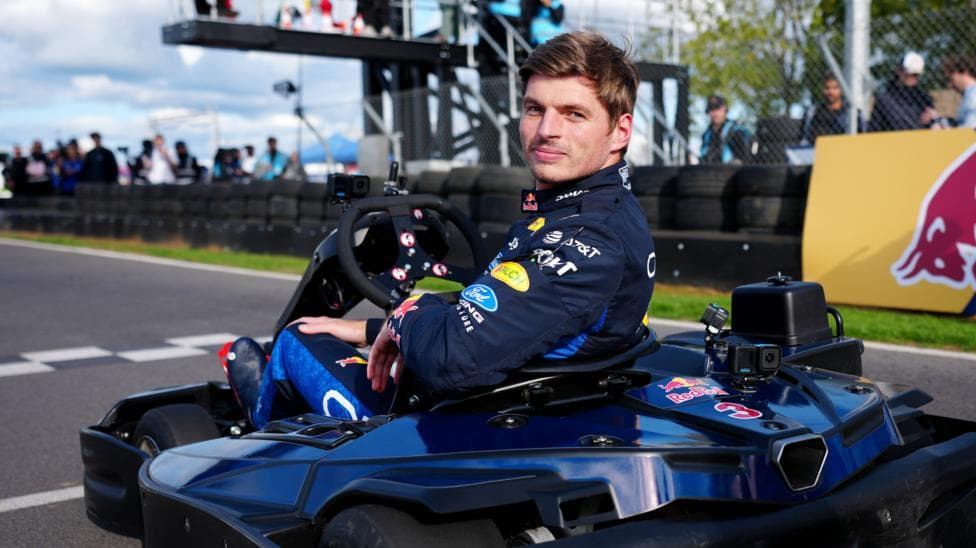
Max Verstappen has spent his entire Formula 1 career with Red Bull, debuting with Toro Rosso in 2015 before his promotion to the senior Red Bull team in 2016.
The drivers' championship battle has intensified as Formula 1 approaches this weekend's Belgian Grand Prix. Kimi Antonelli leads Mercedes teammate George Russell by 25 points, with Ferrari's Lewis Hamilton seven points further behind.
Before the Spa-Francorchamps race, F1 correspondent Andrew Benson addresses recent questions from fans.
Could Verstappen realistically move to McLaren? Tim asks: "I'm struggling to see how Max Verstappen could go to McLaren. They never have a number one driver and last year Max was laughing at McLaren's decisions when trying to be fair to Lando Norris and Oscar Piastri, such as the swap in Monza for a slow pit stop. Max isn't going to accept a team order to let his teammate past to keep things fair (like he didn't in Brazil in 2022). Surely it would tear McLaren apart if he went there?"
The first point to note is that McLaren Racing CEO Zak Brown has dismissed the idea of Verstappen moving to McLaren in the near future. Brown stated at the British Grand Prix that recent talks with Verstappen's management "didn't go anywhere," that he was "very happy with my two racing drivers," and "what I couldn't offer him (Verstappen) was a seat in my race car."
Nevertheless, Verstappen and his management are exploring options, and McLaren is among the teams under consideration.
Verstappen is contracted with Red Bull until the end of 2028 but has a performance clause likely allowing him to leave at the end of this year if he chooses. This clause activates in October, so there is ample time before any decision is expected. Sources have told that Verstappen has not made any decisions yet.
Could a Verstappen move to McLaren work? Brown would first need to remove one of his current drivers, world champion Lando Norris or Oscar Piastri.
McLaren's fundamental philosophy centers on fairness. Their drivers are permitted to race each other, with team intervention only in specific circumstances, such as those that occurred a few times last year. This approach contrasts with Red Bull's traditional style but aligns with Mercedes, another team with which Verstappen has held talks.
Neither McLaren nor Mercedes would alter their approach if Verstappen joined. Why would Verstappen have an issue with this? He is confident in his ability to win any intra-team battle.
Teams signing Verstappen understand they face a level of stress uncommon with other drivers, testing their management skills. While some may view Verstappen's uncompromising style as a risk, F1 teams prioritize performance, and Verstappen guarantees top-tier, consistent performance behind the wheel.
For McLaren, currently experiencing challenges as a customer engine team, Verstappen's talent could provide a significant competitive edge.
Longevity of Top Drivers: Hamilton and Alonso
Matthew asks: "Lewis Hamilton, age 41, has recently won a race for Ferrari. Fernando Alonso, age 44, is consistently outperforming his younger teammate and probably, given a comparable car, would also win a race. Are the cars easier to drive, or do some drivers have greater longevity at the top level?"
Grands prix today are less physically demanding than in the mid-2000s, when refueling and tire wars required flat-out racing from start to finish. Current races involve tire and energy management, reducing physical strain.
Nonetheless, driving an F1 car remains highly physically demanding, and both Hamilton and Alonso maintain excellent physical condition.
The primary limiting factor for aging drivers is mental rather than physical, assuming they meet bodily demands. Drivers often lose the desire and commitment to push themselves to the limit in a dangerous environment.
"You have to really want it to perform at the highest level in F1, to drive to the limit every time you get in the car, no matter how competitive it is. And Hamilton and Alonso remain totally committed, and in love with what they are doing."
Combined with their exceptional ability—they are among the greatest drivers ever—this explains their continued success. The rarity of such longevity highlights how extraordinary their achievements remain.
What Makes Spa-Francorchamps a Classic Circuit?
Clive asks: "Spa is held by many as one of the all-time great circuits. What is it that makes it so good? And will these 2026 cars work well there?"
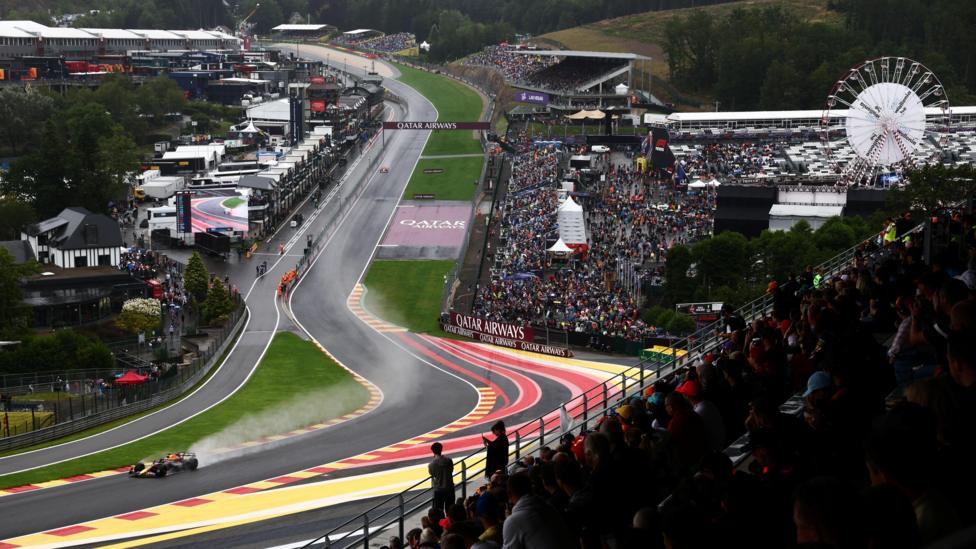
Spa-Francorchamps, host of this weekend's Belgian Grand Prix, has earned its reputation as a classic circuit due to the challenges it presents to drivers.
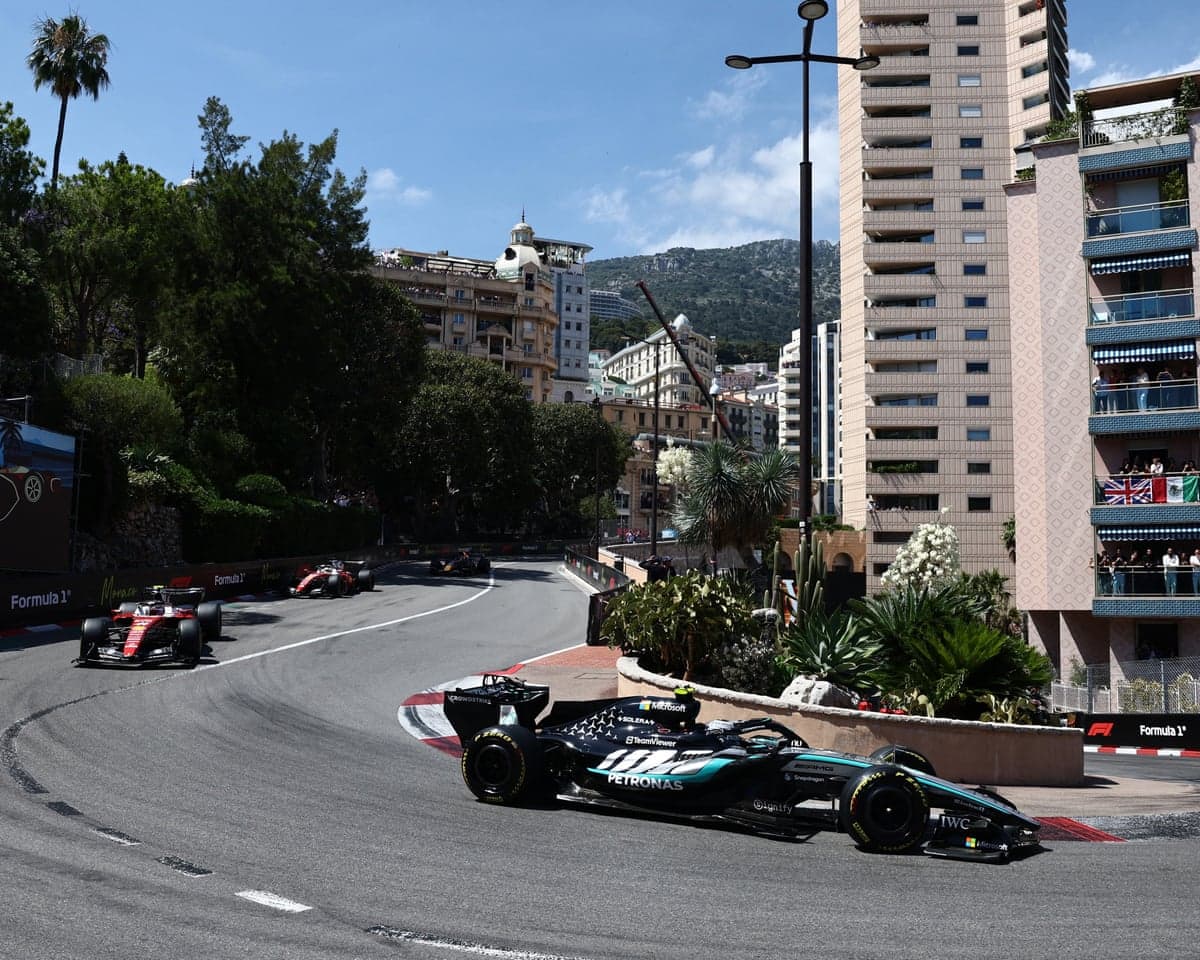
Whether in its original eight-mile layout or the shortened 4.3-mile version used since 1983, Spa combines flowing high- and medium-speed corners unmatched by most circuits. On the F1 calendar, only Suzuka in Japan rivals it, though Monaco is exceptional in a different way.
The most famous corner is Eau Rouge, a high-speed left-right flick into and out of a compression that launches cars uphill into a left over a crest, technically known as Raidillon.
In dry conditions on qualifying laps with empty tanks, Eau Rouge is now considered "easy flat," meaning the challenge has lessened as cars are not at the grip limit there. However, "easy flat" is relative; it remains a 200mph corner and a daunting challenge.
In wet conditions, Eau Rouge remains as fearsome as ever.

Currently, the "big" corner at Spa is Pouhon, a high-speed downhill double left-hander midway through the lap. It was taken flat-out by the best cars in recent years but is unlikely to be so this year.
More than individual corners, it is the sequence of challenging, long corners flowing together that defines Spa, similar to Suzuka.
Former F1 driver Mark Webber described a lap of Spa as feeling like "you were going somewhere." It is a throwback to old road courses that dominated the calendar, flowing with the landscape and evolving organically by joining public roads, as Spa originally did, though now fully closed off.
Another aspect is the risk factor. Spa remains very dangerous despite modern safety measures, as demonstrated by the deaths of Antoine Hubert in Formula 2 in 2019 and Dilano Van 't Hoff in Formula 4 in July 2023. These risks increase in wet conditions, which are common in the Ardennes forests.
Drivers are acutely aware of these dangers, contributing to Spa's intense experience. Verstappen, for example, calls it his favorite circuit, saying:
"It is amazing to drive in the dry, and when you then have a wet qualifying, it's pretty… I wouldn't say scary but it's really interesting and quite extreme."
Mercedes boss Toto Wolff describes Spa as a reminder that F1 is "still a gladiators' sport."
Will this year's cars perform well there? F1 cars are designed for circuits like Spa, but new engines and the track layout mean cars will be especially energy-starved.
Batteries will not last long enough for full power throughout long flat-out sections from La Source, through Eau Rouge to Les Combes, or from Stavelot around Blanchimont to the Bus Stop chicane.
Engines will enter recharge mode at points, causing "super-clipping," where speed decreases as the engine runs against the MGU-K. While not ideal, as seen at Silverstone, most spectators will likely not notice.
F1 Season Outlook Amid Middle East Conflict
Roger asks: "With the war between Iran and the US resuming, what arrangements, if any, is the FIA planning ahead of a possible abandoning of the last races in the season in Qatar and Abu Dhabi? It would be such a shame to lose two further races of the 2026 season."
The ongoing conflict in the Middle East creates uncertainty for the season's remainder beyond September, but F1 remains relatively relaxed about the final races in Qatar and Abu Dhabi.
The situation between the US/Israel and Iran fluctuates weekly. A ceasefire was agreed previously, but tensions have recently escalated.
F1 has until late September or early October before freight departures for the Middle East become critical, so there is no immediate cause for concern.
More pressing is the possibility of rescheduling the Bahrain Grand Prix in the gap between Azerbaijan (24-26 September) and Singapore (9-11 October). For this to happen, F1 needs assurance by the end of July that the Middle East situation is calm enough to consider scheduling a race then. Currently, this appears unlikely.
Kimi Antonelli's Car Issue at Silverstone
Alan asks: "What actually broke on Kimi Antonelli's car at Silverstone and how did it happen?"
Antonelli's British Grand Prix victory hopes were dashed when the front left wheel shield failed and became lodged in the wheel.
A wheel shield is a carbon component used to shape and direct airflow around the wheel for cooling and aerodynamic purposes.
When the issue occurred, Mercedes mechanics sent Antonelli back out after his first pit stop without fully resolving the problem. At the second stop, they removed the shield, resolving steering issues.
However, the car lost what the team described as "a good chunk" of downforce and performance.
Initially, the team was unsure of the failure's cause but later determined it was largely due to the amount of kerb taken at Silverstone and the high speeds involved.
The failure was unfortunate for Antonelli, who was on course to catch and pass Ferrari's Charles Leclerc for a likely victory.
As George Russell noted, the problem effectively balanced the reliability issues both Mercedes drivers have faced this season, making the championship standings—Antonelli leading Russell by 25 points—a fair reflection of their seasons so far.
Get in Touch
Send us your questions for F1 correspondent Andrew Benson.
Chequered Flag Extra: Piastri on Max, Title Talk & Advice for Harry