The personal story of a dad who took his autistic son to the British Grand Prix
Joshua has always been fascinated by cars, and attending a live Formula 1 event has long been a dream for him.
As a group of men push past us, a sudden loud noise and gust of air cause Joshua to stop abruptly.
He looks at me with a brief expression of panic, freezes, closes his eyes, and covers his ears with both hands before screaming.
We are at Silverstone for the Formula 1 British Grand Prix. From start to finish, the day is an intense sensory experience—especially for my nine-year-old son, who is autistic and has ADHD.
I feel guilty that he has become distressed and agitated.
However, it is not the roar of a 1.6-litre V6 turbo hybrid engine that triggered this reaction. We are standing near the door of a public restroom where one of the men has started using a hand dryer.
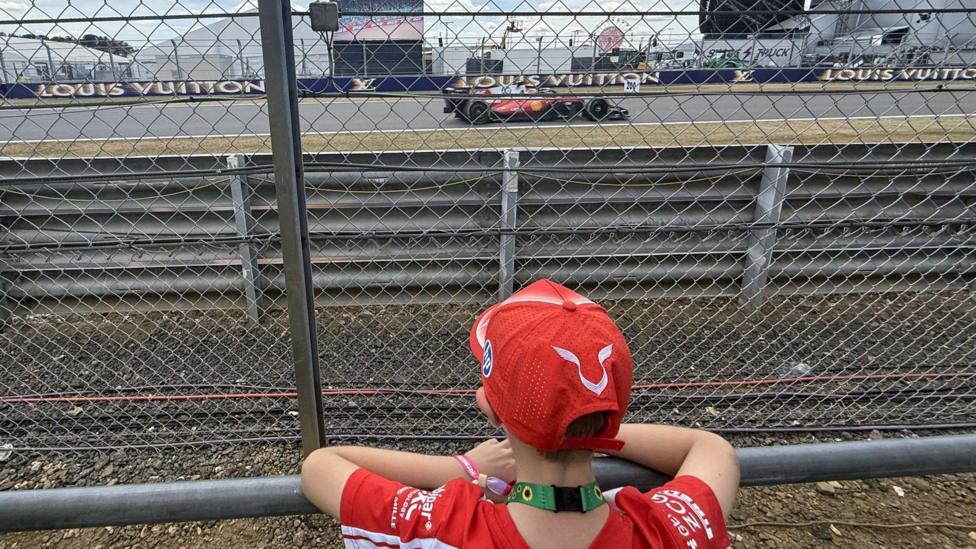
I take Joshua by the arm and guide him back toward our spot beside the circuit, where the drivers are just beginning to appear for the start of qualifying.
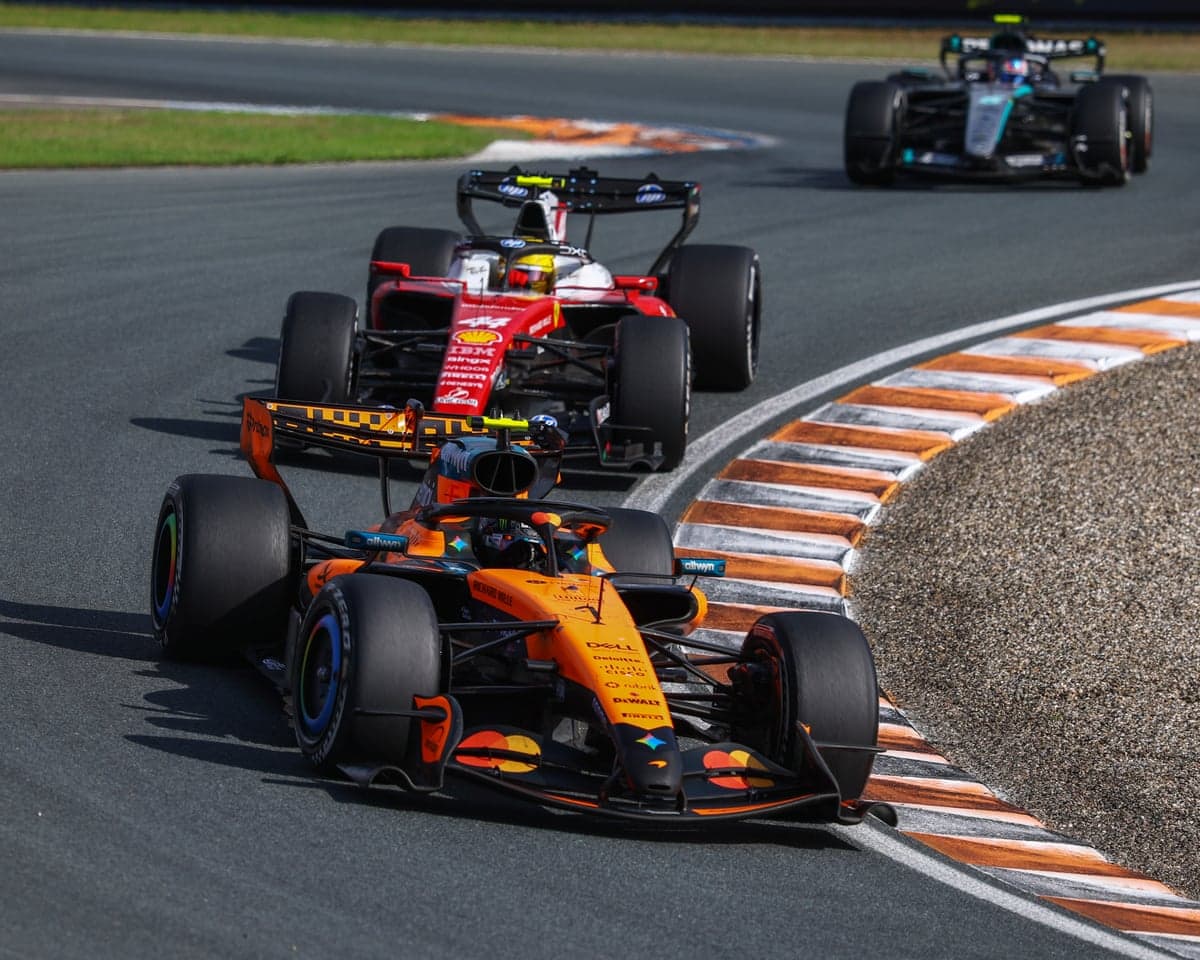
Despite the distant roar of world champion Lando Norris' McLaren and the noise of the large crowd as he prepares for his first hot lap, Joshua's breathing becomes steadier, his eyes widen, and his grip relaxes.
Why one sound is unbearable while another is almost soothing is difficult to fully explain, but this is how he experiences life through autism.
Remarkably, race tracks like Silverstone have become a familiar and welcoming environment for my car-loving son.
A unique experience for neurodiverse fans
According to the National Autistic Society, over one in 100 people are autistic, also known as autism spectrum disorder (ASD), with at least 700,000 autistic adults and children in the UK.
Joshua is among 260,000 autistic pupils currently studying in England. Awareness and diagnosis rates have increased significantly, with a 787% rise in diagnoses between 1998 and 2018.
While people with ASD "share differences from non-autistic people," as the National Autistic Society explains, they are also "different from each other," with each autistic individual having a unique combination of characteristics. Autism is a spectrum.
This diversity makes it challenging to accommodate everyone. However, with neurodivergent fans now accounting for at least 20% of all applications for accessibility tickets, Silverstone has adapted accordingly.
"We've almost been on this decade of change," said Louise Broomhall, head of customer service. "When I first started here we had a very small amount of knowledge and support for it but it's just grown from strength to strength year on year.
It is so important for us that everybody can attend."
A key feature of the current provision is a special viewing area exclusively for neurodivergent fans called Copse Triangle. This is a relatively small, grass-covered trackside spot that is limited in capacity.
Access is granted through Silverstone's Personal Assistance Scheme. Tickets for the British Grand Prix usually go on sale about nine months before the event. Given the limited numbers and increasing demand, early application is advisable but worthwhile.
Copse Triangle offers a space away from the off-track chaos but with an excellent view of the action on the circuit. It is also surrounded by other neurodiverse children and adults, as well as parents who understand the experience.
"Some of the feedback we've received from parents is that there's no judgement within that area," said Sue Davidson, accessible champion in the customer service team.
"For me to hear that was just wonderful, because everyone is so different. And so many friendships have been made within that area."
The complicated decision to go in the first place
For any parent of a child with autism, planning a day out is rarely straightforward. Life becomes a continuous risk assessment.

This process begins before leaving the house, involving managing expectations and preparing for what lies ahead. It can continue for days after returning, as unreleased anxiety and excitement affect home and school life. Meltdowns caused by emotional dysregulation are often inevitable.
Deciding to attend a major sporting event is therefore complex. Factors to consider include travel, schedule, crowd size, smells, sounds, and even food.
However, having a specific, focused hobby is common among autistic individuals. For Joshua, motor racing has been an obsession since he could hold a toy car.
As a toddler, he lined up and organized his cars. As he grew, he created rainbow patterns on the living room floor with his collection. Now, he recreates races as they unfold on television.
So, we decided to attend an entire race weekend at Silverstone.
Although tickets are now fully digital, the accessibility team sent a helpful printed leaflet detailing the facilities available to us. This simple step allowed Joshua to begin preparing early.
"It's not necessarily about just looking at other venues because what we do isn't normal - it's very unique to Silverstone," said Broomhall. "It all stems from talking to people constantly and making sure we're keeping up."
Coming through autistic burnout
Joshua overcame a pre-race wobble to make it back into the circuit on Sunday.
Certain aspects of any day out like this are unavoidable.
There will be queues and waiting, made more difficult by persistent heat and sun. There will be hand-holding to navigate overwhelming crowds. Certain sounds and smells may trigger anxiety.
One must manage these challenges as they arise, but even with provisions, situations can become overwhelming.
Joshua was quiet for much of Saturday. He does not express much verbally, but his eyes and body language reveal his struggle with emotions and sensory overload.
This culminated on race morning. He woke feeling unwell, torn between wanting to leave and wanting to return to the track. Moved to tears, this was likely autistic burnout from the previous day manifesting.
Fortunately, with patience and rest, he recovered, and we were ready to enjoy the event again.
Noise levels are a significant topic, especially for neurodivergent fans, given the presence of state-of-the-art racing machines thundering around the circuit.
Mohammed Ben Sulayem, president of the governing body FIA, has expressed interest in returning to V8 engines by 2030 or 2031. This would reintroduce the louder, more dramatic sounds of earlier years.
While some fans have campaigned for this change, it could negatively impact the growing neurodivergent fanbase accustomed to the quieter hybrid engines used since 2014.
In the short term, Silverstone focuses on what it can control and is making significant progress.
In the family zone, accessible to all, Joshua enjoyed playing with Lego. There was also a sensory room designed to provide refuge from the crowds.
Additionally, 120 extra volunteers, known as 'race makers,' were present to help Silverstone meet its accessibility goals for 2026.
"It's just so lovely to see more and more people realise they can go out, they can do it, they can take their families with them and they can have a really good time," said Broomhall.
So, did Joshua have a good time?
"One of the best days of my life."