The Reuben family and Saudi Arabia's Public Investment Fund (PIF) were part of a consortium that took over Newcastle United in October 2021. As the club approaches the fifth anniversary of that takeover, Newcastle's progress under ambitious ownership is being measured against the scale of the challenge ahead.
Three years, seven months and 21 days. That was how long it took for Manchester City to win their first Premier League title following the club's takeover by the Abu Dhabi United Group in 2008.
Memories of such a relatively swift transformation were still fresh in the minds of top-flight executives after Newcastle United's Saudi-led buyout in 2021.
There was quite a lot of fear in the other clubs because they thought it was going to be another Manchester City
a source said.
The reality proved a little different.
Newcastle may have gone on to end a 70-year wait for a major domestic trophy by lifting the EFL Cup in 2025. Eddie Howe's side may have qualified for the Champions League in 2023 and 2025.
But the regulatory landscape has changed dramatically since Manchester City first set out to disrupt the established order, as football finance expert Kieran Maguire succinctly explained.
The challenge for Newcastle United is in the era of PSR (profit and sustainability rules) and now SCR (squad-cost ratio), it is very much geared towards preserving the status quo
A huge revenue gap still to bridge
Newcastle, nonetheless, had big ambitions from the outset. They may have been in deep relegation trouble at the time, but former owner Amanda Staveley made it clear in her opening round of interviews that the club's aim was to win the Premier League within a decade.
There was a concern elsewhere in the top flight that Newcastle could look to finance such a push within the rules by turbocharging revenues through lucrative sponsorship deals with Saudi companies.
As previously reported, an unnamed executive contacted the Premier League on behalf of his club and 10 others just a few days after the buyout. He requested that notice was given of a vote to introduce a short-term ban on such related-party transactions.
This was the precursor to the rules on associated party transactions (APTs), which were introduced in December 2021.
Newcastle's income streams have still grown - from £140m in 2021 to £335.3m in 2025 - but they are lagging behind the Premier League's highest-earning clubs.
Newcastle may only be two places below sixth-placed Chelsea in the top-flight's revenue table, but the Blues still generated £155m more in the respective clubs' most recent set of financial accounts thanks to an aggressive trading model.
This is just one of the reasons why Chelsea have been able to agree a club-record £117m deal with Aston Villa for Morgan Rogers and hand the England forward a sizeable wage increase.
Three key players sold in less than a year
As the fifth anniversary of the takeover approaches in October, Newcastle clearly have work to do on and off the field.
Chairman Yasir Al-Rumayyan set out to be
number onewhile chief executive David Hopkinson's aim was to be
in the debate about being the top club in the worldby 2030.

But Newcastle need the infrastructure to match.
An announcement is awaited on plans for a new state-of-the-art training ground after a site was identified in Woolsington near Newcastle Airport.
The club have stressed the importance of taking time to make the right decision when it comes to either expanding St James' Park or building a new stadium, which will be key to boosting revenue.
To consistently compete, however, there is little margin for error.
Newcastle needed to see more of an immediate return from a £100m-plus net spend last summer, for example, but defender Malick Thiaw has been the only unquestioned success.
The club are also counting the cost of a bruising 12th-placed finish last season after missing out on Europe.
Most pertinently, after breaching Uefa's financial sustainability regulations, Newcastle have entered into a three-year settlement with European football's governing body.
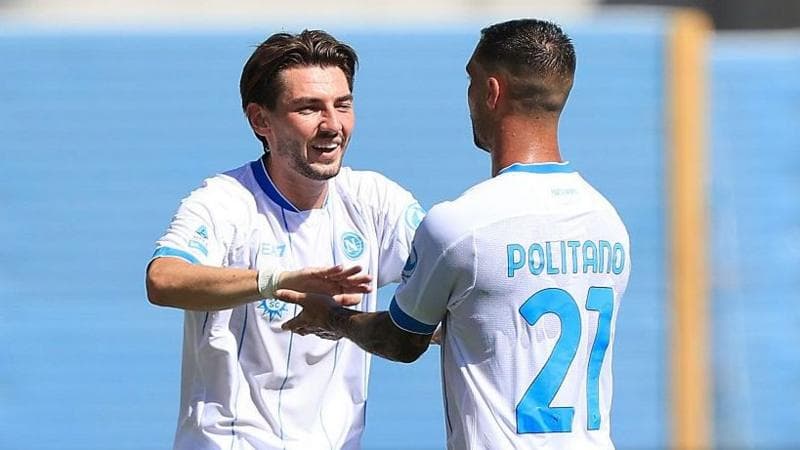
Raising funds through the sales of Anthony Gordon and Sandro Tonali to Barcelona and Tottenham Hotspur respectively was therefore crucial in order for the club to have the ability to reinvest this summer.
Three key players have now left in less than 12 months, though, which has weakened the side considerably, following Alexander Isak's painful £125m departure to Liverpool last summer.
Newcastle do not want to lose another big name in Bruno Guimaraes, but the captain's future is uncertain after he intimated he wished to join Arsenal.
Whatever happens, trading will remain a key part of the club's strategy in the coming years and there has been a shift in approach with incomings too.
Further reinforcements are sorely needed but all of the club's arrivals this summer - goalkeeper Ewen Jaouen, midfielder Sean Steur and winger Bazoumana Toure - have been aged 20 and under, and from the continent.
The trio have immense potential and, in the right hands, could flourish, but they will need time. It feels like the same could be said for the project as a whole right now.
##
##
Gifted, charismatic and passionate amid highs and lows - Keegan obituary
How have missed targets affected Newcastle's summer rebuild?