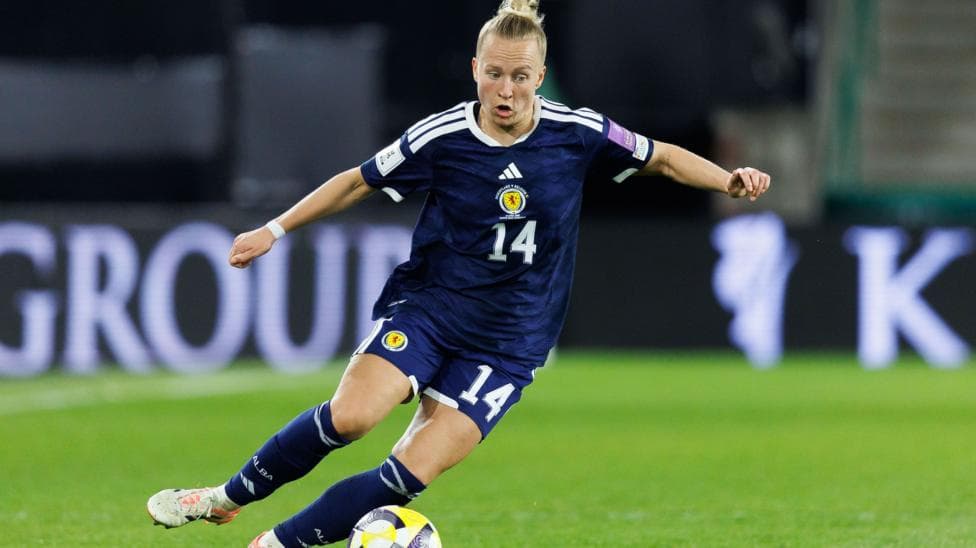
Scotland's football authorities have unveiled Project 2035, an ambitious strategy designed to transform women's and girls' football across the country over the next decade. Backed by £250,000 in government funding this year, the initiative aims to double registered female players, quadruple match attendances and audiences, and establish Scotland as a leading women's football nation by 2035. According to BBC News, the plan represents a coordinated effort across multiple organisations to address long-standing challenges in the women's game.
A newly formed taskforce involving the Scottish government, the Scottish FA, Scottish Women's Football, the Scottish Women's Premier League, PFA Scotland, Sportscotland and Cosla will oversee delivery of the strategy. The taskforce is due to begin overseeing delivery in December 2026.
What are the specific targets?
The plan establishes clear baselines and ambitious growth targets. Current figures show 28,000 registered female players, 80,000 match attendees and 1.2 million broadcast or streaming viewers in 2025–26, with targets of 56,000 players, 320,000 attendees and 4.8 million viewers by 2035–36. Beyond participation metrics, the strategy aims to secure regular qualification for major tournaments—a goal Scotland's women's team has not achieved since reaching the World Cup in 2019. The ambition also includes reaching the group stage of at least one Women's World Cup during the plan period.
Why is this strategy needed?
Women's football in Scotland has experienced growth in recent years across participation, attendances and investment at both professional and grassroots levels. However, stakeholders acknowledge significant obstacles remain. Challenges include inadequate facilities, insufficient volunteer support, gaps in coaching pathways and difficulty retaining players within the sport. The strategy seeks to address these systemic issues while capitalising on momentum already building in the women's game.
SFA chief executive Ian Maxwell emphasised the importance of major tournament exposure in driving growth.
We saw in the men's World Cup in the summer, the impact that had across the country and to be able to replicate that from a women's point of view, we can't underestimate the benefit that would bring.
First Minister John Swinney outlined the broader vision underpinning the initiative.
Football has the power to bring communities together, improve health and wellbeing, and inspire young people to achieve their potential. Our ambition is simple: every girl in Scotland who wants to be part of football should have the opportunity to do so, whether as a player, coach, official, volunteer, supporter or leader.
What happens next for Scotland's team?
Scotland's immediate focus is a World Cup play-off against Sweden. The team secured this tie by defeating Czechia 5–2 on aggregate, including a 3–2 second-leg victory in Paisley after trailing 2–1 during that match. Scotland will host Sweden on 1 December 2026 at 7:25pm in Paisley, with the second leg in Stockholm on 5 December at 3pm UK time.
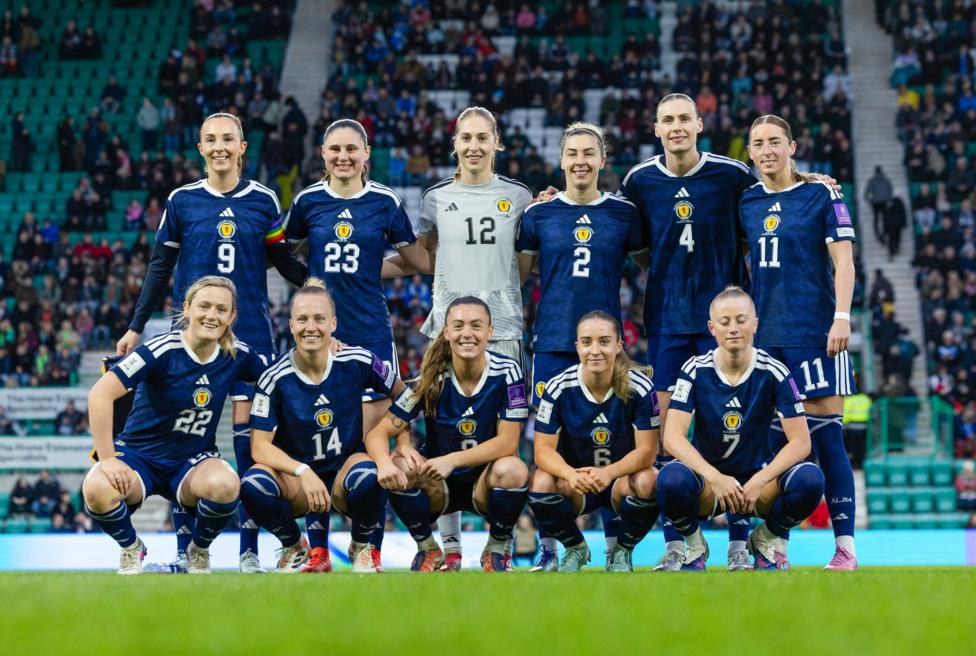
Beyond the play-off, Scotland's competitive calendar will intensify. Scotland were drawn in Nations League Group A4 with Germany, the Netherlands and Sweden on 3 November 2026, after earning promotion back to League A. The Nations League campaign begins in February 2027, with the first two rounds scheduled for 23 February–6 March.
Key Facts
- Project 2035 aims to double registered female players from 28,000 to 56,000 by 2035–36
- Match attendances are targeted to increase from 80,000 to 320,000 annually
- Broadcast and streaming audiences are projected to grow from 1.2 million to 4.8 million viewers
- A dedicated taskforce begins overseeing delivery in December 2026
- Scotland faces Sweden in a World Cup play-off on 1 and 5 December 2026