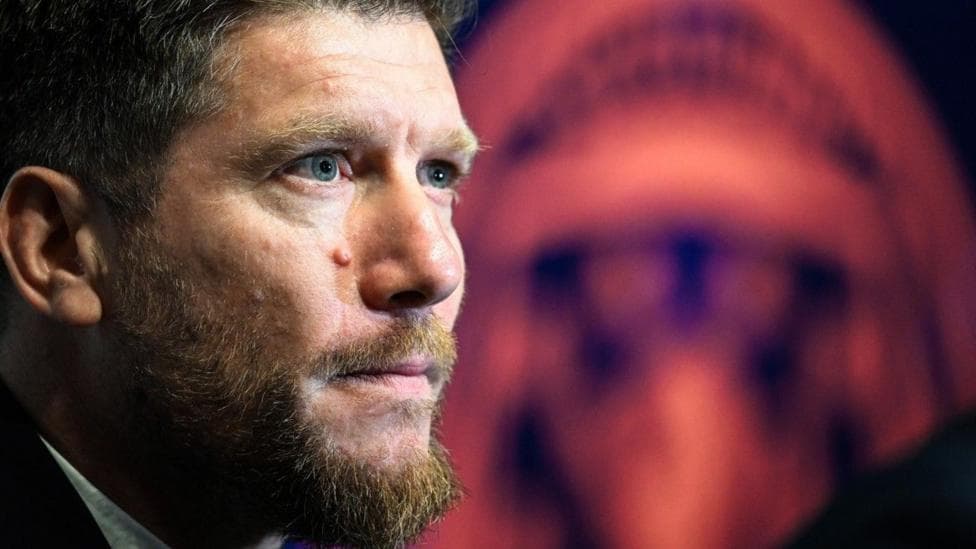
Sebastien Pocognoli will make his competitive debut as Scotland head coach on Saturday 26 September 2026 when his side travels to Ljubljana to face Slovenia in a UEFA Nations League fixture. The Belgian manager, appointed in August to succeed Steve Clarke, has described his emotional state ahead of the encounter as one of excitement tempered with responsibility.
Pocognoli replaced Clarke, whose seven-year tenure concluded following Scotland's elimination at the group stage of the World Cup. The new manager inherits a squad undergoing significant transition, with Kristi Montgomery called up after Kieran Tierney and Kenny McLean dropped out, and a blend of youth and experience assembled for a demanding schedule of four Nations League matches across 11 days.
Speaking to a national broadcaster's sports coverage, Pocognoli reflected on his mindset entering the tournament.
If we talk about nerves, yes, but it's a positive nervousness. We have a job with responsibility. It's excitement and I'm just passionate about being on the touchline.
The Scotland squad is currently based at a warm weather training camp in La Manga, Spain, where Pocognoli has assembled a much-altered group. His selection includes James Wilson, a 19-year-old prospect, alongside four players aged 20—Findlay Curtis, Ben Gannon-Doak, Lennon Miller and Colby Donovan—and three further players at 22 years old: Montgomery, Luke Graham and Robbie Ure. The squad also features seven uncapped players including Luis Binks, Jon McCracken, Josh McPake and Stephen Welsh, while Oli McBurnie has been recalled for the first time in five years. With Montgomery replacing the injured Kenny McLean, eight uncapped players now feature in the squad.
How will Pocognoli balance youth with experience?
The manager acknowledges that integrating so many new faces presents both opportunity and challenge.
It's a lot of new faces, so it's a challenge to find the right balance, to keep the cohesion in the team.Pocognoli has emphasised that he will rotate his squad across the four fixtures to manage workload and provide opportunities for different players to demonstrate their capabilities.
Despite the scale of change, Pocognoli has already established a clear tactical philosophy. He believes his players will reveal themselves through their performances, and he remains flexible in his approach rather than rigidly adhering to a single formation.
I always think the players select themselves. We have four games, so we need to plan. We need to have a periodisation about the tactical aspect and the physical aspect. This team can be flexible. We're ready for the four games in terms of what kind of approach we want to give.
What tactical approach will Scotland adopt?
Pocognoli's managerial style centres on aggressive pressing and rapid tempo, principles he intends to implement from the outset against Slovenia. He has outlined the fundamental elements he expects to see immediately.
For me, it's about the personality of the players. I like a unit team who are just fighting for each other. It's a basic principle—attack together and squeeze the pitch. When we need to defend, it's just to defend like brothers. When we lose the ball, it's try to regain the ball as quickly as possible.

When asked whether his football will embrace greater risk and adventure compared to Clarke's tenure, Pocognoli cautioned against abandoning pragmatism.
We have to find the right balance because if you play fantastic football and you don't qualify you get some criticism.This reflects his awareness that aesthetic appeal must be balanced against the fundamental requirement of achieving results.
What did Pocognoli learn from his predecessor?
Pocognoli has already engaged with Clarke in a telephone conversation to understand the context of his appointment and the challenges ahead.
He was very kind, very humble. That was very helpful for me. It just was to let me know that he's behind the team. He was very happy but he also felt that it was the right time to leave. He wished me all the best.The outgoing manager's support has provided Pocognoli with reassurance as he embarks on his tenure.
Pocognoli has set an ambitious long-term objective for the national team.
I will try to be as successful as the previous staff because we want to play in a big tournament. We want to create this moment for the country.This statement underscores his commitment to restoring Scotland to major tournament football after their recent disappointment.
What challenges face Scotland in Slovenia?
Slovenia will present a formidable opening test for Pocognoli's new-look squad. The hosts have been weakened by injuries to Benjamin Šeško, Niko Prelec, Žan Zaletel and Petar Stojanović, which may provide Scotland with an opportunity to begin their Nations League campaign positively. However, Pocognoli recognises that his squad requires time to develop cohesion, even if certain principles must be evident from the first whistle.
Reflecting on the early stages of his tenure, Pocognoli expressed cautious optimism about what he has observed during the La Manga camp.
So good so far. But we need to get the response through the games. It's up to them to perform well, but it's up to me to make them perform well.This statement captures the shared responsibility between manager and players in the months ahead.
What happens next for Scotland?
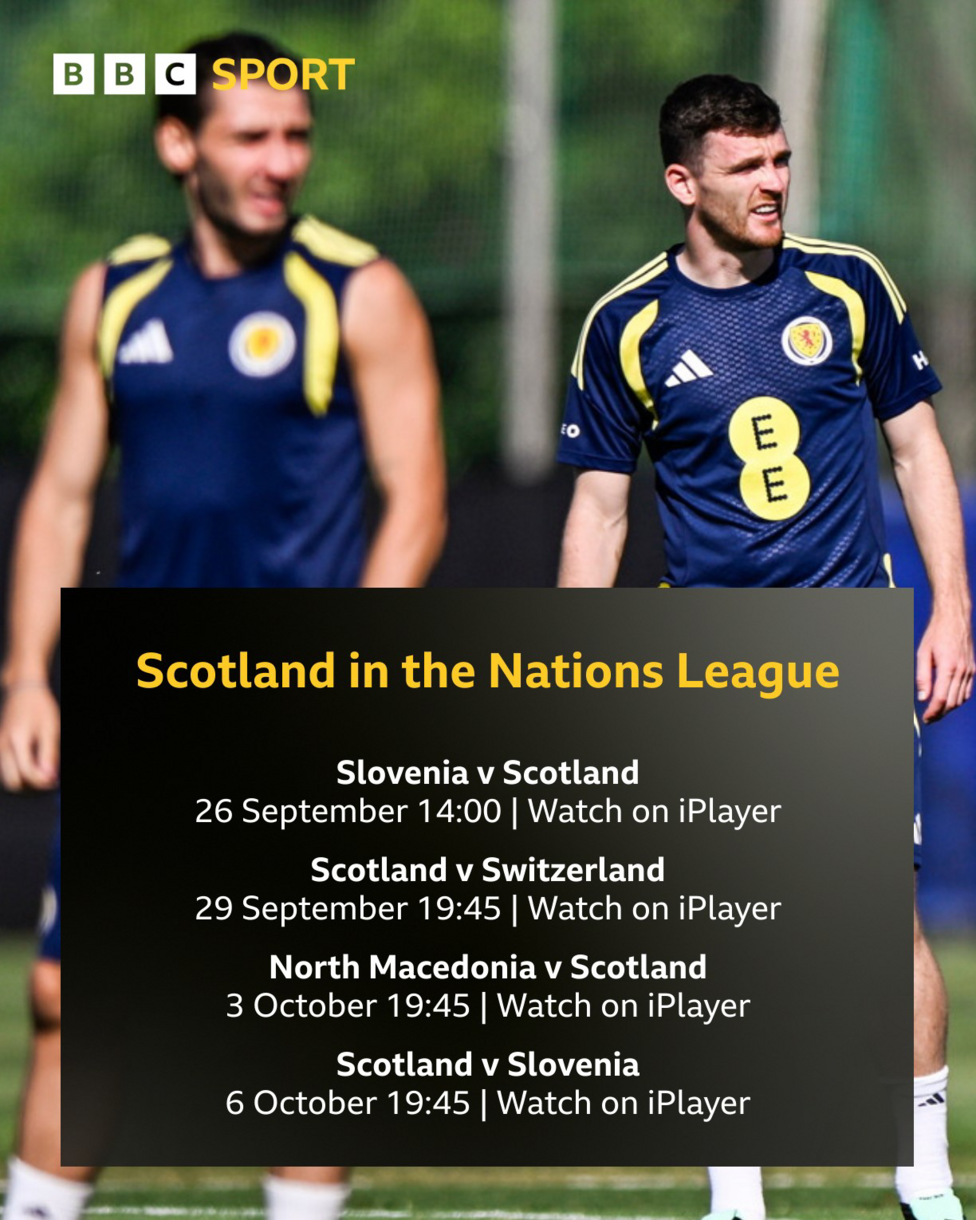
Scotland's Nations League schedule demands immediate adaptation and consistency. The team will face Slovenia in Ljubljana on Saturday 26 September 2026 at 14:00 BST, with live coverage available from a national broadcaster. This will be followed by a home fixture against Switzerland at Hampden on Tuesday 29 September 2026 at 19:45, before away and home matches against North Macedonia and Slovenia respectively complete the four-match block.
The condensed nature of this schedule means Pocognoli must manage squad rotation carefully while maintaining tactical coherence and team identity. His ability to balance these competing demands will significantly influence Scotland's prospects in this Nations League campaign and set the tone for his tenure as head coach.