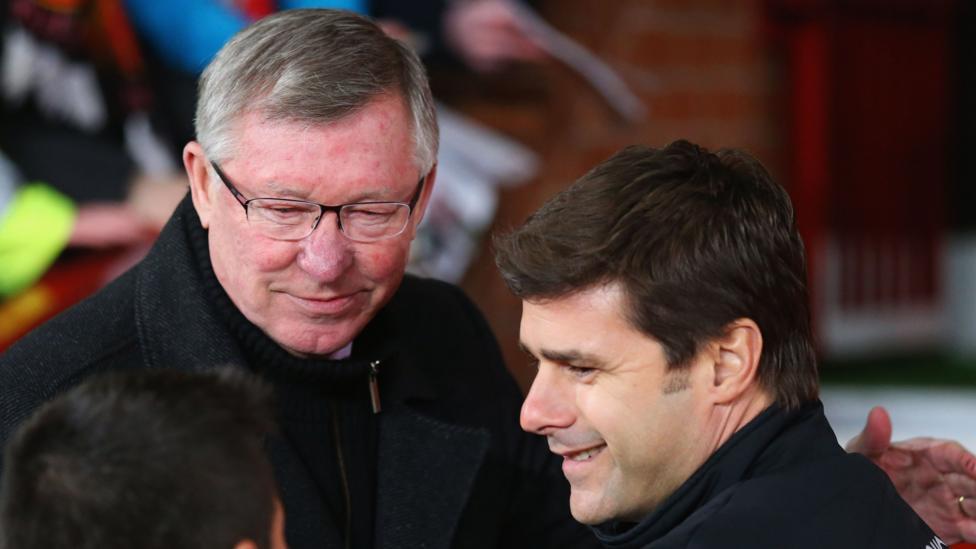
Mauricio Pochettino was appointed Manchester United manager on Friday, tasked with reversing the club's fortunes after Michael Carrick's dismissal. According to BBC Sport, Carrick was sacked on 12 November after just 16 matches in the permanent role, with United winning only once in their previous 11 games. The Argentine's appointment represents a significant shift in how the club approaches its managerial structure and playing philosophy.
When asked which three Premier League managers he would have most wanted to play for, Pochettino's answer was unambiguous.
Sir Alex Ferguson, Sir Alex Ferguson, Sir Alex Ferguson,he replied during a 2023 interview with Sky Sports while serving as Chelsea manager. Six years earlier, while in charge of Tottenham, he had spent two hours in conversation with Ferguson himself.
When I was young, when I started my career as a manager, he was always my inspiration, my reference. And when you can share two hours with a person who was the greatest manager in the history of football, you can only enjoy.
Since Ferguson's departure in 2013, Manchester United's managerial appointments have grappled with a fundamental tension within the club's identity. One faction prioritises winning through any tactical means, while another emphasises the style of play and cultural values that defined United's most successful era. In recent years, the club has oscillated between European coaches with distinct tactical systems and former players from Ferguson's reign. Pochettino's combination of tactical philosophy and reverence for Ferguson may uniquely position him to bridge this divide.
How Carrick's Transition Strategy Fell Short
Michael Carrick's tenure produced impressive results in its early stages, with United finishing the previous season on an exceptional run unmatched by any other team in the league. However, this success was built on a counter-attacking foundation that proved difficult to evolve. In matches where United possessed less than 50% of the ball, they lost only once across 13 games, recording a win-rate of 62%. That figure dropped sharply to 36% in games where they controlled the majority of possession.
This direct style suited United's attacking personnel and provided defensive stability. Casemiro's set-piece ability offered a reliable method to break down deep defensive blocks—a persistent challenge this season. When United took the lead, opponents pushed forward, creating space for Carrick's side to exploit on the transition. The system functioned effectively within these parameters.
Yet Carrick harboured a different vision for United's future. He envisioned a team capable of playing intricate, possession-based football with short passing sequences in build-up play, drawing inspiration from Paris St-Germain's midfield structure. The intention was to build possession in a manner that drew pressure from opponents before releasing the ball quickly to attacking players. This transition from a successful counter-attacking side to one that could dominate possession while maintaining attacking threat proved insurmountable—the same obstacle that had defeated Ole Gunnar Solskjaer and Erik ten Hag before him.
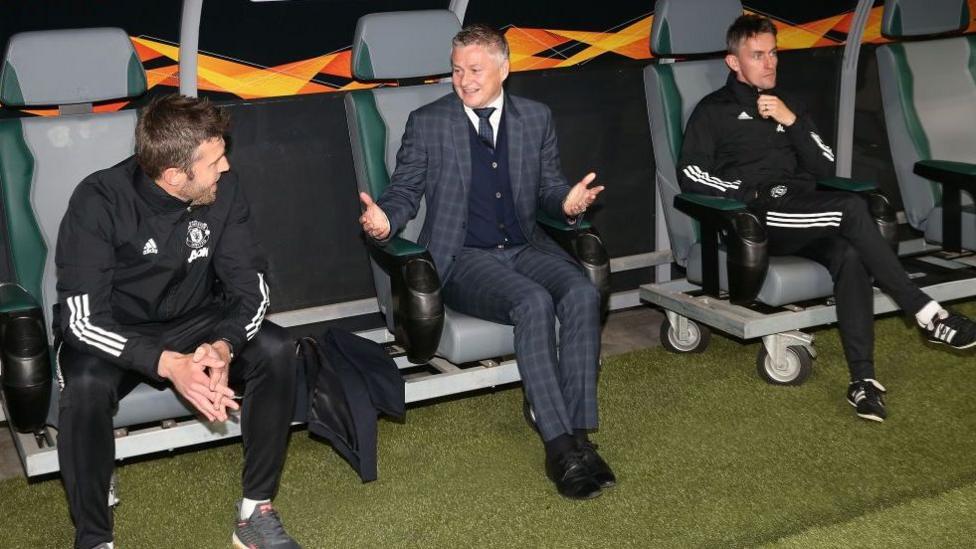
Both Solskjaer and Carrick, as former Ferguson-era players, had leaned heavily into United's historic style when constructing their tactical frameworks. Their attempts to modernise the approach while maintaining that identity created internal contradictions that ultimately undermined their tenures.
What Makes Pochettino's Approach Different
Pochettino offers United a distinct solution to this recurring problem. He describes his teams as needing
to be protagonists, always press high, work hard and be dynamic,and identifies himself as a
discipleof legendary Argentina manager Marcelo Bielsa, under whom he played. In the current Premier League, Liverpool's Andoni Iraola most closely resembles Pochettino's possession-based philosophy, similarly citing Bielsa as his primary influence. Both coaches encourage vertical, high-intensity football while maintaining the initiative.
Pochettino's tactical approach differs fundamentally from fixed positional systems like those employed by Manchester City's Enzo Maresca. Instead, he designates specific players to hold position while others move freely. This flexibility creates problems for teams defending in zonal systems, as opposing midfielders can drift into spaces between defensive zones, leaving them unmarked with time on the ball.
The 2026 World Cup provided a clear demonstration of Pochettino's tactical evolution with the United States. By positioning midfielders in close proximity to one another, his team generated small-space passing combinations that drew opposing defences toward the ball. Combined with intelligent off-ball movement, this approach stretched the pitch and created opportunities for strikers to receive possession with minimal defensive pressure. The US midfielders' ability to move freely meant they could step into areas between zonal defensive blocks, resulting in unmarked players receiving the ball in dangerous positions.
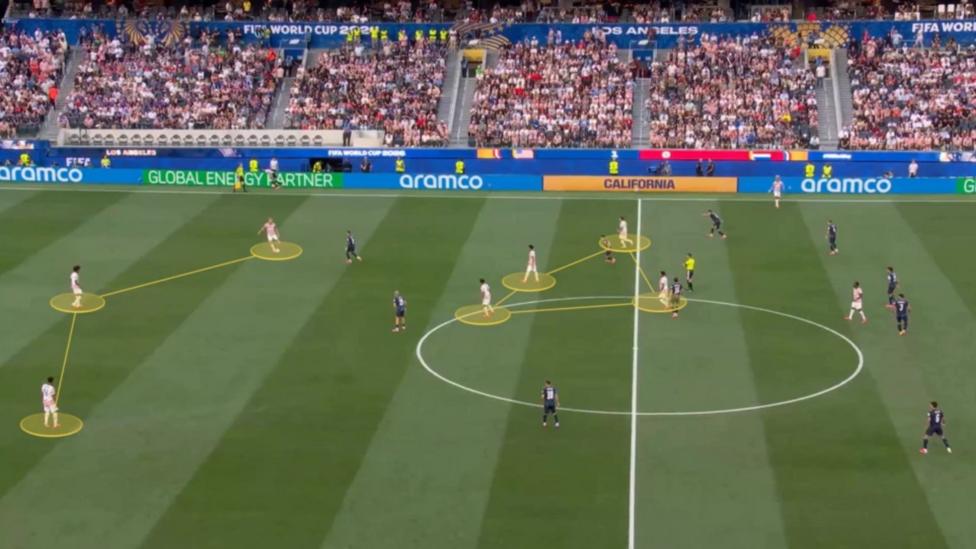
Pochettino's men frequently threaded through-balls in behind opposing defences after enticing the press, with pace in attack allowing them to convert these opportunities into goals. The tactical fluidity extended to positional swaps, with defenders inverting into midfield and wingers repositioning to the touchline for balance.
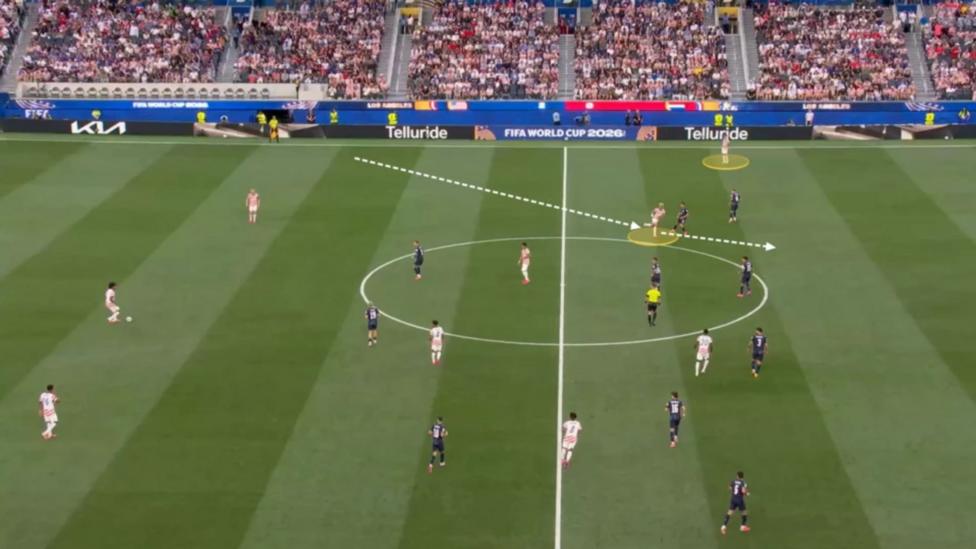
This combination of fluid midfield movement, small-space passing, and direct through-balls bears conceptual similarities to what Carrick attempted to implement. However, Pochettino's stated philosophy—
to give a freer style with a good organisation—suggests he possesses the organisational clarity that Carrick struggled to provide consistently.
Why Intensity and Organisation Matter
For supporters of elite clubs, fast-paced vertical football is generally accepted when it stems from proactive intent—as exemplified by Ferguson's United or Jürgen Klopp's Liverpool—where teams seek to maintain possession without passing for its own sake. The same style is viewed negatively when it emerges from conceding possession and defending one's own goal for extended periods.
Carrick's initial approach appeared proactive, with his 4-2-4 press generating quick turnovers and rapid attacking transitions. Four players positioned high created risk but enabled United to regain possession and score quickly. As opposing teams adapted to this system, United failed to evolve. Additionally, fitness levels appeared to decline as the season progressed following the departure of Ruben Amorim, who had left the squad in excellent physical condition despite managing without European football commitments.
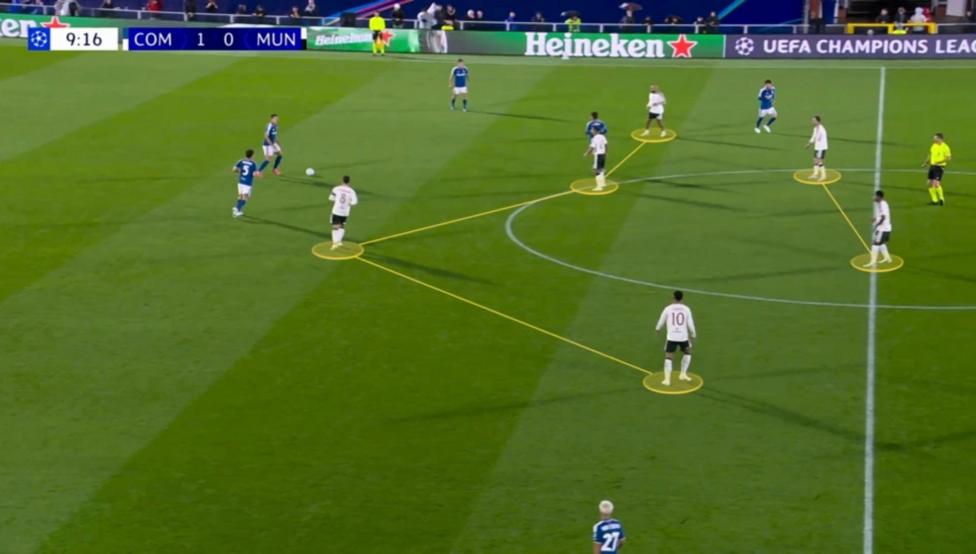
Appointing Pochettino initiates an immediate transformation toward a well-drilled, high-pressing side capable of applying coordinated intensity. During his tenure at Tottenham, Pochettino built relative success on this foundation of intensity and coordination, distinguishing his team from competitors. While such approaches have become more common in the decade since his Spurs period, his execution will determine his success at United.
Brighton's current season demonstrates that intensity-based pressing remains effective in the 2026 Premier League. Fabian Hurzeler's side sits second in the league with the fourth-highest average possession, validating the tactical approach Pochettino favours.
Empowering Individual Quality
Rather than relying on predetermined patterns, Pochettino prioritises creating an environment where players can showcase their individual strengths. While managing Spurs, he explained that
the most important thing [was] to create a good shape for players to be comfortable and to show their real qualities.This player-centric approach means recruitment of top talent becomes increasingly important.
Cole Palmer, who enjoyed his most productive Premier League season under Pochettino at Chelsea, described how
he [gave] me the confidence and licence to go where I wanted on the pitch, where I [could] use my strengths.United possess attacking talent capable of thriving under such an approach, provided they demonstrate the initiative Palmer showed when given freedom within structure.
From a footballing perspective, Pochettino aligns closely with Ferguson's core values and will implement numerous similarities to what Carrick envisioned but ultimately failed to deliver. His extensive managerial experience makes him a more proven entity than his predecessor. His appointment involves a reported two-and-a-half-year contract through 2029, with United expected to pay approximately £7.4 million to release him from his USMNT contract. If he can establish fitness levels and implement his characteristic high-pressing system, United should experience an upturn in form.
What Happens Next
Pochettino is expected to join United for training on 18 or 19 November after overseeing two US matches against Haiti. His first competitive fixture will come quickly, with United's first match after the international break scheduled away to Liverpool on 22 November at 16:30 GMT. This fixture represents an immediate test against one of the league's most demanding opponents.
The Risk of Repetition
Should Pochettino stumble, the cause will likely mirror previous failures: United's inability to break down stubborn defences when required to dominate possession. If his tenure follows the pattern of Solskjaer and ten Hag, it will be because the club could not successfully transition from counter-attacking football to possession-dominant play. However, Pochettino's tactical flexibility, proven track record, and philosophical alignment with Ferguson's intensity-based approach suggest he possesses the tools to avoid this outcome. The appointment represents a calculated attempt to solve a problem that has confounded United's recent managerial appointments.