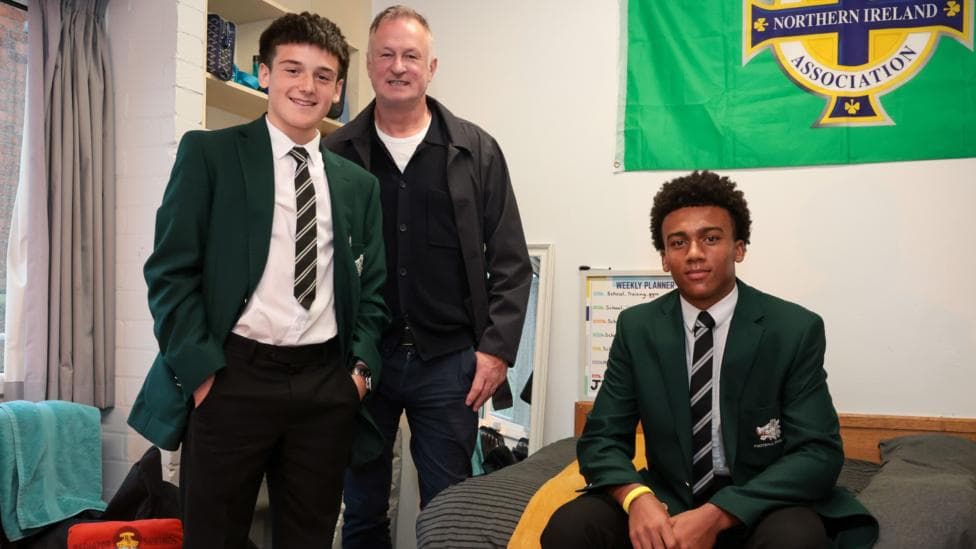
Northern Ireland manager Michael O'Neill has demonstrated a clear commitment to nurturing young talent, integrating teenagers and players in their early twenties into recent squad selections. The current international window features teenagers Ceadach O'Neill, Tom Atcheson, Braiden Graham and Kieran Morrison, while 21-year-old Patrick Kelly and 22-year-old Terry Devlin have begun establishing themselves as regular options. Following a 1-0 victory in Georgia on Friday and a 0-0 draw at home to Hungary on Monday, Northern Ireland has made a positive start to their Nations League campaign, with O'Neill now overseeing a structured pathway designed to convert academy prospects into senior internationals.
O'Neill visited Campbell College, home to the IFA JD National Academy, to assess the young players developing through the system. The academy operates as a residential facility for 24 elite players at under-15 and under-16 level, preparing them for the demands of professional football and life away from home.
"I know about all these players in here, know the clubs they are attracting attention from, their positions,"O'Neill explained.
"We have regular meetings as staff every month with regular updates on the academy and where those players are going. Our job is to prepare them as best as possible and guide them if that opportunity comes to take the next step into the professional game in England or Scotland."
How does the academy balance football with education?
The academy prioritises both athletic development and academic achievement, recognising that professional football offers no certainties. Students maintain their schooling throughout the day before transitioning to training sessions and gym work in the afternoon, with evening study time reserved for coursework.
Bailey Magee, a 16-year-old academy student who plays at club level with Glenavon, described his typical routine.
"Going away with Northern Ireland has helped me because I'm able to stay away from home and you get used to that a wee bit,"he said.
"The hardest times are [after] Christmas because that's when you're coming back after spending a long time with family. The IFA and Campbell have done really well when you're trying to mix the two and balance football with studies. I'll work hard until the end of the year and whatever happens, happens. I'll maybe do A-Levels, maybe a B.Tech or full-time football academy with the likes of Linfield or Larne, so there are loads of different pathways for us."
Kayson Braniff, a 15-year-old currently on Linfield's books, echoed the importance of maintaining academic focus.
"My dad had drilled it into my head that we need our studies,"Braniff stated.
"It's not as if football is everything, studies come first because you definitely need them in case football doesn't work out."
Why is early academy development crucial for Northern Ireland players?
English clubs possess significant advantages in integrating young players into their systems from an early age, potentially leaving Northern Ireland-based prospects at a disadvantage when they transition in their mid-teens. The academy environment prepares potential stars for the rigours of relocating to a new setting with unfamiliar coaching staff, making them better equipped to succeed at English or Scottish clubs.
O'Neill has observed tangible benefits from this investment in youth development.
"Two or three years ago we brought players in a bit younger than their club career suggested they were at that level, but it pays dividends now,"he noted.
"You need the right people in the right positions to make that work and I think we have that. Players have decisions to make on their club situations and international situations, but your pathway is very important as it builds a loyalty within players. We want young players from whatever part of the community they come from to be part of this pathway to become senior international players."
The strategy has already produced measurable success. According to the Irish Football Association, six recent JD Academy graduates secured scholarships with English Premier League or Championship clubs in August 2026. Alfie Mulvenna and Jude Crawford joined Crystal Palace and Hull City respectively, while Adam Nelson and Alfie Pollock moved to Sunderland, Mason Ayre to Nottingham Forest, and Eamonn Tohill to Middlesbrough.
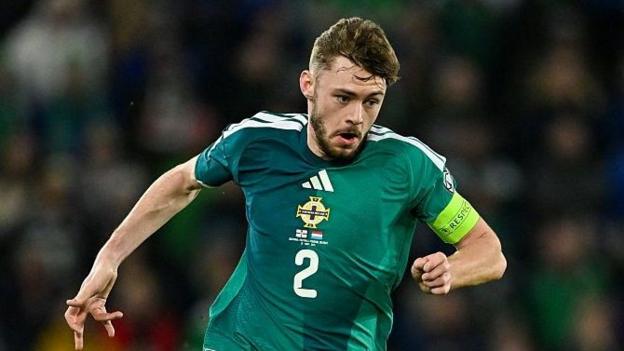
Conor Bradley stands as a high-profile graduate of the academy system, having progressed to represent Northern Ireland at senior level and compete in Champions League football. His trajectory provides tangible inspiration for current academy members.
The presence of O'Neill in the academy environment reinforces the pathway's credibility.
"He's a really nice guy and to think I could be in that team in the next few years, which is the goal, it's really reassuring,"Magee said following his meeting with the manager. Braniff similarly appreciated O'Neill's engagement, noting it demonstrates
"he cares about the youth."
How has the academy structure evolved?
The academy system has developed beyond its original residential model. According to the Irish Football Association, the JD National Performance Programme now recruits 60 under-14 players across three regional centres, with selected players progressing to the full-time residential JD Academy. This tiered approach widens the talent pool while maintaining elite standards at the highest level.
In 2026, eleven students graduated after two years at the residential academy, with Adam Nelson and Eamonn Tohill sharing Graduate of the Year honours. Both players subsequently secured moves to English Football League clubs, exemplifying the academy's role in facilitating professional progression.
Both Magee and Braniff expressed determination to follow similar paths.
"It doesn't matter who it's for or where it is, so long as it's a professional team and a professional contract,"Braniff stated, reflecting the ambitions shared across the academy cohort.
What lies ahead for Northern Ireland's youth pathway?
Northern Ireland's progression in the Nations League reflects the emerging strength of the squad. The team were promoted from Nations League League C and entered League B for the first time in the 2026/27 competition, signalling competitive advancement at international level.
Northern Ireland are scheduled to play Ukraine away in Trnava, Slovakia, on 2 October 2026, followed by a home fixture against Georgia on 5 October. These matches will provide further opportunities for academy graduates and emerging talent to stake claims for senior selection, continuing the cycle of development that has defined O'Neill's tenure.