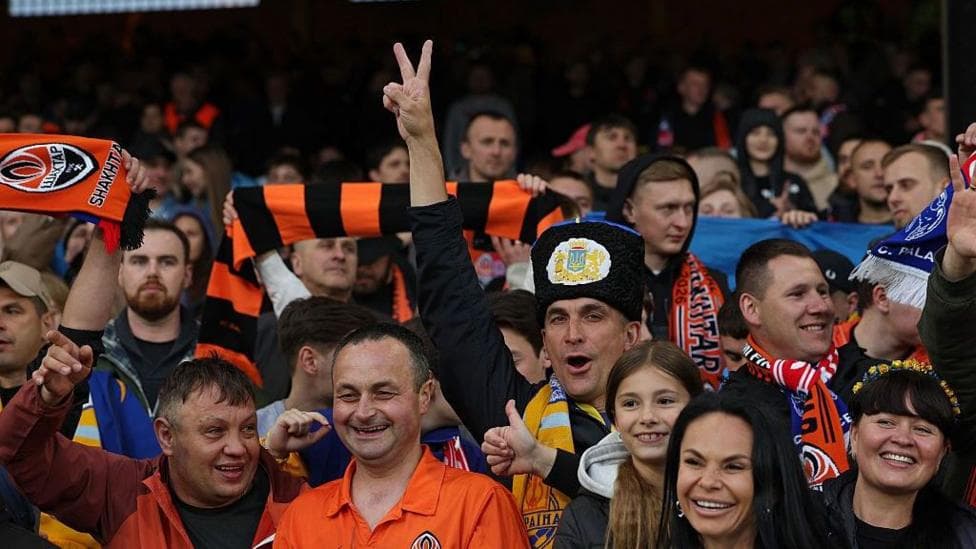
Shakhtar Donetsk's UK-based supporters are seizing the rare opportunity to watch their team compete in European football, with the club hosting its Champions League league-phase matches at Chelsea's Stamford Bridge this season. The decision has galvanised the Ukrainian diaspora across Britain, transforming what might otherwise be routine fixtures into powerful symbols of national resilience and community connection.
Artem Genne's most treasured footballing memory dates to 2012, when he stood on the Donbas Arena pitch waving the Champions League flag as Shakhtar prepared to face Chelsea. Two years later, Russia's military-backed seizure of Donetsk forced him and thousands of others to abandon the city. Today, living in the West Midlands, Genne plans to attend all four of Shakhtar's home Champions League matches at Stamford Bridge, beginning with the fixture against AEK Athens scheduled to kick off at 20:00 BST.
The displacement of Shakhtar's fanbase reflects a broader upheaval across eastern Ukraine. Following the 2014 annexation and the full-scale invasion that began in 2022, the club has been forced into a nomadic existence, playing home matches in Kyiv, Lviv and Kharkiv within Ukraine, and in Poland, Slovenia and Germany for European competitions. According to UEFA records, Shakhtar drew 1–1 away to PSV Eindhoven in its opening league-phase match on 10 September 2026, leaving the club with one point before facing AEK.
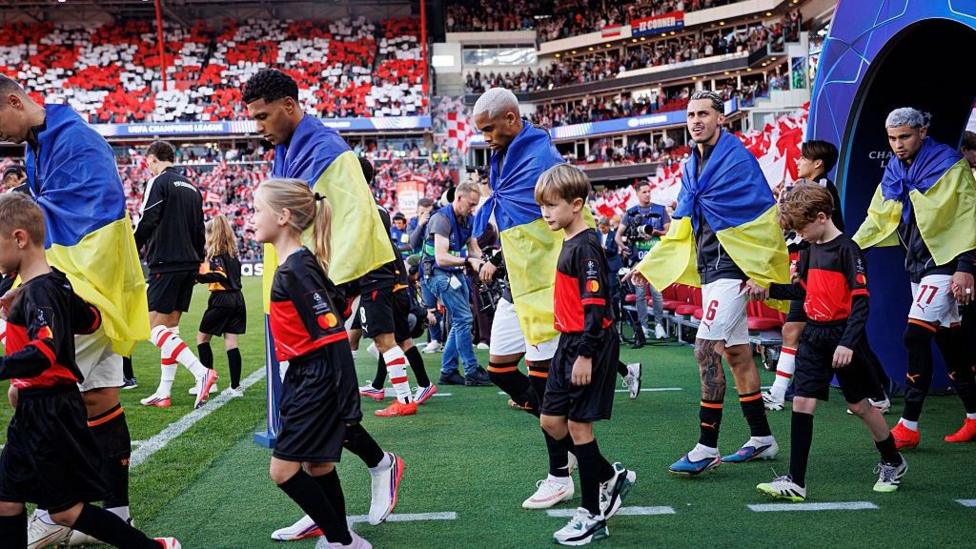
For supporters like Genne, the opportunity to gather around their club carries profound emotional weight.
When the invasion started, lots of people left, thinking that it's all going to be over in several weeks, we'll be coming back. But unfortunately, that didn't happen,he reflects.
When I meet people from my home area of Ukraine abroad, it gives you a sense of home and hope. Knowing that you're sharing the values and you remember the times when it was different, that's important. It gives you a bit of a soft tear because that's something you cannot touch any more.
Genne emphasises the warmth extended by British society.
In the UK, people are very supportive and I want to highlight that I'm extremely grateful to this country for hosting so many of our people at the most difficult time. When you're walking around in a Shakhtar shirt, people are clapping their hands and giving you high fives and there is no aggression whatsoever.
Dima Prasolov, who relocated from Donetsk to Kyiv when the war began and now resides in Kent, represents another segment of the displaced fanbase. The club's decision to offer four-game passes has transformed his relationship with supporting Shakhtar.
I was ecstatic because it's the first time in about 15 years that I will be able to buy some sort of a season ticket for Shakhtar,he says.
It really means everything to me because it's the club I've been supporting all my life. But since the Russian invasion, for us Donbas people, watching our team regularly is almost impossible. For me, it's a very emotional situation, because of how much the club means to me and how dedicated myself and my family are to the club.
What challenges does Shakhtar face in Ukraine?
The club's relocation to London offers temporary refuge from the daily dangers confronting players, staff and their families back home. Chief executive Sergei Palkin has described the extraordinary pressures under which the team operates. The club has been forced to move its under-12 academy to a safer area of Kyiv following recent attacks, while the women's side experienced a match disrupted by a nearby drone strike.
Every day when our team goes to the pitch, it's much more than football because behind it we have a lot of challenges every day,Palkin explains.
It's a human question, a mental question, a family question for our players, for the academy and so on. The most difficult and important challenge is uncertainty. You wake up in the morning and you don't know what's going to happen today or tomorrow.
Palkin views the London fixtures as an opportunity to maintain international visibility for Ukraine's plight.
Part of our role when we play in London and other cities in Europe is to send these messages and remind people what's going on.
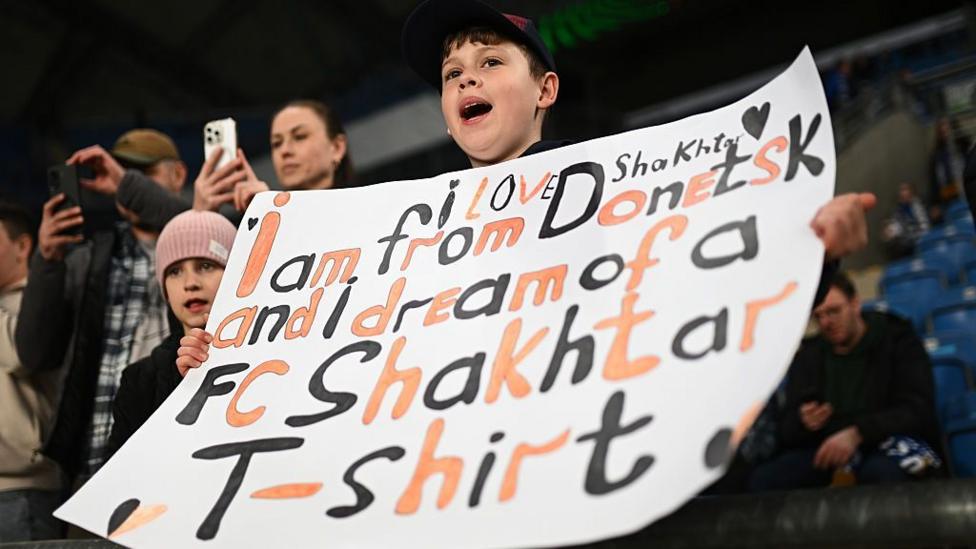
Why has Ukrainian football support transformed?
The invasion has fundamentally altered the dynamics of Ukrainian football fandom. Many ultras who once engaged in fierce rivalries now find common cause, united by a shared national struggle. Genne describes a striking shift in attitudes among supporters of rival clubs.
My two friends are supporters of Dynamo Kyiv, but in Europe we support each other. It's about representation of the country. The hooligans don't fight any more with each other because they know they have one enemy and it's not the football enemy.
This unity extends beyond traditional rivalries. The general director anticipates an average attendance of 30,000 supporters at Stamford Bridge across the four home matches, a figure that reflects both the size of London's Ukrainian community and the symbolic importance of the fixtures.
What barriers prevent Ukrainian fans from attending?
The decision to stage matches in London has provoked criticism within Ukraine, where practical obstacles prevent many supporters from travelling. A UK visa costs £135 and requires application at least three months in advance—a timeline and expense that many Ukrainians cannot manage amid the ongoing conflict.
One anonymous Shakhtar supporter who regularly attends matches in Ukraine articulates the frustration.
That sort of money for some Ukrainians is a monthly income. And no-one has time in Ukraine now to wait a few months for a visa. So the poor thing is we want to support the team, but we can't go to support because the regulation in England is crazy now.
Instead, supporters across Ukraine will gather in pubs and community spaces to watch the matches, with viewership extending beyond Shakhtar's traditional fanbase to encompass broader Ukrainian solidarity.
When Shakhtar play, it's like a big family. It's more than rivalry because they represent Ukraine. Ukraine is always the first place. Then comes football,the fan adds.
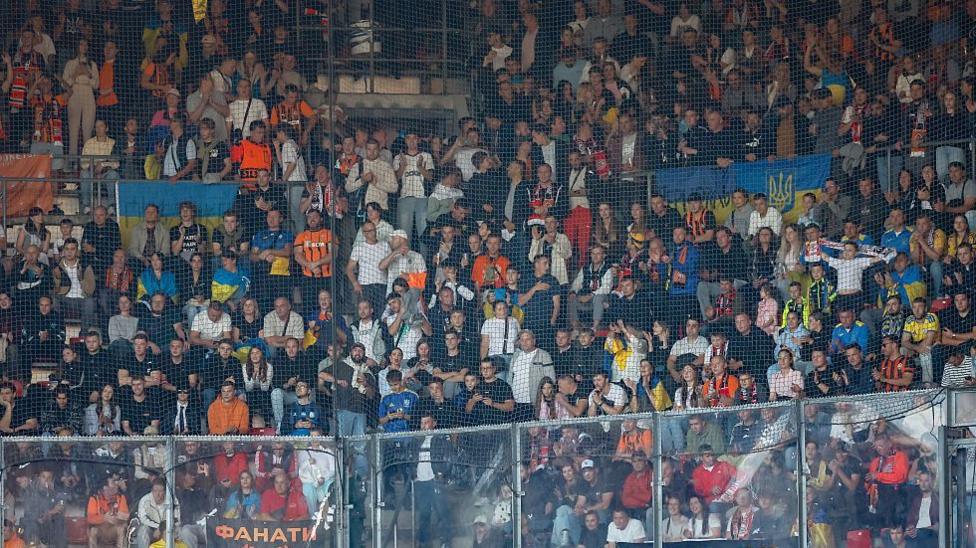
How strong is the Ukrainian diaspora's support?
The club's previous experiences hosting matches in England demonstrate the depth of Ukrainian support within Britain. When Shakhtar's allocation sold out for the club's away leg against Crystal Palace in the Europa Conference League semi-final last season, tickets disappeared within an hour. Similarly, when the team played Arsenal in the 2024-25 Champions League campaign, the away section sold out in the same timeframe.
Prasolov attributes this enthusiasm to London's established Ukrainian community, particularly in west London.
The club are making a big gamble on the existing Ukrainian population in London, of which in west London there is a big Ukrainian diaspora that's been there for a number of years. They are actually a very passionate fanbase of all things Ukraine. Any time Ukrainian teams plays in London, they always turn up. There will be lots of Ukrainian national songs and chants. It will be a good atmosphere for sure. I think people will enjoy it. It will be very friendly.
Many supporters will travel from across the UK to attend matches, a pattern consistent with Shakhtar's previous away fixtures in England. The atmosphere is expected to blend football passion with cultural celebration and fundraising for humanitarian causes.
How does Shakhtar use the London platform?
Beyond the sporting dimension, the club is leveraging its presence at Stamford Bridge to strengthen connections with the Ukrainian community and raise awareness of conditions in Ukraine. Palkin describes an ambitious outreach programme.
We have a very good connection with the Ukrainian diaspora in England. We will do activities with Ukrainian children living in London. We will come to schools, bring them to training sessions and connect them with the team. For Ukrainian people living here, it's a good connection to Ukraine.
Genne emphasises the broader significance of these gatherings for the diaspora.
There's a massive community. There are constantly events like concerts with Ukrainian artists and they fund-raise for med kits, for equipment, for everything. We're all united by the symbol to liberate our country and to do what we can. Even though we're far away, we help with what we can. It's great that there will be another reason for Ukrainians to get together. It'll be something positive rather than something that's not so positive, which unfortunately is happening a lot more lately.
London has become home to roughly 265,000 Ukrainians who sought refuge in the UK following the 2022 invasion. Shakhtar's presence at Stamford Bridge provides an opportunity to maintain visibility for Ukraine's ongoing struggle while celebrating the nation's resilience.
Palkin articulates the symbolic weight of competing in the Champions League.
For Ukraine, it's very important to be visible at this moment of our history. And for us it's very important because we are playing for our nation. At this moment 99% of news coming from Ukraine is all negative. To see Ukraine represented in a tournament like the Champions League is very important. It means one message: that we are alive, Ukraine continues to fight, continues to work, continues to live and continues to compete on this stage.
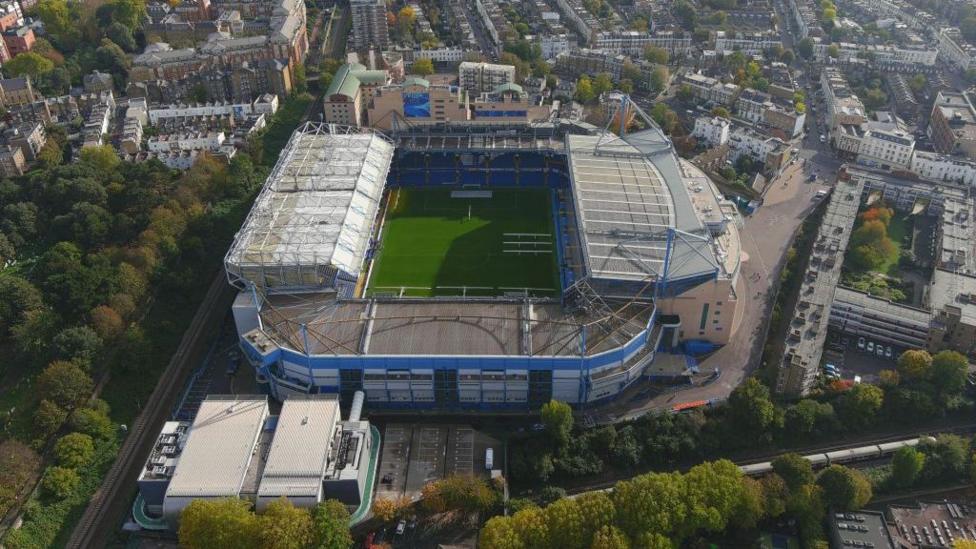
What do the matches mean to younger diaspora members?
For supporters who left Ukraine at a young age, Shakhtar's international success carries particular resonance. Amir, who departed Donetsk at 15 and now lives in London, views the club's Champions League participation as profoundly significant.
I think it is a beacon of hope. Seeing Ukrainian sportsmen succeeding internationally gives a lot of reassurance and a sense of power to the Ukrainian people. There is a sense of reconnection to their roots and the national achievements for Ukrainians living abroad. In a way it is quite important the club that is from Eastern Ukraine which is currently occupied by Russia is the club representing Ukraine internationally. It is important internationally as a reminder of the regional roots of Shakhtar and of Donetsk overall.
Genne reflects on the psychological importance of sporting achievement amid ongoing conflict.
Any sort of positive news, any positive results, are bringing people joy and making us a little bit happier. It doesn't make us forget about all the rest of the things that are happening, but it makes us a bit more joyful. Like remembering what joy of life is, in supporting your club, having fun, coming together, having the sense of community. It's way more than just football and analysing a player's performance and goals. It's way, way more than that.
What lies ahead for Shakhtar's campaign?
According to match information, Shakhtar enters the AEK fixture with one league-phase point, while AEK arrives with three. The 2026–27 Champions League league phase runs from 8 September 2026 to 27 January 2027, with Shakhtar's next away fixture scheduled against Inter on 21 October 2026, followed by a home match against Sporting CP on 3 November 2026.
The remaining home fixtures at Stamford Bridge—against Real Madrid, Sporting and Fenerbahce—will provide further opportunities for the Ukrainian community to gather, fundraise and demonstrate their nation's continued presence on Europe's biggest sporting stage. For displaced supporters like Genne, Prasolov and Amir, each match represents far more than ninety minutes of football: it is a tangible connection to home, a celebration of survival and a powerful assertion that Ukraine endures.