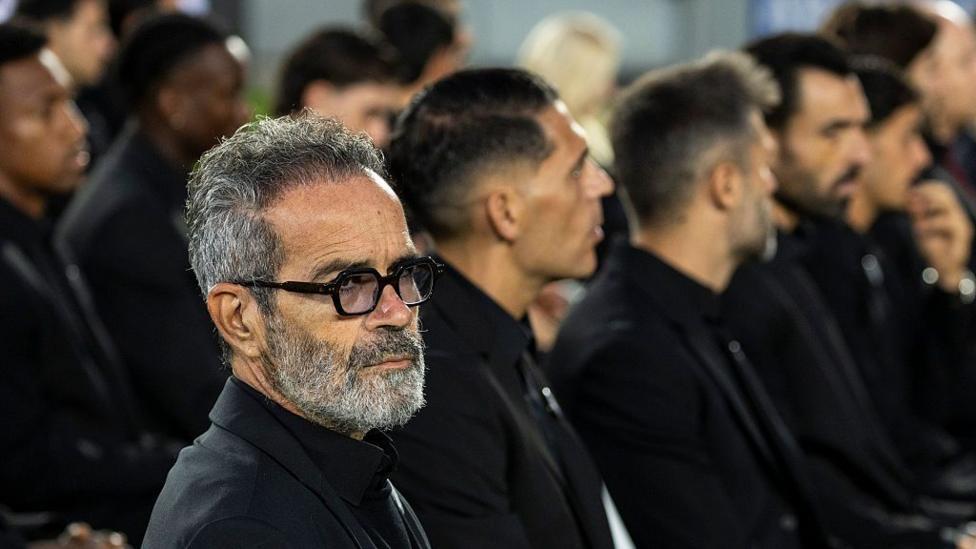
Tenerife manager Alvaro Cervera has stated that goalkeeper Jesus Owono's 12-match suspension "might feel light" in the context of the tragedy, though he acknowledges that existing regulations were unable to address the unprecedented circumstances surrounding the incident. According to BBC Sport, a disciplinary committee from the Spanish football federation confirmed the ban on Friday following the death of Tenerife forward Jesus de Miguel.
FC Andorra's Owono, 25, was sent off after colliding with De Miguel during the closing stages of the Spanish second-tier match between the two clubs on 2 November. De Miguel died the following day aged 30 from injuries sustained in the collision. The 12-match suspension represents the maximum penalty available to the disciplinary committee, which could only evaluate the on-pitch offence itself and not what the committee described as "the tragic outcome of the incident."
What did the disciplinary committee find?
The disciplinary committee based its decision "on the facts expressly recorded in the referee's report," which documented that Owono "was sent off for 'violently striking an opponent in the chest with his leg, using excessive force, while the ball was in play'." A preliminary autopsy reportedly attributed De Miguel's death to accidental chest trauma, though toxicology results were still pending. Police also opened an investigation into the death, which is now under judicial supervision.
How does Cervera view the punishment?
Speaking before his club's fixture against Ceuta on Sunday—their first match since De Miguel's death—Cervera explained his perspective on the ban.
I think that, just as in other areas of life, there are rules or laws that must be followed. Since the current regulations don't specifically account for what happened, I believe they have simply adhered to the rules and imposed the number of matches permitted by the regulations.
The 61-year-old manager added that while the suspension might appear lenient compared to other disciplinary cases, the existing framework left little room for alternative action.
Anything else I might say would just be my own personal opinion, which I'll keep to myself. It might seem a bit light when compared to other cases, but in reality, I don't think the rules allow for anything else.
How is the Tenerife squad coping?
Cervera described the process of returning to training and preparing for matches as "tough" and "complicated" in the aftermath of De Miguel's death. De Miguel, who joined Tenerife in 2025 and was a father of one, had been a key member of the squad.
When we're together, we're fine, during our sessions, we're doing well. It feels like the group is gradually getting back to normal. What we don't know is how everyone is doing when we're apart and that's a significant factor.
Cervera acknowledged that players cope in different ways, with varying levels of support available to them outside the training environment.
Everyone has their own way of coping and their own thoughts; some have people at home to support them, while others are more on their own. We're making progress, a very slow process, but we are moving forward - it's tough, it's complicated.
Are the players ready to return to competition?
The manager expressed uncertainty about whether his squad was mentally prepared to resume playing, recognising that some players might benefit from the distraction of football while others would struggle to focus.
Both positions are reasonable. On one hand, you want to return to some sense of normality though you know that true normality isn't something you'll find right now.
Cervera stressed that the trauma of De Miguel's death cannot be compartmentalised or set aside during matches.
This isn't something you can just set aside or push to the back of your mind to focus on your own work; it's not like other life events you might encounter. It's always there, constantly on your mind, yet we have to keep going.
What happens next for Owono and FC Andorra?
FC Andorra manager Carles Manso revealed that Owono has not yet decided whether to return to football and is currently spending time with his family. The goalkeeper, who described himself as experiencing "the most difficult days of my life" following the incident, faces an uncertain future in the sport. FC Andorra were scheduled to return to action against Almería on Saturday, 14 November, as the club attempts to move forward from the tragedy that has affected the entire Spanish football community.