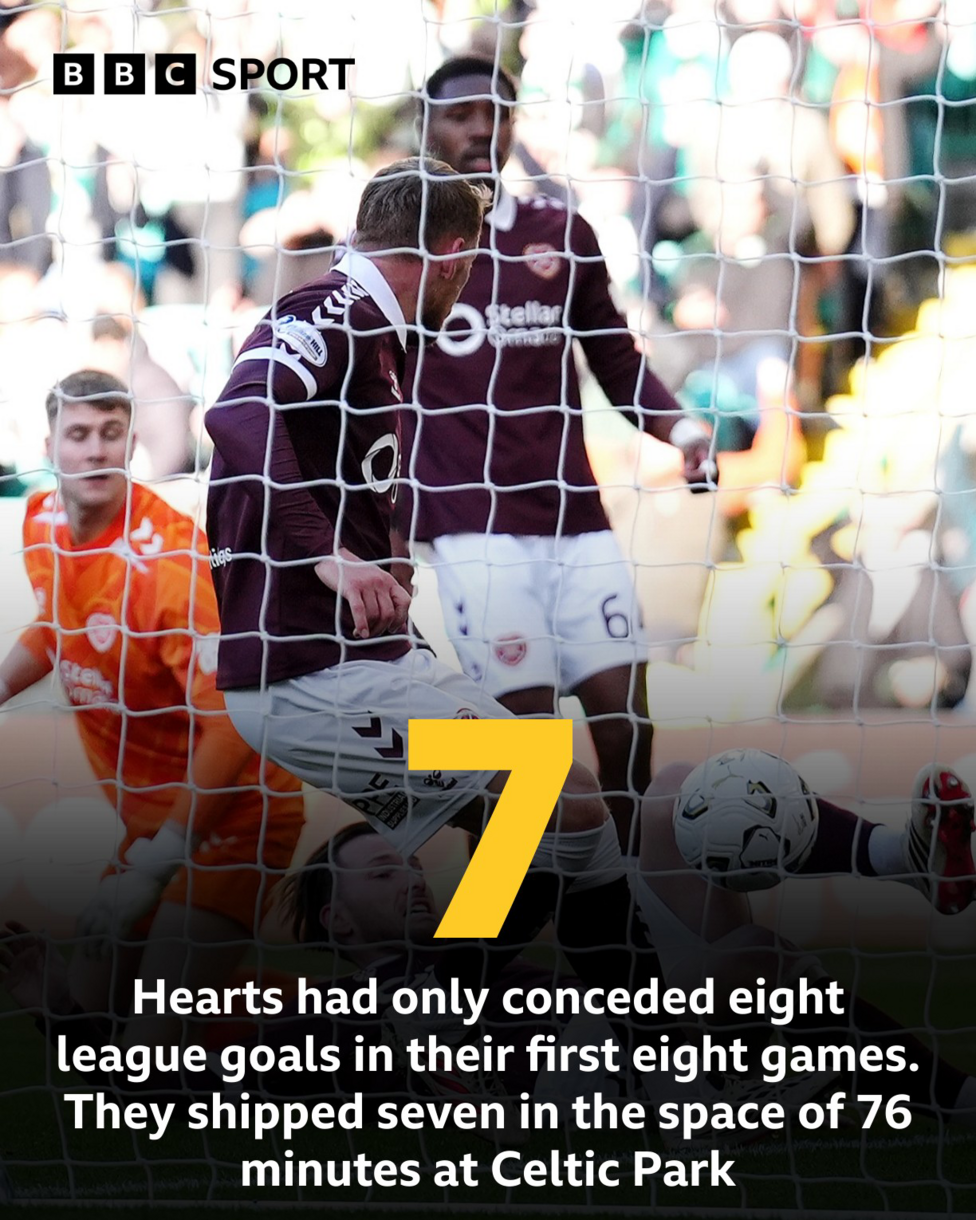
Celtic delivered a devastating performance to thrash Hearts 7-1 at Celtic Park, with the visitors' defensive frailties exposed from the opening minutes in a result that underlined the gulf between the Scottish Premiership's top two teams. According to BBC Sport, the home side's clinical finishing and Hearts' naive tactical setup combined to produce one of the season's most lopsided encounters.
The match served as a stark reminder of Hearts' limitations away from home, where they arrived with just two wins in 11 league games stretching back to the end of the previous campaign. According to BBC Sport's live coverage, the result left Celtic four points clear at the top of the table, while Hearts remained third, eight points adrift of the leaders.
The opening ten minutes set the tone for the entire afternoon. Liam Scales rose highest at the near post from a corner to open the scoring in the seventh minute, before Benjamin Nygren added a second just three minutes later after Dane Murray outfought Claudio Braga to help the ball back to him. Hearts' poor concentration and lack of physicality at set pieces had already handed Celtic a commanding advantage before the visitors had mounted any meaningful attacking threat.
Hearts had travelled to Glasgow with a gameplan built on attacking intent, believing they could match their hosts through aggressive pressing and a high defensive line. Yet their slow defenders and willingness to push upfield left them catastrophically exposed to Celtic's pace in transition. The strategy was not merely high-risk; it was reckless against opponents capable of punishing such naivety with ruthless efficiency.
The visitors did briefly stabilise their position around the midpoint of the first half, when Josh McPake—one of the form players in the country—began to impose himself on proceedings. However, Colby Donovan's defensive interventions proved decisive. Twice in the space of three minutes, McPake took on Donovan and twice the Celtic defender routed him, snuffing out Hearts' most dangerous player and denting his confidence at a crucial juncture.
That respite proved temporary. Sabri Guendouz surrendered possession carelessly, allowing Camilo Durán to combine with the increasingly impressive Callum Osmand to make it 3-0 in the 36th minute. Osmand's involvement was particularly significant given his recent struggles with injury; the Celtic forward later reflected that injuries had made it difficult to secure playing time and expressed his relief at returning to action and finding the net. Osmand struck again just two minutes later, capitalising on Jamie McCart's loss of concentration to extend Celtic's lead to 4-0 before half-time.
The statistics painted a bewildering picture of Hearts' collapse. The visitors recorded more shots than Celtic (20 to 18), more shots inside the box (16 to 13), more possession (52 per cent to 48 per cent), more crosses (16 to 10), and won more duels overall (51 per cent to 49 per cent). Yet Celtic had more shots on target, with 10 to Hearts' five, and converted their opportunities with clinical precision. Hearts' passing accuracy of 458 completed passes from 423 attempts masked a fundamental inability to use possession effectively; time and again they surrendered the ball in dangerous areas, inviting Celtic to launch devastating counterattacks.
Martin O'Neill's side had endured recent difficulties, but this performance offered immediate respite. The Celtic manager emerged visibly rejuvenated by the display, having witnessed his team feast on Hearts' scarcely believable weaknesses. The home side's attacking play was slick and coordinated, with Benjamin Nygren, Callum Osmand, Camilo Durán and Haissem Hassan operating with devastating effect. Hassan struck the post when he turned and darted away from Stephen Kingsley, a moment that underscored Celtic's superiority in open play.
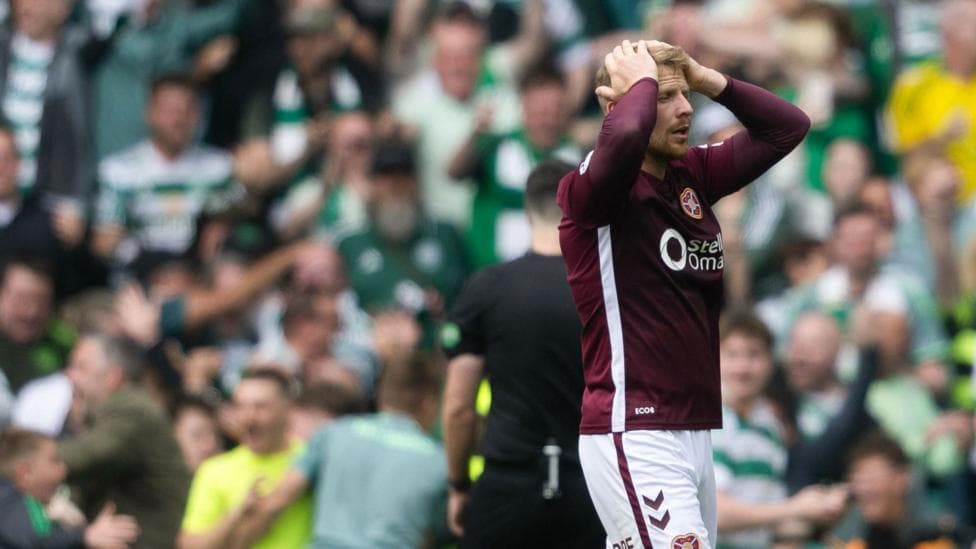
Hearts' heads had gone long before the final whistle. They became a broken team, psychologically shattered by the relentless onslaught. The easiest tasks became difficult; the difficult became impossible. They surrendered all discipline and direction as Celtic continued to carve them open at will.
How did the second half unfold?
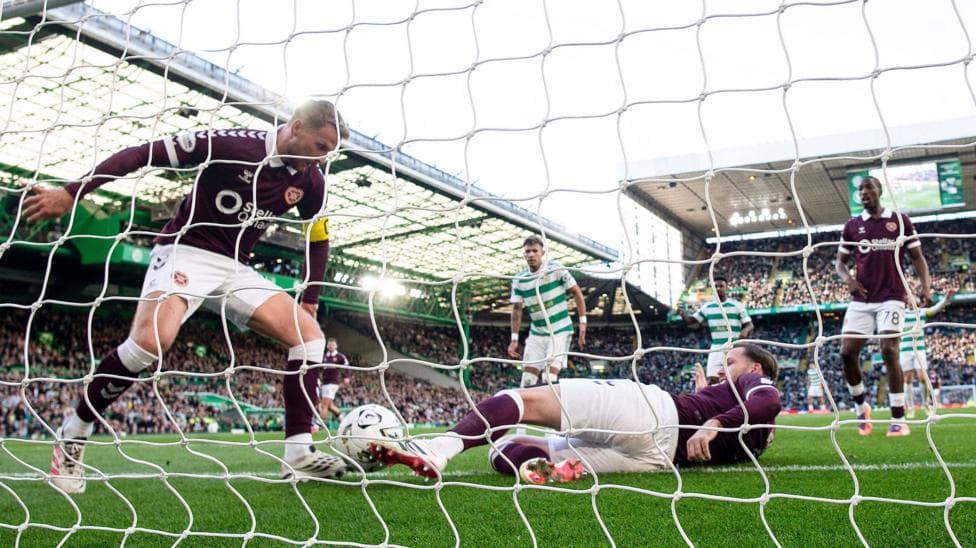
The second half saw Hearts' suffering intensify rather than ease. Durán added a fifth goal in the 49th minute, and the visitors' defensive structure disintegrated entirely. Mika Baur slalomed past the comatose figures of McPake and Malachi Fagan-Walcott to dink a shot on goal in the 56th minute, with both Kingsley and McCart flailing on the floor as the ball found the net to make it 5-1. Hearts fans began departing Celtic Park at this point, sparing themselves further anguish.
Laurent Mendy pulled one back for Hearts in the 41st minute—a consolation that barely registered amid the carnage—but Celtic's relentless momentum proved unstoppable. A sixth goal followed, with Mendy's own contribution and McCart's continued defensive lapses combining to gift Celtic another opportunity. Tomas Magnusson then featured in the build-up to a seventh, with Durán and Nygren finishing with aplomb to complete the rout. Seven minutes remained when the scoreline reached 7-1, yet the expectation lingered that Celtic might add an eighth or ninth before the final whistle.
What does this mean for the title race?
The scale of this defeat raises serious questions about Hearts' credentials as title contenders. While the Gorgie side possess talent and showed resilience in previous encounters with Celtic, their away record remains a critical weakness. Hearts had arrived at Celtic Park on 18 October 2026 seeking redemption after a devastating 3-1 defeat at the same venue in May ended their championship hopes, yet they departed with an even more damaging result.
Last season, Hearts played Celtic four times, winning two matches, drawing one and losing one, demonstrating that they possessed the nous and resilience to compete. This team has talent, but with their away record as it stands, they appear unlikely to mount a sustained challenge for the title. The psychological damage inflicted by this humiliation may prove difficult to overcome in the weeks ahead.
Celtic, by contrast, will be buoyed by this display. O'Neill may have identified a powerful attacking formula that does not require Kasper Hogh from the start, with Osmand's performance suggesting a viable alternative. After enduring rough days and nights, the champions have reclaimed some of their feelgood factor. The challenge now lies in maintaining that momentum on the long road ahead.
What happens next?
Celtic are scheduled to host Celta Vigo in the Europa League on 22 October 2026, providing an immediate opportunity to build on this dominant performance at the continental level. Hearts face their own European test, with a Conference League fixture against Trabzonspor also scheduled for Thursday, 22 October, offering a chance to restore some pride after this domestic humiliation.