Prime Minister Andy Burnham has condemned the prohibition on fans consuming alcohol in stadium stands during men's football matches, characterising it as unfair treatment of supporters. Speaking to reporters during his visit to the United Nations in New York, Burnham suggested that a trial scheme could test whether the restriction might be relaxed, though no formal process is currently underway.
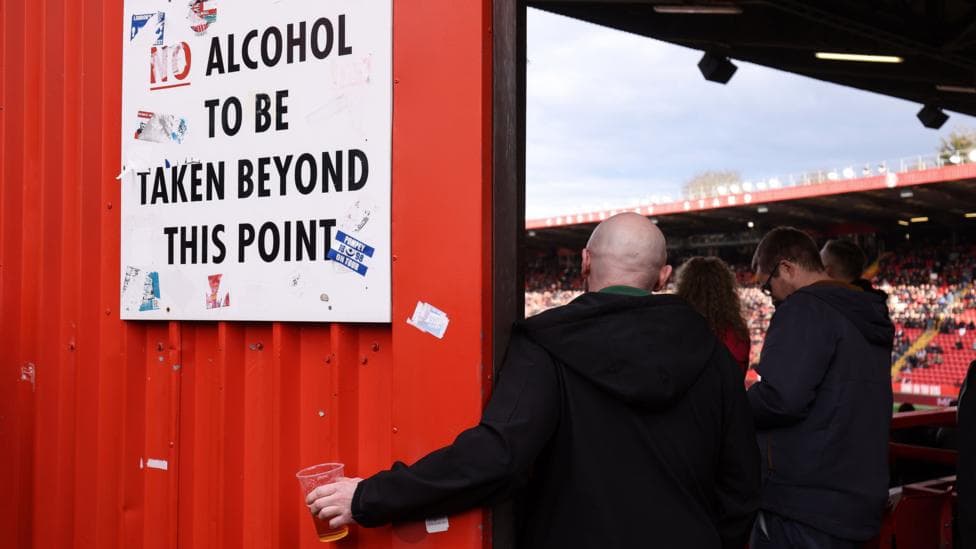
The ban, established through the Sporting Events (Control of Alcohol etc.) Act 1985, has prevented spectators from drinking in view of the pitch at grounds belonging to clubs in England's top five male football tiers for nearly four decades. Notably, supporters attending other sports—including rugby league and concerts—face no equivalent restrictions, a disparity Burnham highlighted as unjust.
Burnham, a season-ticket holder at Premier League club Everton, has long held this position. Shortly before entering Downing Street, he criticised the rule while attending a rugby league match at Everton's Hill Dickinson Stadium, where fans could openly consume drinks in the stands.
"I think that legislation dates to an era where football was very different. And I do believe there is a case to remove that discrimination. There are different ways it could be done. It could happen on a trial basis. But I'm not going to back away from what's been a long held view of mine. I don't see how it can be fair that some supporters of one sport can be treated differently."
Why was the ban introduced?
Margaret Thatcher's government enacted the 1985 legislation for English and Welsh football grounds following concerns about disorder at matches. Leon Brittan, then-Home Secretary, argued that alcohol represented a "major contributory factor in violent and disorderly behaviour" within football stadiums, making the restriction necessary for public safety.
What do police and supporters say?
Law enforcement officials have expressed serious reservations about any relaxation of the ban. A UK Football Policing Unit spokesman cautioned that changes would create "challenges" to policing and the "safety of staff and fans at football games." The spokesman noted that
"Other sports simply don't see the violence and criminal behaviour from their supporters that football does, albeit a minority, with alcohol often playing a significant part in violent and disorderly behaviour. It would be irresponsible to fuel this by allowing greater alcohol consumption during games."Police chiefs have requested a meeting with the Prime Minister to outline their concerns and expertise on the matter.

By contrast, the Football Supporters' Association (FSA) has backed Burnham's position, describing the legislation as "outdated." FSA chairman Tom Greatrex argued that
"it was unfair to criminalise football fans for having a pint while watching the match - especially since you can sit in the same seat drinking alcohol whilst watching an Oasis gig or rugby league."Greatrex added that
"many clubs" were in favour of a changeand welcomed the Prime Minister's remarks, stating that the law "deserves to be reviewed."
Has this been tested elsewhere?
Women's football has already served as a testing ground for relaxing alcohol restrictions. All Women's Super League (WSL) clubs were permitted to offer alcohol to supporters in the stands following two successful trial seasons. According to the Football Supporters' Association, the women's-game pilot involved more than 100 matches, with supporter feedback described as "overwhelmingly positive." Additionally, WSL Football reported that 70% of supporters now back the alcohol-in-stands initiative.
Building on this success, Women's Super League and WSL2 clubs will be able to let supporters drink alcohol in the stands from the 2026-27 season after regulators changed the competition rules. The expanded trial is optional, meaning individual clubs can decide whether to permit alcohol in seated areas.
In Scotland, restrictions have also begun to ease. While the general sale of alcohol has been prohibited in Scottish football stadiums since 1981—a more stringent rule than in England—trial sales have recently taken place, and fans can now purchase alcohol at Hampden Park games.
Currently in English men's football, fans may purchase alcohol in concourses but cannot bring it into the stands themselves.
What happens next?
Any broader change to the law affecting men's football would require extensive consultation involving football clubs, supporters, and the Department for Digital, Culture, Media and Sport. No such consultation process is currently scheduled. Government sources have not ruled out a trial or pilot scheme to examine whether a change would be feasible, though no timeline has been announced for such a trial in men's football.
A fan-led review of football governance published in 2021 had previously called for the law to be re-examined, lending weight to arguments for reform.