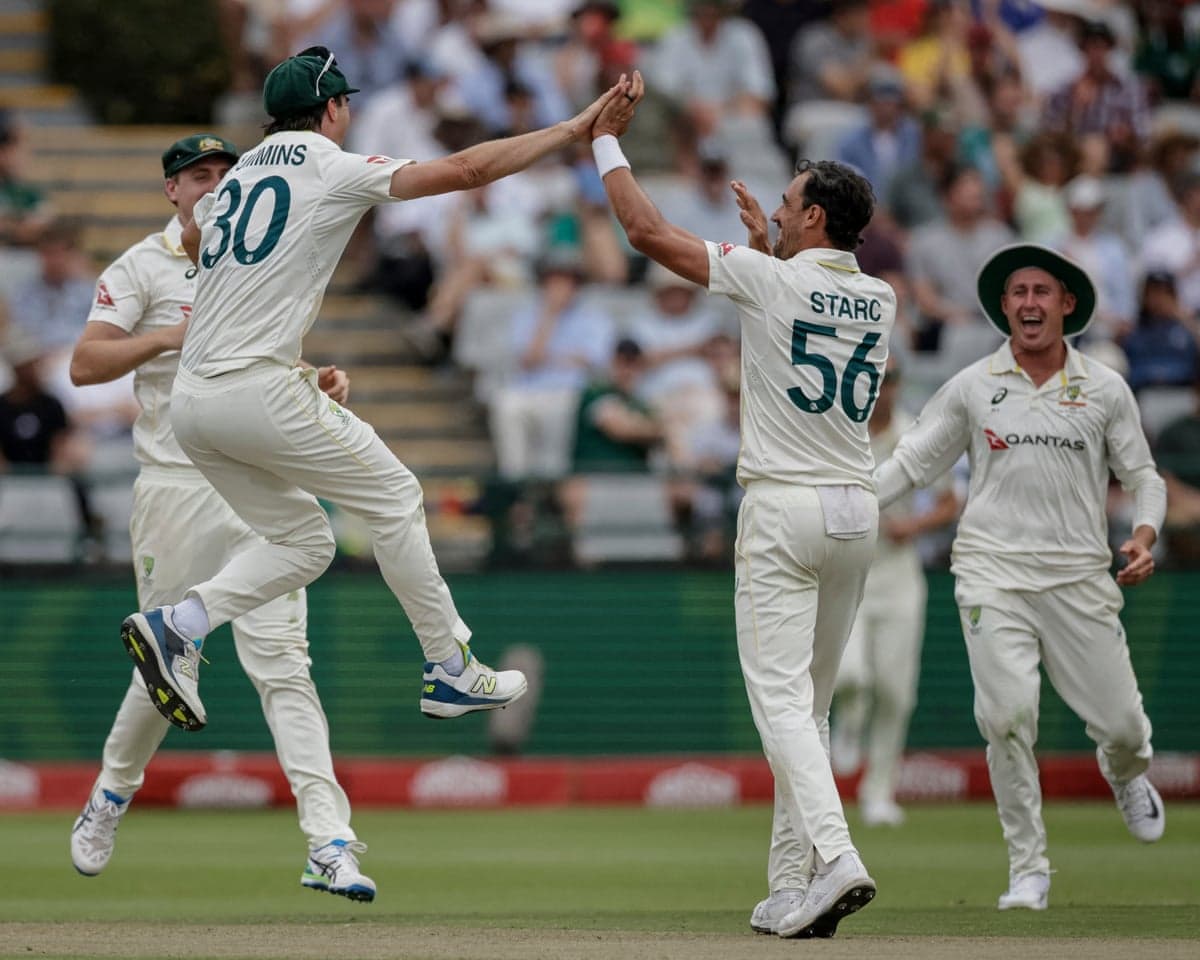
Pat Cummins' decision to bowl first at Cape Town appeared destined for infamy when South Africa's openers plundered 140 runs by lunch on the opening day of the deciding Test. Yet by stumps, Australia had engineered a stunning reversal, dismissing the hosts for 329 after taking 10 wickets for 189 runs in the afternoon and evening sessions. Mitchell Starc's devastating spell with the new ball—six wickets for 72 runs, including four dismissals in six deliveries—transformed a day that began as a potential selection disaster into a serious Australian comeback.
This story was first reported by The Guardian.
According to The Guardian, the morning's collapse of Cummins' strategy evoked comparisons to cricket's most infamous toss decisions: David Gower's choice to bowl at Leeds in 1989 when Australia accumulated over 600, Nasser Hussain's call in Brisbane in 2002 with Australia reaching 364 for 2 by day's end, and England's Edgbaston gamble in 2005 that yielded 407 runs from 80 overs. Cummins, who has favoured bowling first in nine of his 25 opportunities as captain, appeared to have miscalculated on a Cape Town pitch known for its batting-friendly characteristics and under bright morning sunshine.
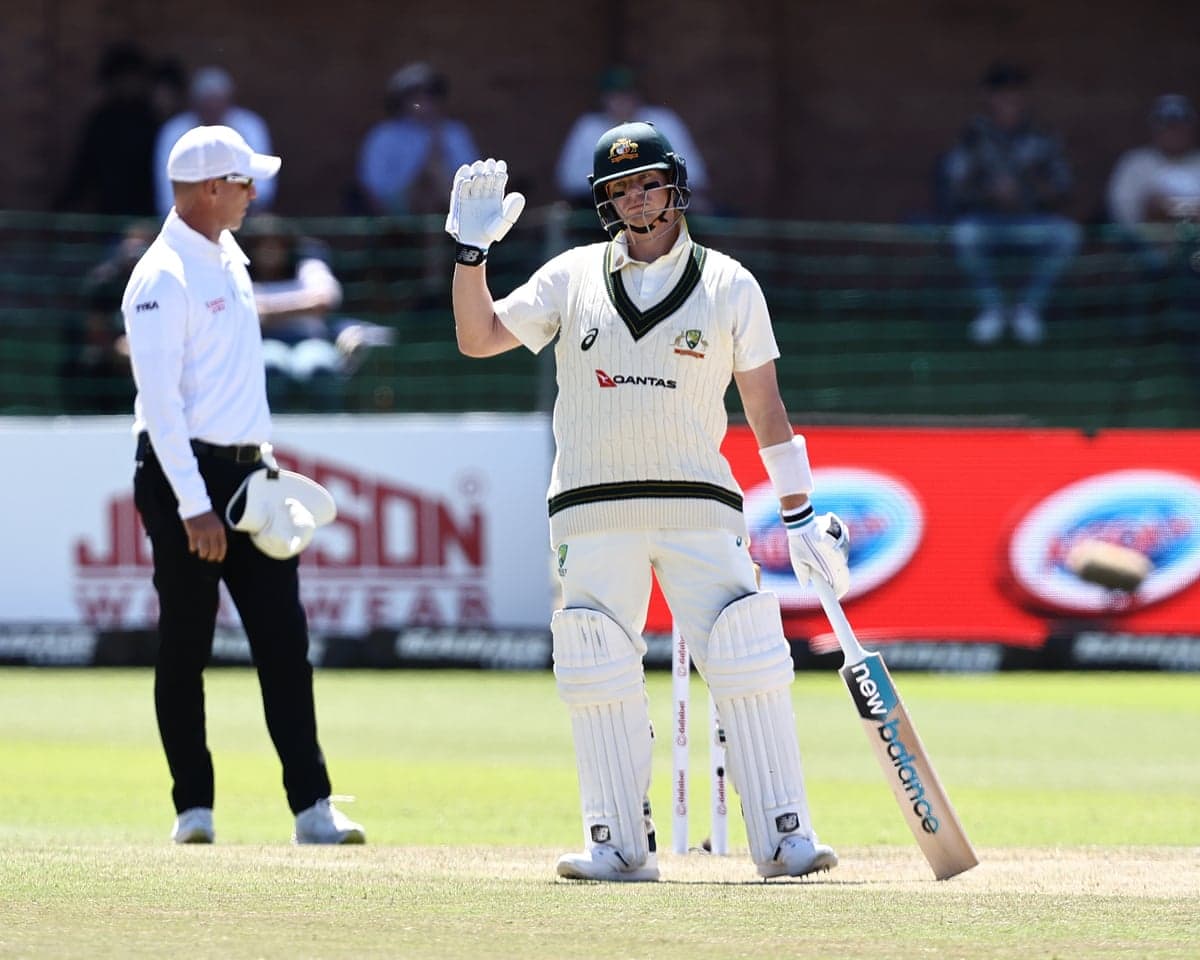
Australia's preparation for this series decider had been marked by turbulence. Cricinfo reported that the visitors made four non-disciplinary changes to their XI, the most significant being the omission of Steve Smith due to a neck injury, with Josh Inglis replacing him at number five. Cameron Green returned as a specialist batter at number four, while Scott Boland was dropped for Nathan Lyon, and Nic Maddinson and Beau Webster were replaced by Cooper Connolly. This represented the first time a touring Australian side had made four such changes since the West Indies in 1984. The selection upheaval reflected deeper anxieties about the tour, with squad composition itself having drawn criticism.
Aiden Markram and Marques Ackerman seized the opportunity presented by Australia's bowling attack. Markram established an aggressive tone with front-foot drives and back-foot punches, while Ackerman followed and then surpassed his partner's aggression. Starc and Josh Hazlewood struggled with line and length, repeatedly bowling short and wide on a pitch offering neither swing nor lateral movement. When Cummins introduced himself as an enforcer, Markram pulled him for six. Lyon entered the attack by the 12th over, an unusually early deployment for a spinner on day one.
Ackerman's assault intensified as the morning progressed. He hooked freely whenever opportunity arose, clearing fine leg for six off Cummins and striking Lyon over midwicket. When Starc returned for a subsequent spell, Ackerman plundered 18 runs from a single over, striking four consecutive boundaries. Australia's fielding compounded the bowling struggles: Travis Head dropped a straightforward catch at cover off Markram's edge, and Lyon allowed a return catch to slip through his hands in the first over after lunch. With South Africa at 158, they stood just 13 runs short of the record opening partnership against Australia for a team sent in to bat.
The breakthrough came through Lyon's persistence. Ackerman, determined to maintain his aggressive approach while approaching 95, charged at the spinner only to be deceived by a wider, slower delivery that evaded his bat and resulted in his stumping. Markram's dismissal followed shortly after, pulling a Hazlewood delivery that had barely risen above stump height to long leg. This opened the floodgates. Lyon bowled Temba Bavuma past his defensive outside edge, and Connolly claimed his first Test wicket when Matthew Breetzke was trapped lbw on review after the ball burrowed past his inside edge.
David Bedingham, who had played with precision and elegance, finally reached a half-century after recording scores of 46 and 49 earlier in the series. His innings ended when he was caught at fine leg attempting to hook, with Hazlewood leaping over the boundary and returning to complete the catch. Wiaan Mulder followed immediately, top-edging a hook at Starc for nought. From 158 without loss, South Africa had collapsed to 216 for six.
Marco Jansen temporarily halted the deterioration. The all-rounder, who had frustrated Australia throughout the series with his match-turning 85 in the second Test, attacked the ageing ball once more, accumulating another half-century. Alongside Ryan Rickelton, they constructed a partnership worth 95 runs at a brisk tempo. However, the introduction of the new ball proved catastrophic for South Africa's recovery.
Cloud cover descended as the day progressed, and the ball began to move through the air. Starc abandoned any experimental approaches, returning to his fundamental strengths: left-arm seam bowling from over the wicket with inswinging precision. Rickelton fell on the fourth ball of Starc's opening spell with the new ball, struck on the back pad for 42. Jansen departed two balls later, attempting to drive but watching the ball curl back to kiss the outside of off stump. Gerald Coetzee was bowled off his pads on the first delivery of Starc's next over, backing away from the inswing. Kagiso Rabada survived the hat-trick ball but was struck in line with leg stump from the following delivery. South Africa surrendered four wickets for two runs, with Starc finishing with figures of 6 for 72.
ESPN's scorecard confirmed South Africa's final total of 329 all out, a dramatic turnaround from their commanding position at lunch. The day encompassed virtually every element that Test cricket could offer: dominant batting, poor bowling, fielding lapses, a middle-order collapse, and a devastating spell of fast bowling under changing conditions.
What happens next
The third Test is scheduled to continue through 31 October, with day two commencing on 28 October. Australia will resume their innings attempt to build a substantial first-innings total and capitalise on their bowling dominance, while South Africa will seek to recover from their dramatic first-day collapse and regain momentum in a series that remains level at 1-1 following their innings victory in the second Test.