

Flock, the US-based surveillance technology company, is introducing new safeguards to curb police misuse of its camera network after its founder and chief executive, Garrett Langley, conceded the company should have acted sooner. Asked directly whether Flock had taken too long to protect its tens of thousands of cameras, licence plate readers and drones from abuse by law enforcement, Langley replied:
Yeah... yes.
In a blog post announcing the changes, Langley wrote that the measures "reflect years of work and deliberation" and are "not the end of that work, but simply the continuation of our commitment to both safety and privacy." As part of the overhaul, Flock is shortening the default retention period for most data from 30 days to seven days, will begin automatically flagging unusual or abnormal search activity by officers, and is requiring the rest of its law enforcement customers to activate its audit tools by the end of the year. Under the new system, accounts flagged for abnormal activity will be automatically suspended pending review, though the company has not specified what qualifies as abnormal.
How has police misuse of Flock's technology come to light?
Law enforcement officers have used Flock's cameras to track current and former romantic partners and to stalk private citizens, according to reporting cited in the original account. In one documented case, police used the system to monitor a woman who had had an abortion. Officers across the country have resigned or been dismissed over misuse of the technology, and a man in Indiana said he only learned through a public records request that police had placed an alert on his vehicle despite him not being suspected of any crime.
The concerns have also extended to reports that the system was used to target immigrants or people seeking out-of-state abortions, at times in apparent violation of state or local law. A 2022 investigation found that some California law enforcement agencies were sharing licence-plate data with states that ban abortion, potentially violating California's own restrictions on out-of-state data sharing; at the time, a Flock executive said the company's mission was to "eliminate crime" and that crime is defined by the jurisdiction where a camera operates. To address this, Flock is now allowing agencies to restrict the scans they share with partner cities or states to specific investigation types, such as stolen-vehicle or missing-persons cases, rather than granting blanket access to all shared data.
Independent reporting adds further scale to the problem. A Washington Post analysis, cited by the Detroit News, found that at least 50 law enforcement officers have been charged with or accused of unauthorised use of licence-plate readers, including for stalking. Separately, the ACLU of Wisconsin documented a case in which a former police chief used Flock's automatic licence plate recognition cameras to track his ex-girlfriend's vehicle 228 times over more than four months. The Business and Human Rights Resource Centre has also compiled more than 20 cases of officers abusing the system for stalking and gender-based harassment.
What does the wider data show about the scale of misuse?
The scale of documented abuse varies depending on who is counting. The Institute for Justice's own 2026 review identified 28 cases of officers using Flock or similar automatic licence-plate-reader systems to stalk former romantic partners, according to public records compiled on the company. Flock itself has said it is aware of 15 incidents of abuse of its system, out of roughly 140,000 monthly active users, according to the Business and Human Rights Resource Centre.
Misuse has now been documented across at least 12 states, according to Newsweek, including cases in which officers accessed plate data to track romantic partners, relatives or acquaintances. In Milwaukee, prosecutors alleged an officer used the system more than 170 times over roughly two months to track a woman he was dating and her ex-boyfriend, according to the Marshall Project. In Albany, Georgia, five former police officers were arrested and charged with misusing licence-plate data and violating their oath of office, according to a report. Civil liberties researchers say Flock's network has also been used to track protesters, target Romani people, and monitor women seeking reproductive healthcare, according to the Electronic Frontier Foundation.
Why are some cities cutting ties with Flock, while others return?
At least 50 cities have ended their contracts with Flock this year amid growing public backlash over privacy concerns. However, Langley said 16 of the cities that had switched off the service have reconciled with the company in the past three months, and that Flock is currently gaining roughly seven new customers for every one it loses.
The backlash intensified after Amazon's doorbell camera company, Ring, announced and then reversed its plan to integrate Flock's licence-plate reader technology into its doorbell cameras, following criticism of a Super Bowl advertisement that raised concerns about unwanted surveillance. Amid the ensuing public uprising against Flock's cameras, Langley previously described people removing the devices as "terrorists" before later apologising for the remark. Langley said that around six months ago he asked Flock's board why public scrutiny of the company appeared to be intensifying.

Historically, my point of view as a chief executive of a private company was, I don't know if I should be making these decisions. I don't know if it's my job to say how long data should be retained.
He said he has since come to agree with civil liberties groups, including the American Civil Liberties Union and the Electronic Frontier Foundation, that police should be required to have an active case number before searching Flock's data.
They're right. I think it should be required.
Our employees and communities have said loud and clear, they expect companies like Flock to have a stronger point of view as the expert. I resisted that because I didn't want to have that responsibility.
What steps has Flock already taken to prevent abuse?
Flock introduced an audit feature, called Audit Assistance, roughly four months ago that automatically logs searches and flags unusual patterns of use. Accounts differ on how widely it has been adopted: the company has said most police customers who had access to the feature chose to activate it voluntarily, while Langley said separately that only about a third of eligible customers had switched it on by the time the latest changes were announced. According to CNN, Flock launched a dedicated "audit assistance tool" in July 2026 specifically to flag abnormal system use after the fact, and one police department profiled by the outlet now requires officers to submit a case number and written explanation for every search. Despite these measures, the Atlanta Journal-Constitution reported in August 2026 that new allegations of police abuse continued to surface even after the audit tools were rolled out. CNN separately reported a case in which a detective admitted to using Flock to track two people and secretly fitted a GPS device to one person's vehicle.
On retention, Flock said agencies can still designate certain scans as part of a longer-term investigation to keep that data beyond seven days, and can otherwise choose "the retention period that fits its public safety strategy." Robert Frommer, a senior attorney at the Institute for Justice, which is representing plaintiffs in two federal lawsuits against warrantless use of licence-plate readers, dismissed the changes as insufficient.
This is yet more window dressing. Flock suggests that police departments limit their retention periods to seven days, while admitting that decision is still entirely up to the police departments themselves.
Langley said misuse had proven widespread enough that Flock decided to make the audit feature standard rather than optional. He argued that officers who abuse their access deserve harsher consequences than dismissal.
If anyone is going to be the one that spearheads getting rid of abusive cops? Sign me up. We trust these individuals with deadly weapons. I think a camera is very far from a deadly weapon, but I would say it's a very powerful tool. We should hold it incredibly accountable.
According to a wire-service report carried by Yahoo News, Langley has also publicly acknowledged more directly that police abuse of the system "is a problem," a more explicit admission than the company's earlier public messaging.
Is Flock unfairly blamed for police misconduct?
Langley pushed back on the idea that his company alone bears responsibility for how officers use its tools, arguing that failures often stem from human error rather than the technology itself.
We're only as good as the data coming in. When you see these cases of wrongful arrest, the data was bad and the officer failed to follow the rules. But it's easier to pick a villain that's a company like us.
He said the visibility of Flock's cameras in neighbourhoods makes the firm an easy target for broader public anxiety about privacy and surveillance technology, particularly in the absence of comprehensive US federal data protection law.
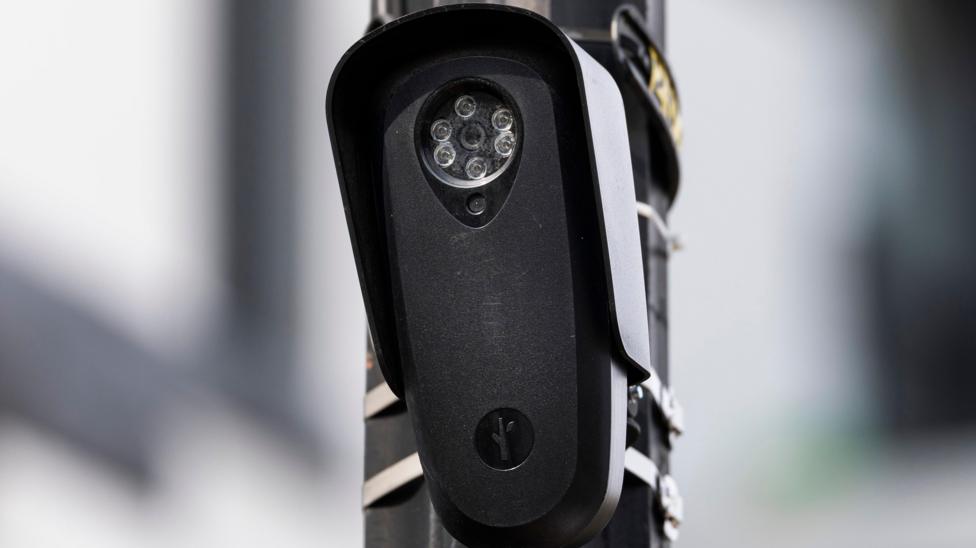
Because you can see our cameras, it's easier to get mad.
Not everyone accepts that framing. Chris Gilliard, a privacy researcher and author of the forthcoming book on surveillance, argued that no amount of internal policy can neutralise the underlying risk.
I don't think there's such a thing as 'mass surveillance, but with guardrails.' Ultimately, networked cameras sprinkled across the country are incompatible with a free society.
Langley recounted meeting a woman in Cleveland who strongly opposed Flock's presence in her community. When he asked why, she told him the technology was ultimately a tool police could use to abuse their power — a sentiment he said many officers themselves share, having told him privately that colleagues they suspected of wrongdoing could not be proven guilty. This mirrors broader criticism of police surveillance tools; commentator John Oliver recently described police surveillance technology, including cameras and licence plate readers, as invasive and prone to error, in remarks likening the tools to "Big Brother on steroids".
What happens next?
According to the Detroit News, a Wisconsin case involving an officer accused of using Flock's cameras to check whether his ex-girlfriend had visited an abortion clinic is scheduled for trial this month. Flock has also said it will soon announce additional filters and tools designed to prevent misuse before it occurs, rather than only flagging it afterwards.
Consequences for officers are already emerging elsewhere. In Greer, South Carolina, two police officers were fired following an internal audit, and state certification records show one officer's law-enforcement certification was revoked on 29 June 2026, according to FITSNews. In Georgia, the Bureau of Investigation said its inquiry into the Albany case remains ongoing, meaning additional charges or disciplinary action against former officers remain possible, according to a report by The Blaze.
Key Facts
- Flock is cutting most data retention from 30 days to seven days, automatically flagging abnormal searches, and requiring all law enforcement customers to activate audit tools by the end of 2026.
- At least 50 cities have cut ties with Flock this year, though 16 have returned in the past three months, and new customers currently outnumber lost ones roughly 7 to 1.
- Estimates of documented misuse range from Flock's own count of 15 incidents to the Institute for Justice's tally of 28 stalking-related cases; a Washington Post analysis found at least 50 officers charged with or accused of misusing licence-plate readers.
- Cases have surfaced in at least 12 states, including Georgia, Wisconsin and South Carolina, with five former officers charged in Albany, Georgia, and two fired in Greer, South Carolina.
- A Wisconsin officer accused of tracking his ex-girlfriend's abortion clinic visit via Flock cameras faces trial this month, and Flock plans to announce additional abuse-prevention filters in the near future.


