

An ICE health-services document reviewed by says at least one person on a hunger strike in immigrant detention was subjected to forced medical treatment, including force feeding, hydration, forced urinary catheterization or involuntary blood draws. The document, published online in February by the ICE Health Service Corps (IHSC), confirms for the first time that the administration has used forced treatment on a hunger striker since Donald Trump began his second term.
The report says an unnamed patient began hunger strikes between October and December of last year and “was subject to force feeding, hydration, or forced urinary catheterization, or involuntary blood draws”. It also says at least seven detained people were on hunger strike in February, and that IHSC forecast a total budget of $4,504.75 for “external medical care” of hunger strike patients and a total budget of $168,928.01 for the fiscal year of 2026 based on costs from last year.
Healthcare associations and international human rights groups have described forcible treatment of hunger strikers as torture. Eunice Cho, an immigrant rights attorney who co-authored a report documenting the many medical complications that resulted from forced treatment for hunger strikers in ICE detention, said the disclosure was alarming.
“This revelation is shocking,”
It remains unclear how many hunger strikers and forced treatments ICE has accounted for since February. The Department of Homeland Security (DHS), which oversees ICE, did not respond to ’s questions about what sort of forced treatment was administered to the detainee in the IHSC report.
This summer, hundreds of people protested at detention centers across the US. Trump officials have repeatedly said detainees are rejecting food to protest unsanitary conditions, medical neglect and what strikers describe as physical and psychological “torture” in detention facilities.
At least 300 detainees began a hunger strike at the Delaney Hall detention center in New Jersey from May to June, and their actions became a national flashpoint, with sustained crowds of protesters gathering outside the facility in solidarity. Advocates said the detainees ended their strike after facing retaliation.
Meanwhile, attorneys with the Immigrant Defenders Law Center (ImmDef) have said that hunger strikers at the Adelanto detention center in California have been zip-tied, threatened with teargas and put in solitary confinement or transferred to other ICE facilities.
Sarah Houston, a managing attorney at ImmDef, said ICE officials denied that her clients at Adelanto who staged hunger strikes were forgoing food. Officials also denied that detainees were facing retaliation for hunger striking, insisting that one of Houston’s clients who led a hunger strike at Adelanto faced disciplinary actions for vague facility violations.
The IHSC document is a “blatant admission” that the government is well aware of hunger strikes, Houston said.
“But if they admit openly that there are hunger strikes, they admit that the conditions in detention are so bad that people are willing to forgo food in order to raise awareness about the situation.”
“Because no one goes on hunger strike unless they are really desperate.”
The IHSC document disclosing the number of hunger strikers and forced treatments covers the first quarter of the 2026 fiscal year, and was produced in response to the Senate appropriations committee, which in 2024 directed ICE to provide regular updates on the matter.
In a statement, the DHS said that “all detainees are provided with three meals a day” and did not engage with questions about whether ICE had forcibly treated any more hunger strikers since February.
To forcibly treat a detained person on hunger strike, ICE must first seek an order from a federal judge. Often, said Cho, these orders amount to a “rubber stamp” because many detained immigrants lack attorneys to represent their interest in court. Once the order is obtained, the forced treatment can begin immediately.
“There’s very little due process in these proceedings,”
The forced treatment can cause a number of medical complications. Force-feeding, for instance, involves the insertion of a nasogastric tube through the nostril — a painful procedure that causes gagging or, in rare cases, the perforation of vital organs, according to the 2021 report. If the tube is misdirected because a patient is struggling or being treated under forced restraint, the procedure can cause serious infections.
Hunger strikes and forced treatment gained notoriety during the first Trump administration. A series of force-feedings took place at an ICE detention center in El Paso in 2019, overseen by a medical team contracted by ICE.

In 2022, the Intercept published the footage of an ICE detainee being force-fed. It shows private security guards dressed in riot gear approaching an Indian asylum seeker named Ajay Kumar, and holding him down while medical staff inserted a feeding tube through the man’s nose and down his esophagus. After widespread criticism of ICE and its contractor’s tactics, ICE released Kumar and the three other hunger strikers from custody.
Force-feedings were internationally denounced in the early 2000s for their brutality, after detainees inside the Guantánamo military base were force-fed by guards after a hunger strike.
How many hunger strikers has ICE acknowledged?
ICE’s health service agency has publicly recorded at least seven detained people on hunger strike in February, but the total number since then is unclear. review of the IHSC document shows that the agency tracked hunger strikes in the first quarter of the 2026 fiscal year, following a 2024 directive from the Senate appropriations committee requiring regular updates.
The same document also indicates that IHSC anticipated spending $4,504.75 on “external medical care” for hunger strike patients and $168,928.01 for fiscal year 2026 based on last year’s costs. That budget detail is part of the first public confirmation that the Trump administration has used forced treatment on a hunger striker since the start of Trump’s second term.
The Department of Homeland Security did not answer ’s questions about whether the detainee described in the report received force feeding, hydration, forced urinary catheterization or involuntary blood draws, and it did not say whether any more forced treatments have occurred since February.
What are detainees saying about conditions?
Detainees and advocates say hunger strikes are a response to conditions in ICE detention, including unsanitary conditions, medical neglect and what strikers describe as physical and psychological “torture”. Trump officials have repeatedly said detainees are refusing food for those reasons, but the administration has not publicly addressed the detainees’ allegations in detail.
At Delaney Hall in New Jersey, at least 300 detainees began a hunger strike from May to June, and the protest drew national attention as crowds gathered outside the facility in solidarity. Advocates said the detainees ended the strike after facing retaliation. The protest also unfolded alongside a labor strike at the facility, making Delaney Hall a major flashpoint in the debate over detention conditions.
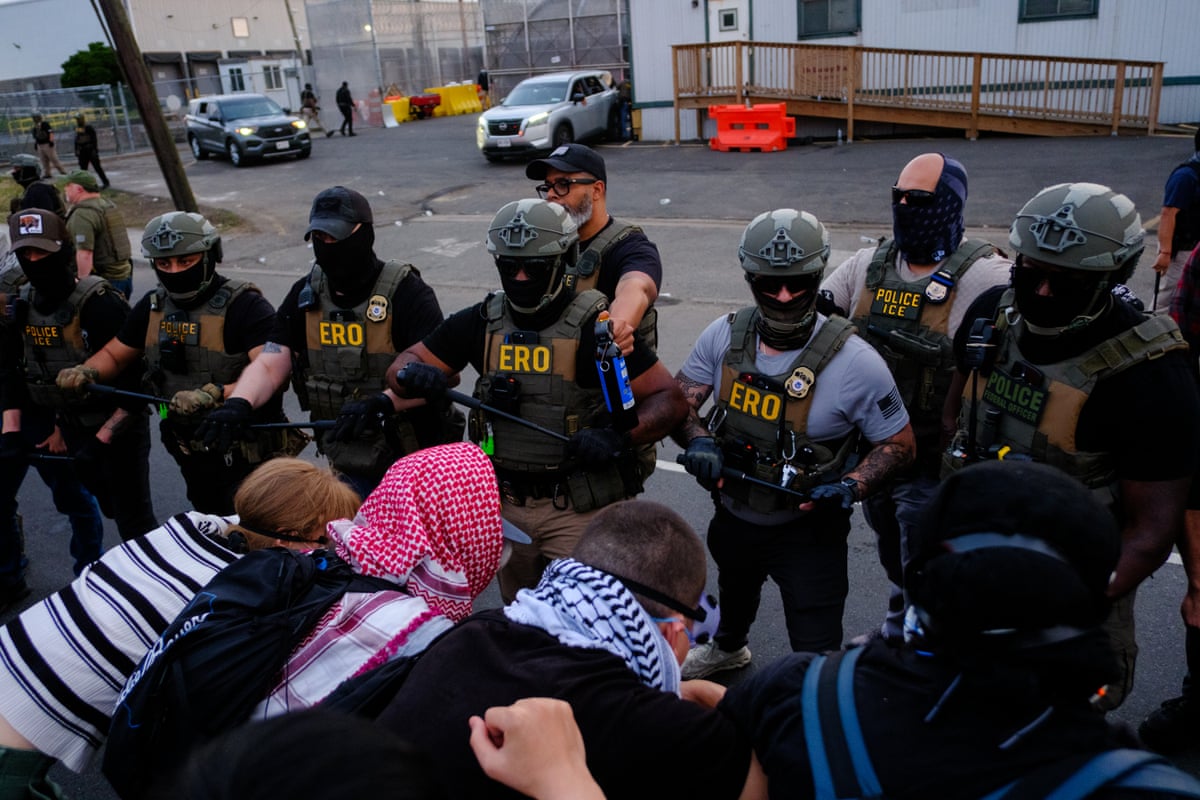
At Adelanto in California, attorneys with the Immigrant Defenders Law Center said hunger strikers were zip-tied, threatened with teargas, placed in solitary confinement or transferred to other ICE facilities. Sarah Houston, a managing attorney with ImmDef, said ICE officials denied that her clients were forgoing food and denied that they were being retaliated against for hunger striking.
What does ICE say about the allegations?
ICE officials told Houston that one of her clients who led a hunger strike at Adelanto faced disciplinary actions for vague facility violations, rather than retaliation for refusing food. Houston said the IHSC document amounted to a direct admission that the government is aware of the strikes and the conditions driving them.
“This revelation is shocking,”
“But if they admit openly that there are hunger strikes, they admit that the conditions in detention are so bad that people are willing to forgo food in order to raise awareness about the situation.”
“Because no one goes on hunger strike unless they are really desperate.”
The Department of Homeland Security said that “all detainees are provided with three meals a day” but did not answer questions about whether ICE had forcibly treated any more hunger strikers since February. The agency also did not explain the specifics of the report’s reference to force feeding, hydration, forced urinary catheterization or involuntary blood draws.
How does ICE force-feed detainees?
To forcibly treat a detained person on hunger strike, ICE must first seek an order from a federal judge. Cho said these orders often amount to a “rubber stamp” because many detained immigrants do not have lawyers to represent them in court.
“There’s very little due process in these proceedings,”
Once a judge’s order is obtained, the forced treatment can begin immediately. The process can involve the insertion of a nasogastric tube through the nostril, which the 2021 report described as painful and capable of causing gagging or, in rare cases, perforation of vital organs. If the tube is misdirected because a patient is struggling or is being restrained during treatment, the procedure can also cause serious infections.
Force-feedings were widely condemned during the first Trump administration, when a series of such procedures took place at an ICE detention center in El Paso in 2019 under a medical team contracted by ICE. In 2022, the Intercept published footage showing private security guards in riot gear approaching an Indian asylum seeker, Ajay Kumar, holding him down while medical staff inserted a feeding tube through his nose and down his esophagus.
After widespread criticism of ICE and its contractor’s tactics, ICE released Kumar and the three other hunger strikers from custody. The wider controversy echoed earlier international denunciations of force-feeding in the early 2000s, when detainees inside the Guantánamo military base were force-fed by guards after a hunger strike.
Key Facts
- ICE Health Service Corps (IHSC) disclosed that an unnamed detainee was subjected to forced medical treatment after hunger strikes that began between October and December of last year.
- The report says at least seven detained people were on hunger strike in February and forecasts $168,928.01 for fiscal year 2026 hunger-strike-related external medical care.
- At least 300 detainees began a hunger strike at Delaney Hall in New Jersey from May to June.
- ImmDef says hunger strikers at Adelanto in California were zip-tied, threatened with teargas and placed in solitary confinement or transferred.
- DHS said “all detainees are provided with three meals a day” and did not answer questions about further forced treatments.


