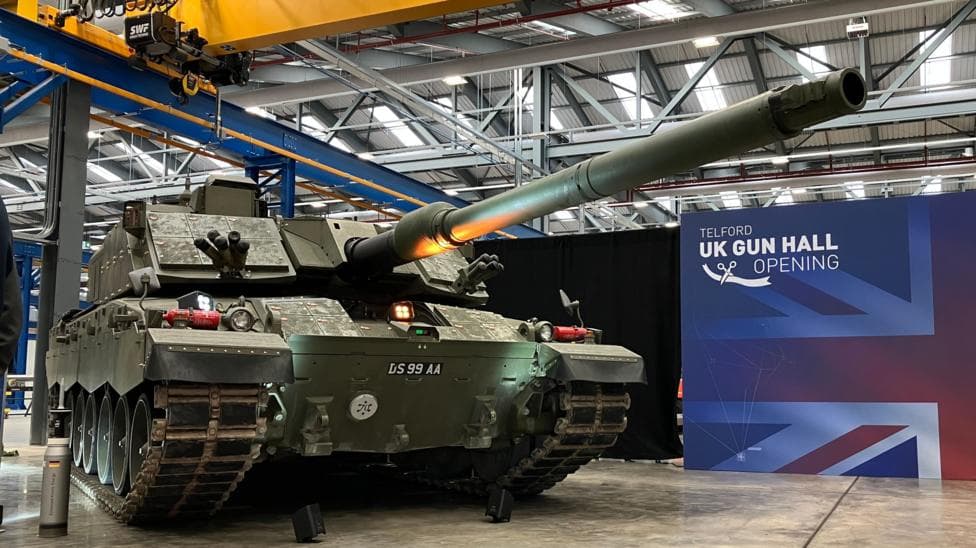
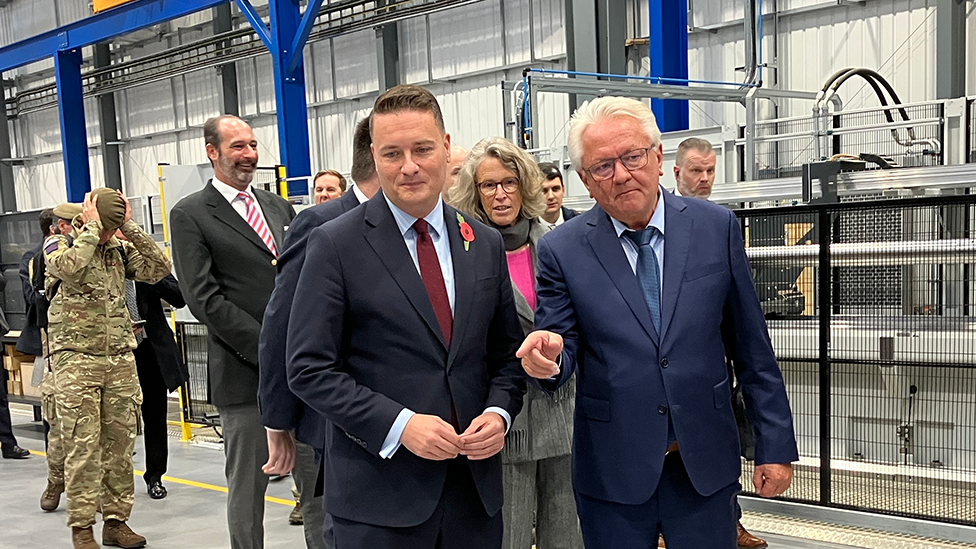
Large-calibre gun barrel manufacturing has returned to the United Kingdom for the first time in 20 years following the opening of a new production facility in Telford, operated by German defence contractor Rheinmetall. The UK Gun Hall has created 100 jobs and will manufacture barrels and breaches for 120mm and 155mm weapon systems. According to BBC News, Defence Secretary Wes Streeting attended the opening ceremony on Thursday and highlighted the significance of the development for Britain's defence industrial base.
Streeting described the achievement as "rapid reindustrialisation in action," noting that the facility had progressed from an empty site to full production within eight months. He characterised the venture as evidence of "defence as an engine for growth," emphasising the combination of skilled manufacturing jobs and the restoration of sovereign capability in weapons production.
The facility will produce barrels and breaches for both 120mm and 155mm weapon systems, including components for the RCH 155 and future artillery platforms. UK Defence Journal reported that breech and breech-block production commenced in May 2026, with barrel production beginning in June, ahead of the official opening ceremony. The 11,500-square-metre facility has an annual production capacity of up to 245 barrels and more than 50 breeches.
Rheinmetall is already engaged in the UK's Boxer combat vehicle programme and is undertaking upgrades to the country's Challenger tanks. The company recruited specialist workers from the Telford area, with staff receiving training at a Rheinmetall facility in Germany in precision manufacturing, quality assurance and specialist weapon production techniques before the facility opened.
Armin Papperger, Chief Executive Officer of Rheinmetall, characterised the gun hall as an "important milestone" that would reinforce the country's industrial base "for decades to come." He stated the company's commitment to long-term investment in the UK, expansion of its industrial presence, and collaboration to deliver future defence capabilities. Speaking to BBC Radio Shropshire, Papperger noted that Rheinmetall currently operates only one comparable production line in Germany and that strong demand for its products necessitated the additional capacity. He highlighted Telford's workforce quality, describing the local population as "very well-educated people, highly-motivated people."
Rheinmetall currently employs 1,300 people across the UK and intends to expand this workforce as production increases. According to UK Defence Journal, Rheinmetall UK Managing Director Rebecca Richards stated that the project established sovereign capability by transferring specialist knowledge from Germany and developing a skilled workforce in Telford. The company has also indicated plans to incorporate British steel from Sheffield Forgemasters into production.
Strategic Context Within UK Defence Reinvestment
The Telford facility represents part of a broader UK government strategy to rebuild domestic defence manufacturing capacity. The opening aligns with Rheinmetall's 2025 projections of more than £400 million in UK economic activity over a decade and over 400 jobs directly and through the supply chain. The facility is part of the UK-Germany Trinity House Agreement, a bilateral defence partnership established in October 2024 that formalises cooperation between the two nations on defence manufacturing and capability development.
Streeting used the occasion to reinforce the government's broader reindustrialisation agenda, describing Telford as being "synonymous with engineering and manufacturing" and characterising the investment as "a vote of confidence in our country" and "a statement of intent on our mission to reindustrialise Britain and create good, well-paid jobs across our country."
Future Expansion Plans
Rheinmetall has signalled intentions to expand the Telford site to support production of the Boxer vehicle and the Challenger 3 tank upgrade programme. The company's long-term commitment to the facility and its expansion trajectory suggest the site will play an increasingly central role in UK defence manufacturing over the coming years.