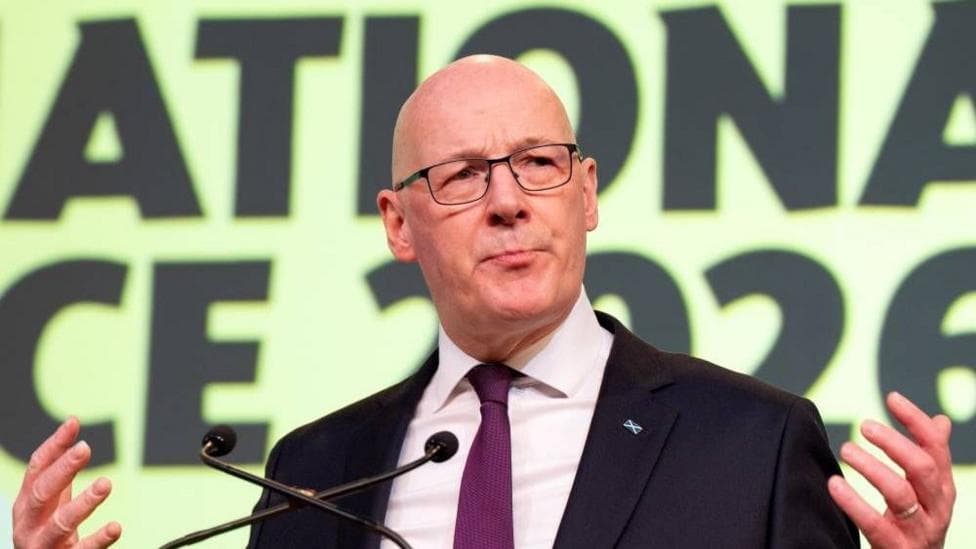
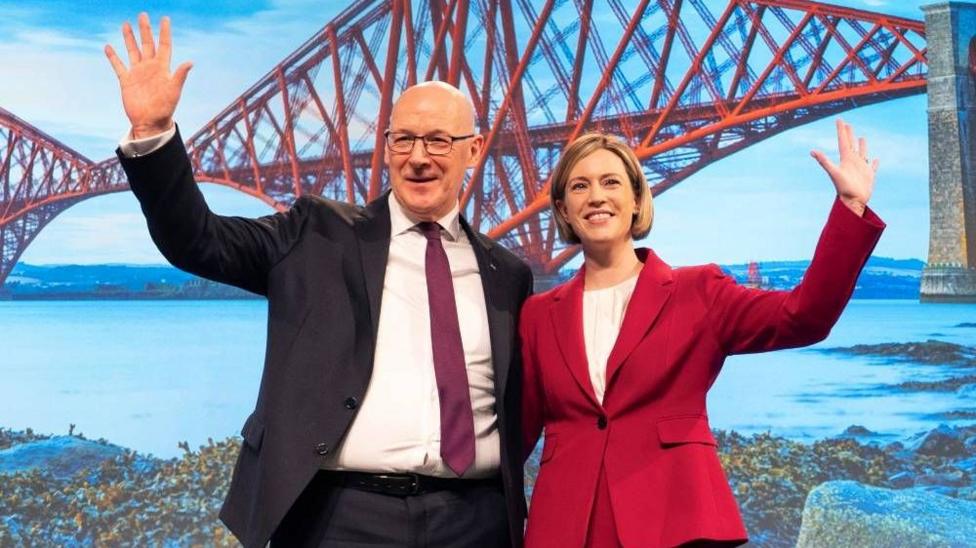
John Swinney will use his keynote address to the SNP conference in Aberdeen to declare that momentum is building behind Scotland's independence movement, arguing that political conditions have shifted decisively in the nationalists' favour.
The first minister will tell party members that 2026 represents a watershed moment in Scotland's "journey towards statehood", according to BBC News. He will emphasise that leaders across the devolved nations now back the principle of self-determination, creating what he views as an unprecedented alignment of political forces.
Swinney's remarks come as he seeks to revive the independence campaign following May's Scottish Parliament election, in which the SNP secured a record fifth consecutive term in government at Holyrood. However, the party fell short of the overall majority that Swinney had identified as necessary to force a second referendum despite Westminster opposition.
What is Swinney's case for independence momentum?
The first minister will stress that "in Edinburgh, Cardiff and Belfast, every first minister now supports our nations' right to self-determination". This reflects a summit held in Cardiff last month where the nationalist leaders of Wales, Scotland and Northern Ireland signed a non-binding agreement asserting that no Westminster government has the authority to "block democracy".
Swinney will tell supporters that "one by one, the stars are aligning in our favour". He will argue that an SNP defeat in May would have set back the independence cause "by decades", but that victory has instead created fresh momentum. The first minister is expected to declare: "The SNP is making the weather. And make no mistake – the wind is now firmly in the sails of Scotland's independence movement."
He will also contend that unionist parties at Westminster are "weaker than they have ever been", positioning independence as an increasingly viable prospect.
How does this relate to Burnham's devolution offer?
Swinney's conference address follows a significant overture from Prime Minister Andy Burnham, who visited Scotland to propose deeper devolution arrangements. Burnham said he wanted to "move beyond the old politics of conflict" and work with the SNP to expand powers to Scottish communities and local authorities.
According to the Independent, Burnham's devolution model includes "regional, economic empowerment" in Scotland, specifically devolving powers from the Department for Work and Pensions. Swinney has indicated he will engage with this offer of co-operation, though the first minister remains committed to pursuing independence.
The prime minister has been explicit that a second Scottish independence referendum remains "off limits" under his government. This position reflects a longstanding Westminster stance: since 2014, successive UK governments have opposed further referendums. The 2014 independence ballot saw Scotland vote against separation by 55% to 45%, and in 2022 the UK Supreme Court ruled that any future vote would require Westminster's consent.
What is the SNP's strategy on a second referendum?
Despite falling short of an overall majority in May, Swinney will declare that "there is no turning back" on the independence agenda. The SNP intends to press the case for another referendum, though the party faces the constitutional obstacle of needing UK government approval.
Swinney has invited Burnham to Aberdeen for talks on a second referendum, a move that prompted SNP minister Stephen Flynn to respond with the challenge: "Bring it on", according to the Week. This suggests the SNP is willing to debate the issue directly with the UK government, even as it acknowledges the legal barriers to holding a vote without Westminster's agreement.
What happens next?
The SNP's 92nd annual conference continues through Saturday, 17 October, at P&J Live in Aberdeen, providing a platform for the party to articulate its vision for Scotland's constitutional future and respond to the devolution proposals now on the table.
Key Facts
- The nationalist first ministers of Scotland, Wales and Northern Ireland signed a non-binding agreement in Cardiff last month asserting their nations' right to self-determination
- The SNP won a record fifth consecutive term at Holyrood in May but failed to secure the overall majority Swinney had targeted
- Prime Minister Burnham has offered to devolve powers from the Department for Work and Pensions to Scotland as part of a deeper devolution settlement
- UK governments have consistently opposed further independence referendums since 2014, and the Supreme Court ruled in 2022 that Westminster consent is required
- Scotland voted 55% to 45% against independence in the 2014 referendum