The UK's highest court has heard arguments that the proscription of Palestine Action as a terrorist group represents an unlawful attack on freedom of expression and assembly. Huda Ammori, a co-founder of the direct action group, is challenging the ban, which placed the organisation alongside groups such as al-Qaida and Boko Haram. According to The Guardian, the first day of the hearing in central London on 4 November 2026 focused on whether the proscription is compatible with human rights protections.
Raza Husain KC, representing Ammori, argued that Palestine Action never advocated violence against people or property, and that the group's tactics were less extreme than those employed by the suffragettes, anti-war protesters, environmental campaigners and animal rights activists—none of whom were designated as terrorists. He told the five judges:
"Palestine Action never advocated for violence against the person and the home secretary has never advocated – and could not advocate – to the contrary."
Husain highlighted that the suffragettes conducted arson and bombing campaigns yet are now celebrated as being on the right side of history. He contended that the Court of Appeal had erred in finding that Palestine Action's methods had "little or nothing in common with the suffragettes … or Iraq war protest groups". According to DPG Law, Ammori's written submissions argue that less than 1% of Palestine Action's direct-action activity over five years met the definition of terrorism.
The case marks the Supreme Court's first consideration of the Home Secretary's proscription power in the context of Convention rights. The court granted permission to appeal only on whether the ban is compatible with Articles 10 and 11 of the European Convention on Human Rights, which protect freedom of expression and assembly.
What is the background to this case?
The proscription of Palestine Action took effect on 5 July 2025 after approval by both Houses of Parliament. The High Court ruled the ban unlawful in February 2026, finding it disproportionate and incompatible with rights to expression, assembly and association. However, the Court of Appeal reversed that decision in June 2026, upholding the government's authority to designate the group as terrorist. The government's assessment relied on three attacks—in Glasgow in June 2022, Kent in June 2024 and Bristol in August 2024—and on an "Underground Manual" published in late 2023.
Ammori has argued that proscription represents a disproportionate interference with the rights to freedom of speech and protest. Husain told the court that the ban had impacted the entire Palestinian solidarity movement, regardless of any connection with Palestine Action, and chilled the expression of journalists, academics and artists.
What is the government's position?
Sir James Eadie KC, representing the home secretary, defended the Court of Appeal's decision as lawful and proportionate. He cited the convictions of four people, including one for grievous bodily harm, and referenced the raid on a factory owned by Israeli arms company Elbit Systems in Filton, near Bristol. Eadie argued that the proscription does not prevent public expressions of support for the Palestinian cause or opposition to Israel and the Israel Defence Forces, or demonstrations targeted at Elbit.
"As a matter of law, the proscription of PA [Palestine Action] does not prevent public expressions of support for the Palestinian cause or opposition to Israel and to the Israel Defence Forces, or demonstrations targeted at Elbit,"he said.
Who has intervened in the appeal?
Amnesty International UK and Liberty were granted permission to intervene in the appeal, alongside Jewish community groups including the Community Security Trust and Jewish Leadership Council. English PEN and PEN International were also granted permission to intervene, focusing on freedom of expression.
What happened outside the court?
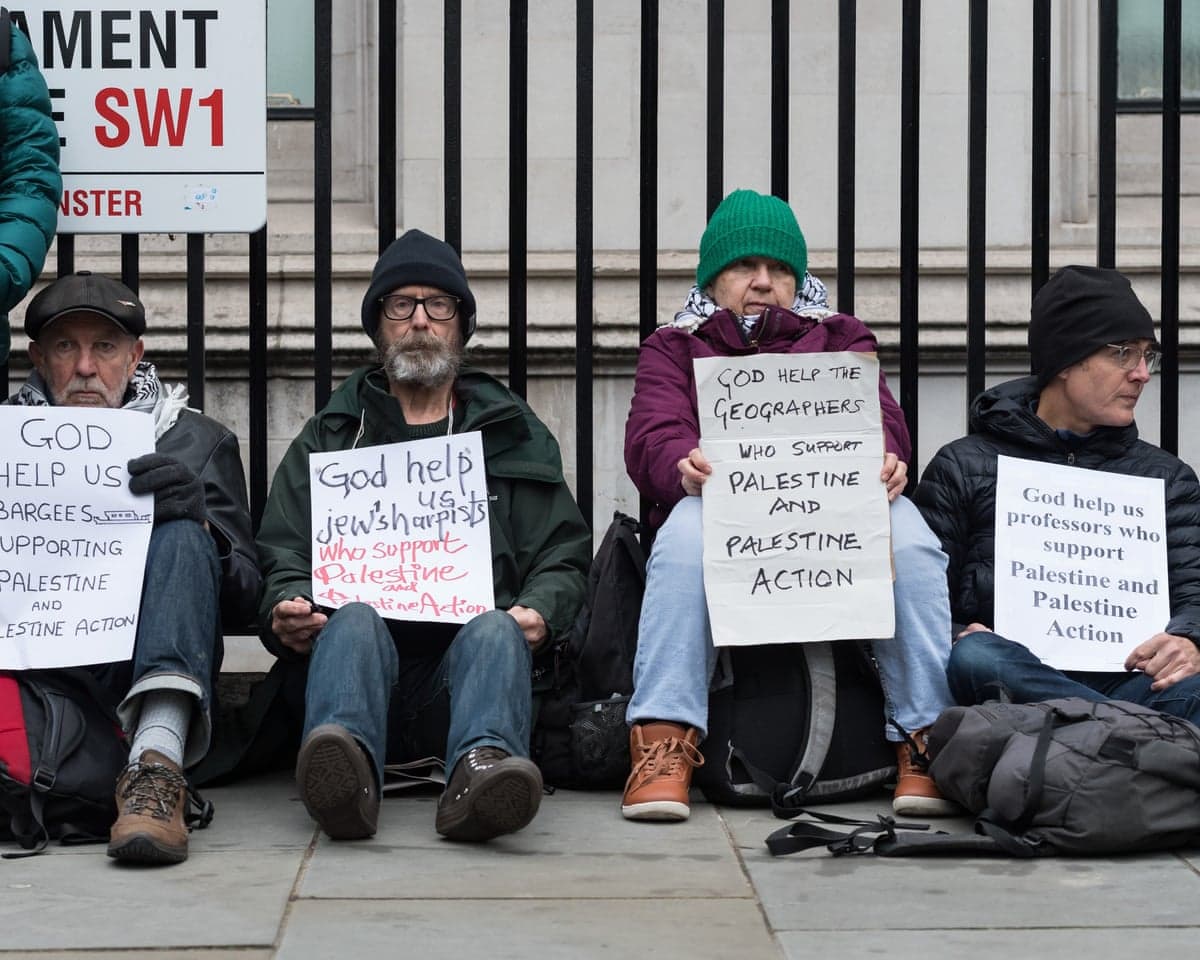
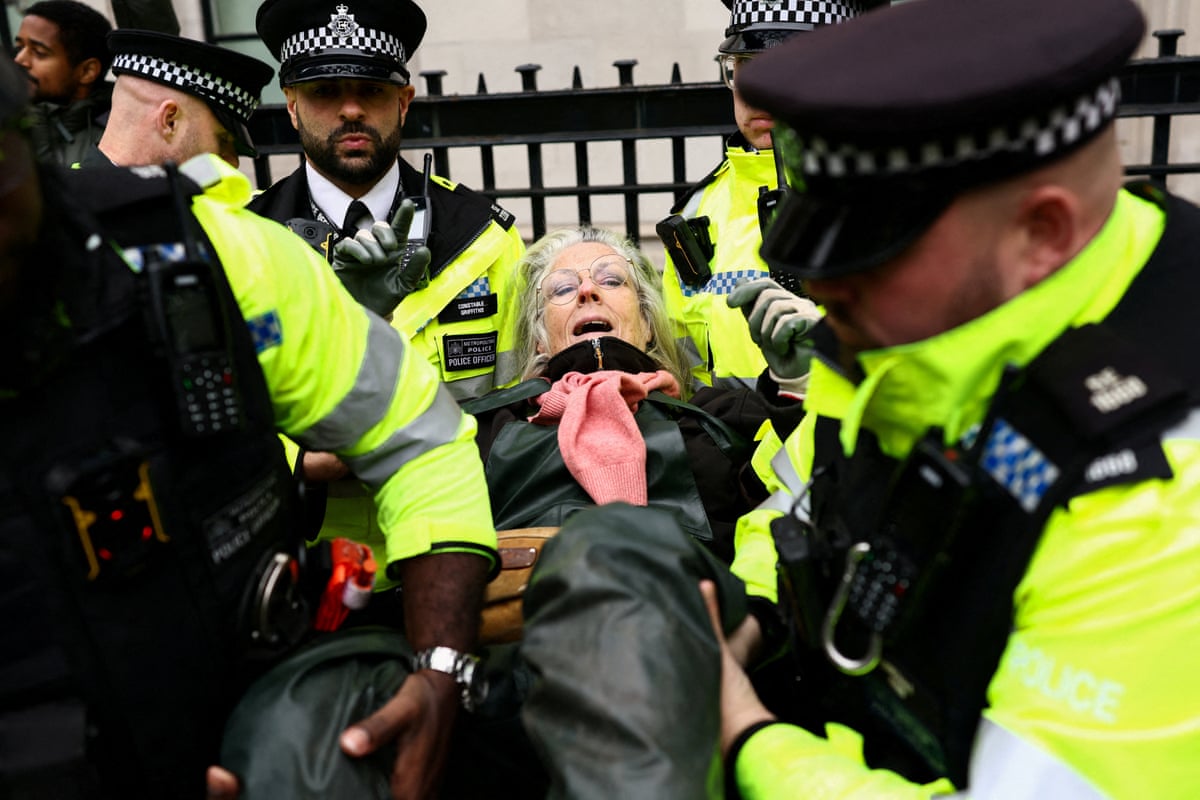
At least 25 protesters were arrested outside the court on 4 November 2026, including Sir Jonathan Porritt, a former director of Friends of the Earth who served as an adviser to the Prince of Wales—now King Charles—for more than 30 years. The demonstrators held placards emulating a tweet by Sarah Helm, the wife of the prime minister's national security adviser. Helm, a journalist and author married to Jonathan Powell, had written a statement of support for Palestine Action that police investigated for potentially supporting a terrorist organisation.
Porritt replaced the word "authors" in Helm's statement with "CBEs" on his placard, while others substituted it with "normal people", "professors", "Jews", "holocaust survivors", and "bartenders". One protester's placard read: "God help us who are not married to the UK's national security adviser who support Palestine and Palestine Action."
What happens next?
The Supreme Court hearing is scheduled to continue on 5 November 2026. No judgment date has been announced, though legal analysts have suggested that Supreme Court rulings typically take three to six months, though this case could be decided sooner.
The case comes as a new pro-Palestine direct-action group reportedly raided a defence company days before the hearing, smashing satellite equipment with sledgehammers, suggesting that activism in this area continues despite the proscription.