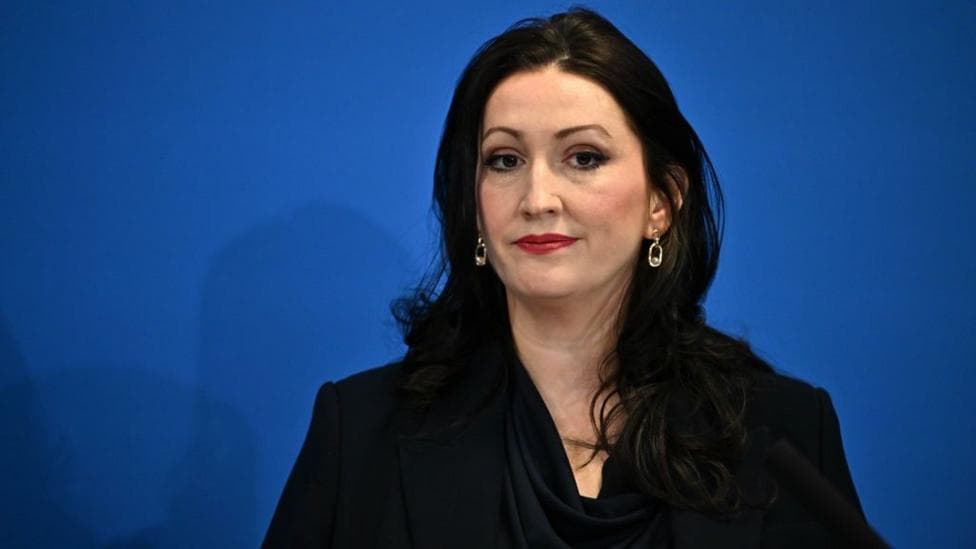
Deputy First Minister Emma Little-Pengelly has insisted that Northern Ireland's executive cannot legally reach a balanced budget without additional government funding, as the devolved administration prepares to make its case directly to the UK government.
According to BBC News, Little-Pengelly said the executive would meet Northern Ireland Secretary Sir Chris Bryant on Friday to "put across the best possible case for fair funding". The executive has not agreed a budget for the current financial year, citing the UK's devolution funding formula as the source of a significant shortfall.
The government has offered a financial package valued at approximately £1.5bn spread across three years, with £525m available in the current year. However, Bryant has stated there would be no "front-loading" of the funding and no additional money beyond the £525m set aside for this year. The executive maintains this falls far short of what is needed.
Little-Pengelly told BBC's The View programme:
"I'm asking the UK government to come forward with a reasonable and fair funding package."She emphasised the urgency of the situation, noting that the executive is now seven months into the financial year without an agreed budget.
Secretary of State Sir Chris Bryant had previously stated there was "no more money" available and accused executive ministers of being financially "irresponsible". However, First Minister Michelle O'Neill rejected this assertion on Wednesday, saying she does not accept the government's claim that no further funding can be offered.
What is the scale of the funding gap?
Stormont departments face a shortfall of up to £1.6bn according to a spending watchdog. The government's initial proposal was £1.1bn over three years before it was later increased to the current offer of more than £1.5bn. The package comprises £1.25bn in extra funding over three years, £150m for public-service transformation, £100m for social housing and £75m to address benefit fraud and error.
Executive parties argue that significant gaps remain even with this offer, preventing them from agreeing to a deal that would allow them to set a budget.
How are public services being affected?
The absence of an agreed budget is creating sustained pressure on critical services across Northern Ireland. Little-Pengelly warned of the "devastating impact on our public services, our schools, hospitals, public sector pay if we do not get this issue resolved".
Currently, public services are operating under contingency arrangements that allow departments to spend up to 95% of last year's funding. This temporary measure cannot continue indefinitely, and the longer the budget impasse persists, the greater the strain on service delivery.
Little-Pengelly stressed the need for urgent resolution:
"This is a time for serious conversation, a time about getting round the table and making sure we can get this hammered out."
Can the executive unite despite internal tensions?
Little-Pengelly acknowledged that "fractured relationships" within the executive have emerged following the Drumcree parading dispute. Despite these tensions, she said it remained important to stand together "responsibly for people right across Northern Ireland".
The executive met virtually on Wednesday evening and agreed to ask Northern Ireland Secretary Sir Chris Bryant for an urgent meeting, signalling a coordinated approach to the funding negotiations despite the internal disagreements.
What happens next?
The Friday meeting between the executive and Bryant will be a critical moment in the budget negotiations. Looking ahead, the UK government's budget is due to be published on 28 October, with some Stormont sources expecting a funding settlement before then. This timeline suggests the current impasse may need to be resolved within weeks rather than months.
Key Facts:
- The executive has operated without an agreed budget for seven months, relying on contingency spending arrangements
- The government's offer of £1.5bn over three years is rejected by the executive as insufficient to close a £1.6bn shortfall
- Public services including schools and hospitals continue to operate under spending restrictions that allow only 95% of previous-year funding
- The UK government budget publication on 28 October may provide an opportunity to resolve the Stormont funding dispute