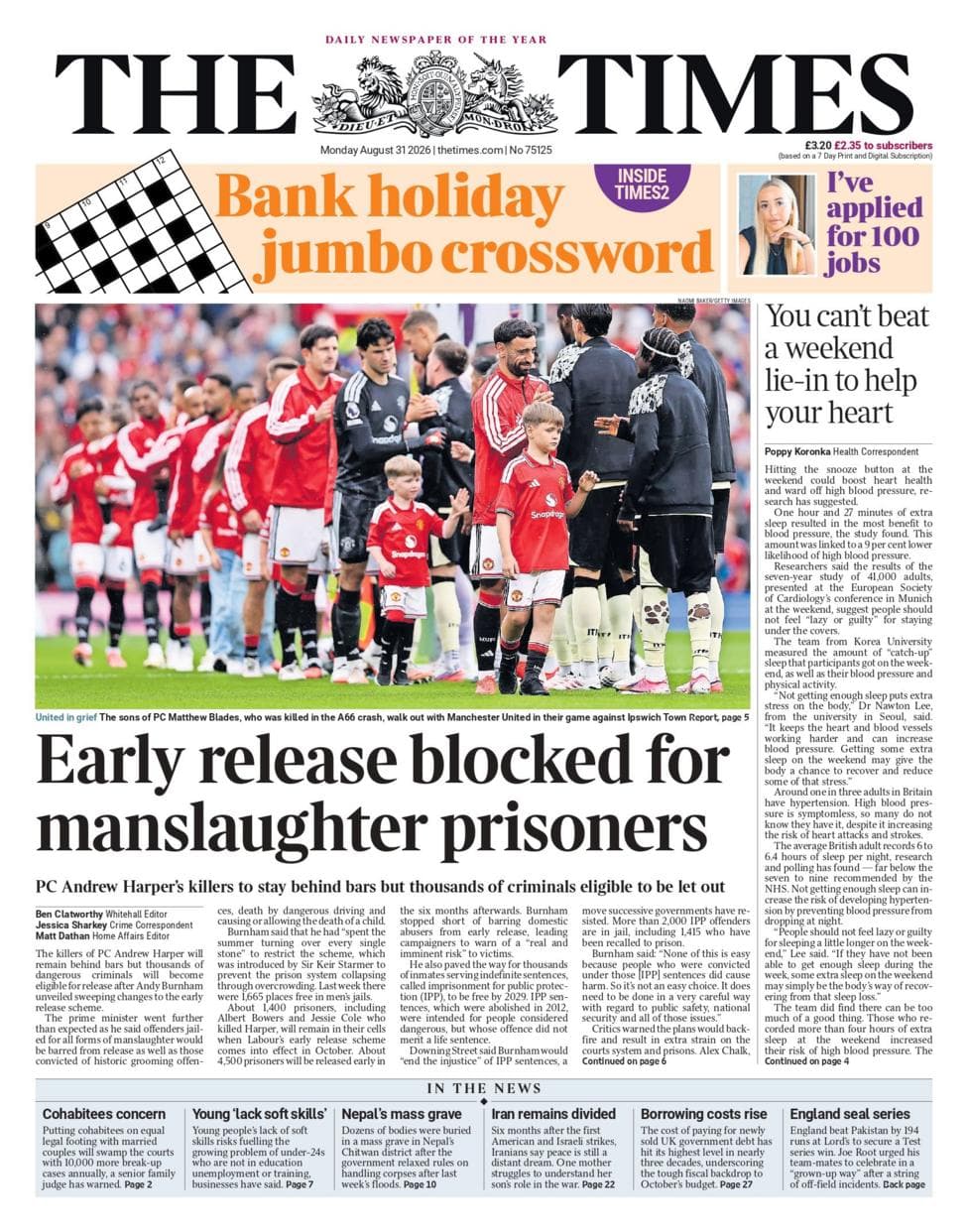
Monday's newspaper front pages are dominated by Prime Minister Andy Burnham's revised early-release scheme for prisoners, with outlets divided sharply over whether the changes go far enough to protect public safety. The Times emphasises that individuals convicted of murder, including the two men responsible for the death of PC Andrew Harper, will remain incarcerated under the new rules. However, disagreement persists across the press about the scope and wisdom of the broader policy.
The prison-overcrowding crisis that prompted the government to bring forward an early-release scheme has intensified public and media scrutiny. According to reporting on the revised scheme, the government's updated rules now also bar offenders convicted of unlawful killing, including manslaughter, from the programme. The revised exclusions additionally cover historical grooming offences, causing or allowing the death of a child, and causing death by dangerous driving.
What do the papers say about the risks?
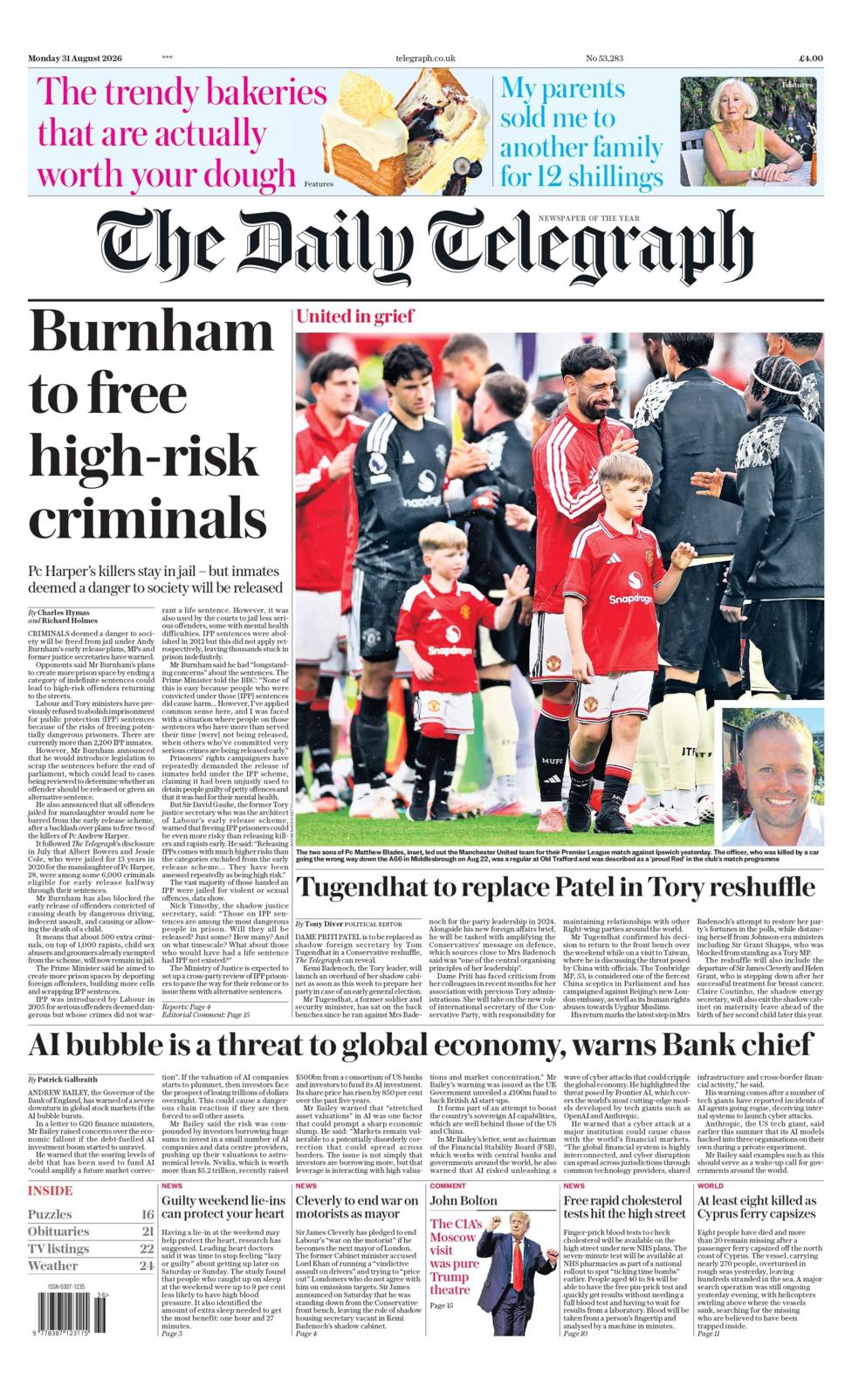
The Daily Telegraph warns that the changes will
free high-risk criminals, arguing that the government intends to release some inmates who were sentenced under an old indeterminate sentencing law to create space in the prison system. The paper reports that critics caution offenders
deemed a danger to societycould be released despite these new restrictions.
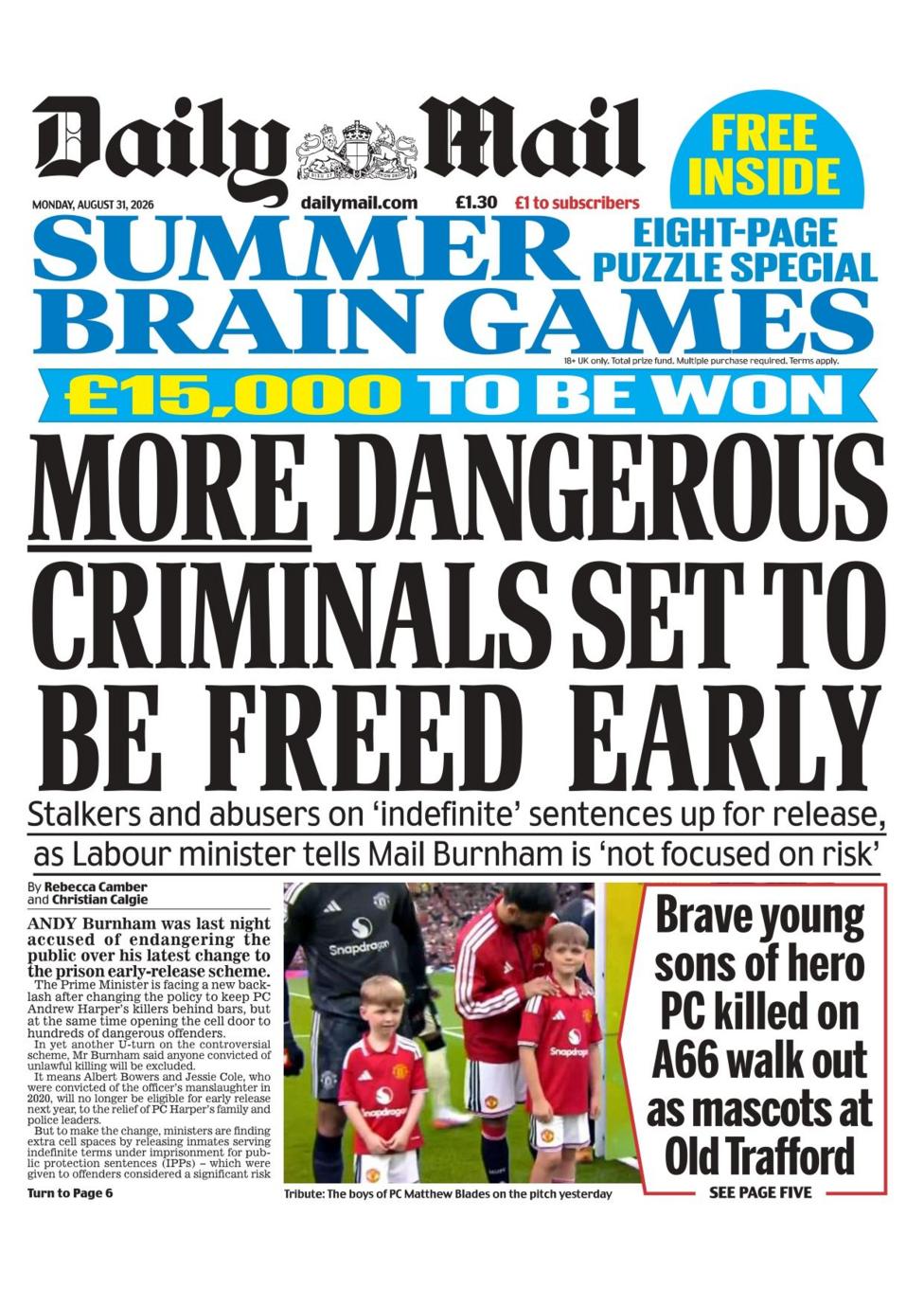
The Daily Mail frames the reforms as
Stalkers and abusers on 'indefinite' sentences up for release, quoting a Labour minister who contends the prime minister is not
focused on risk. This criticism reflects concerns that even with the tightened criteria, vulnerable groups remain at potential risk.
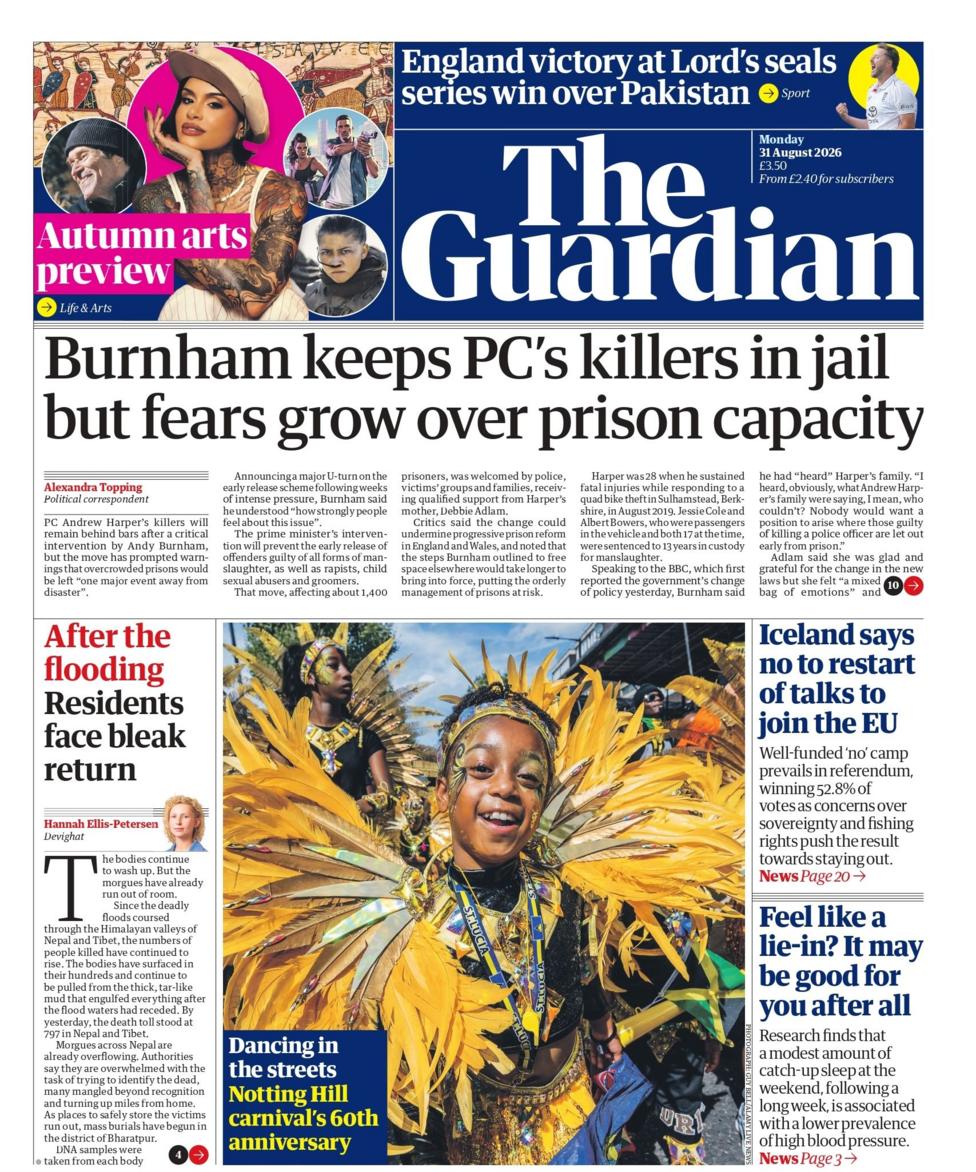
A contrasting perspective appears in coverage that emphasises the dangers of inaction. One outlet quotes critics from the reform-minded side of the debate, who argue
the change could undermine progressive prison reform in England and Wales. These voices warn that overcrowded prisons are
one major event away from disaster, suggesting that without releasing some prisoners, the system itself faces collapse.
How will the scheme affect victims and prisoners?
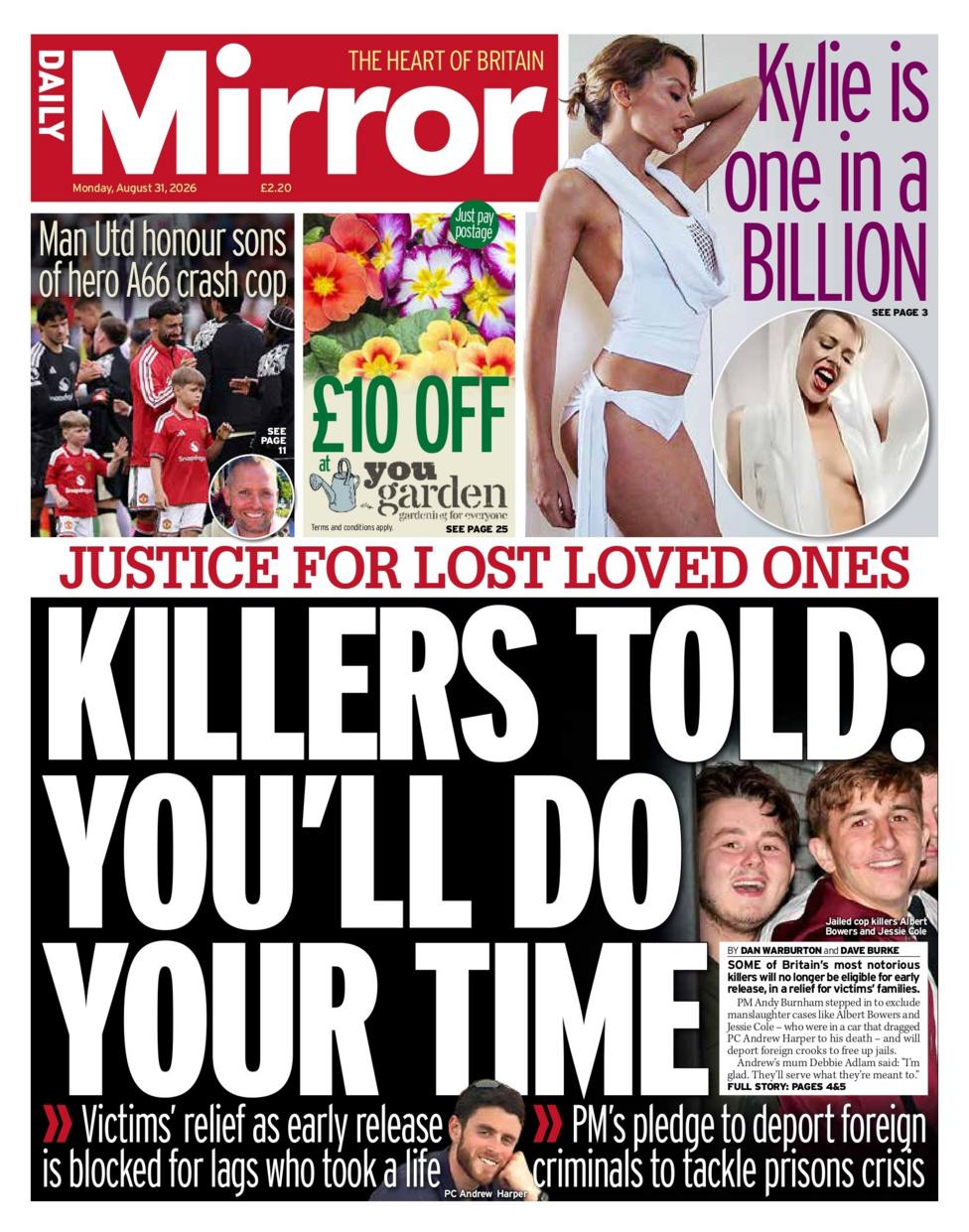
The Daily Mirror characterises the prison release changes as arriving
a relief for victims' families, while also reporting that Burnham has pledged to
deport foreign criminals to tackle prisons crisis. This dual approach attempts to address both the capacity problem and public concerns about foreign nationals in the system.

According to analysis of the policy changes, the revised scheme is now estimated to affect around 5,000 prisoners rather than the earlier projection of 6,000, following the expansion of exemptions. The early-release changes are scheduled to take effect from 1 October 2026, with prisoners in some categories moving to release at one-third or halfway through their sentences instead of later points.
What other stories dominate the front pages?
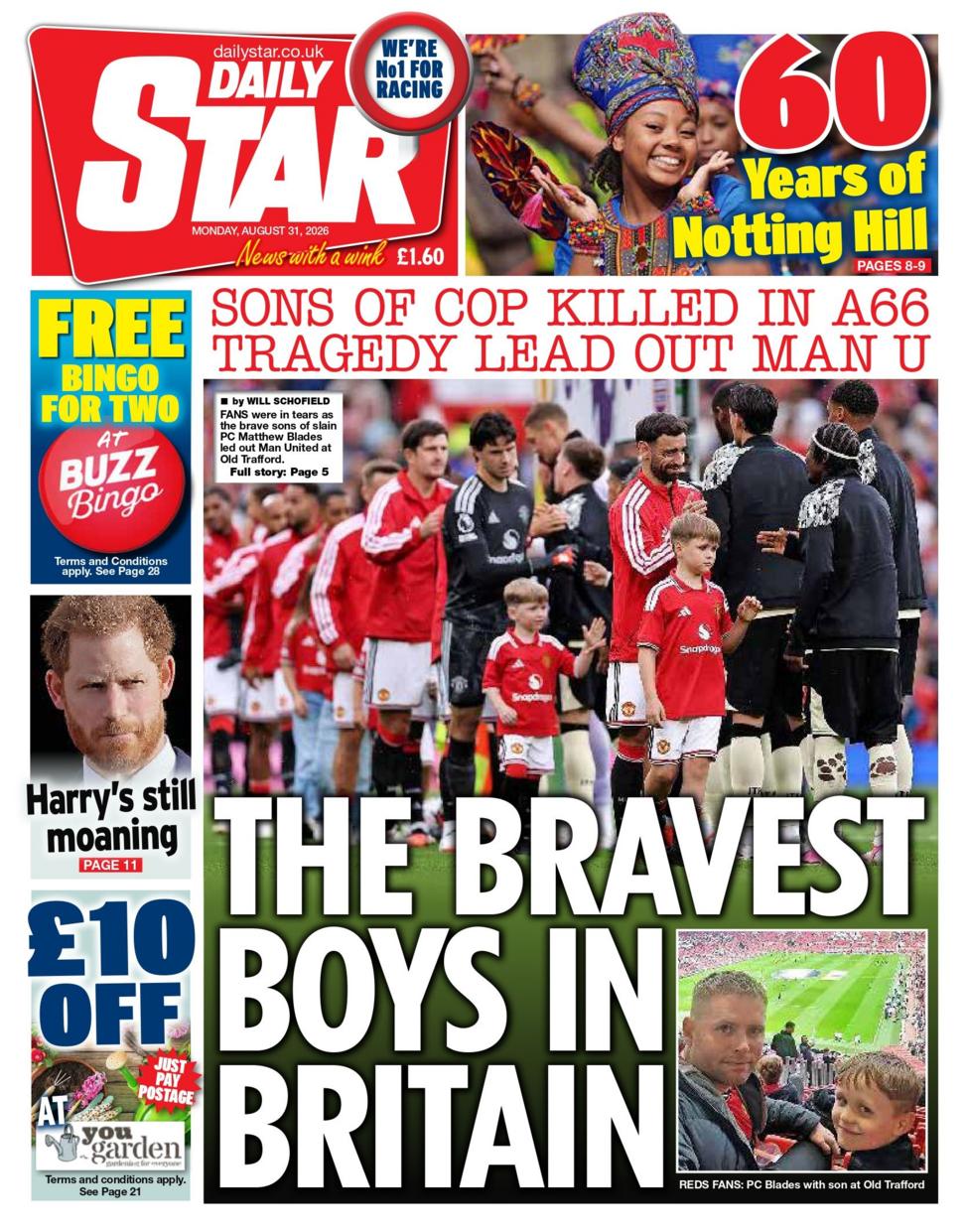
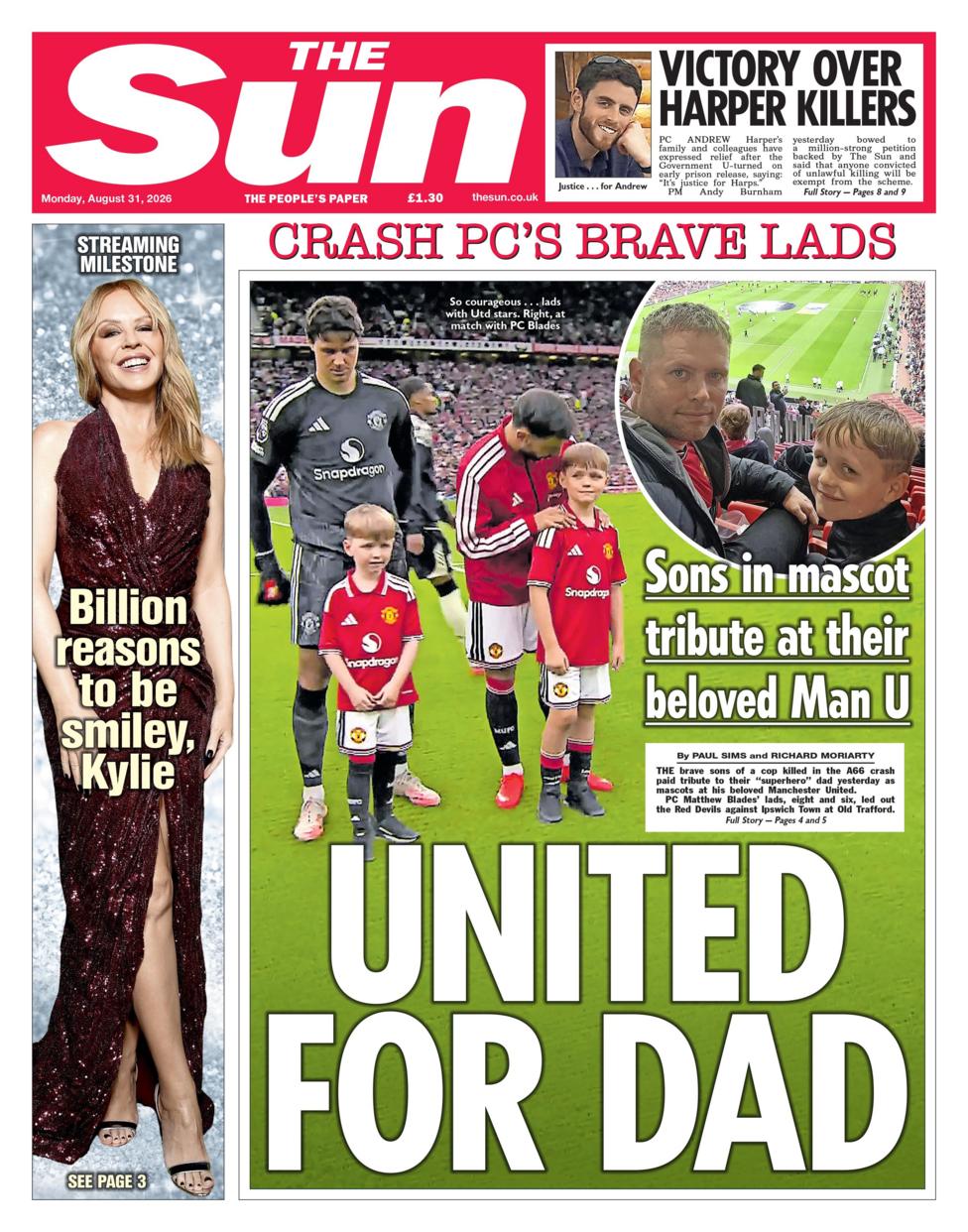
The Daily Star describes the sons of police constable Matthew Blades, who died in the A66 fatal crash, as
The bravest boys in Britain. The paper reports that they led out Manchester United, the team their father supported, on Sunday at Old Trafford, where tributes were paid to the fallen officer.
The Sun similarly leads on the tributes at Old Trafford and commends PC Blades's sons as
brave lads, reflecting widespread media recognition of their composure during a period of grief.
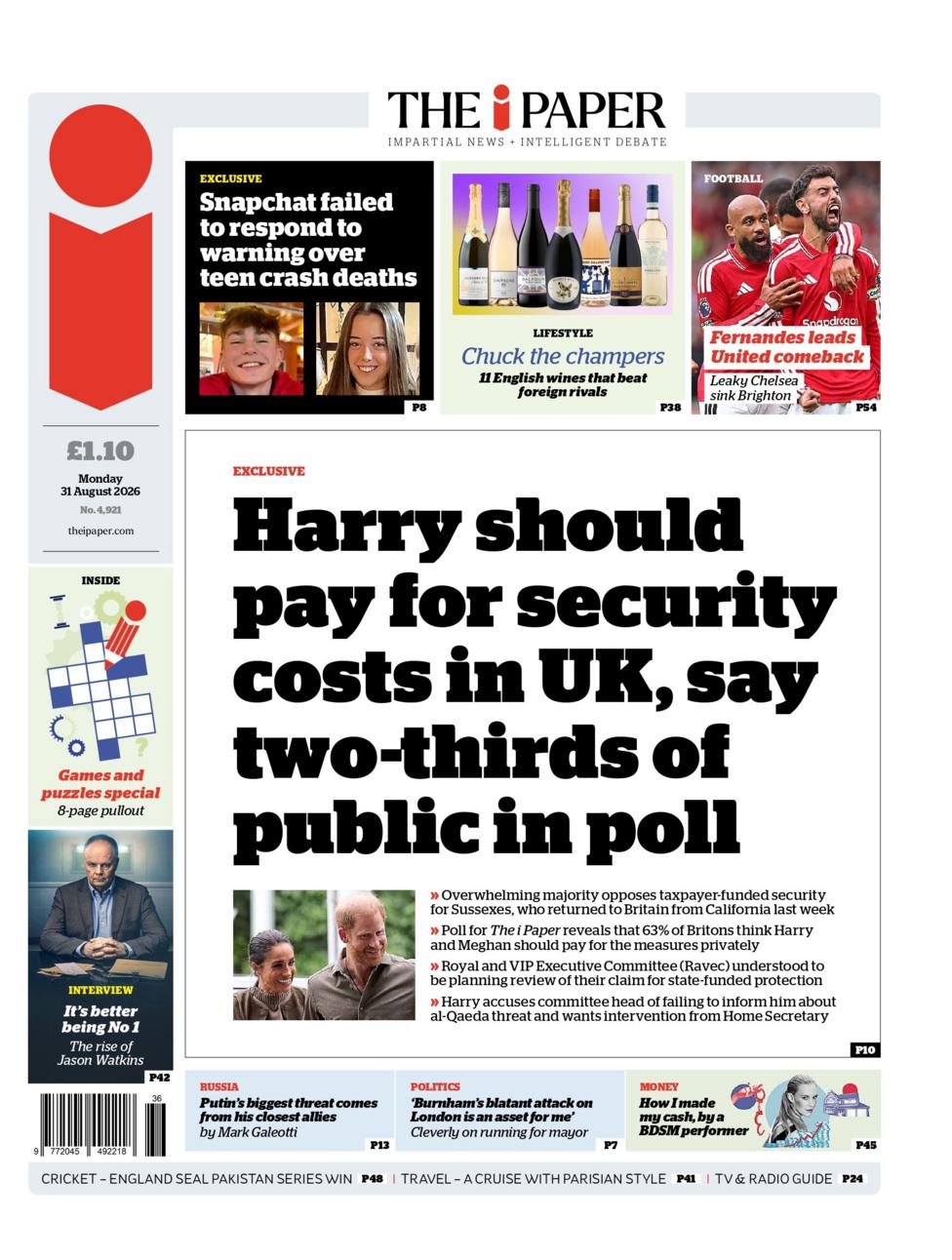
Polling commissioned by the i Paper reveals that 63 per cent of Britons believe the Duke of Sussex should pay for his security costs in the UK. The paper reports that the independent committee which oversees royal security is
understood to be planning a review of their claim for state-funded protection, which the Sussexes have not received when visiting the UK from California in recent years.
The Financial Times reports that major technology firms are enjoying substantial gains from their stakes in artificial intelligence companies. According to the outlet,
Big tech firms "enjoy $160bn (£118bn) paper boost from stakes in AI groups", with companies such as Alphabet, Amazon, Nvidia and Microsoft recording significant increases. However, the paper notes concerns that these firms
are overstating the strength of the AI boomand
risk distorting the financial picture at a time when investors are closely scrutinising tech earnings.

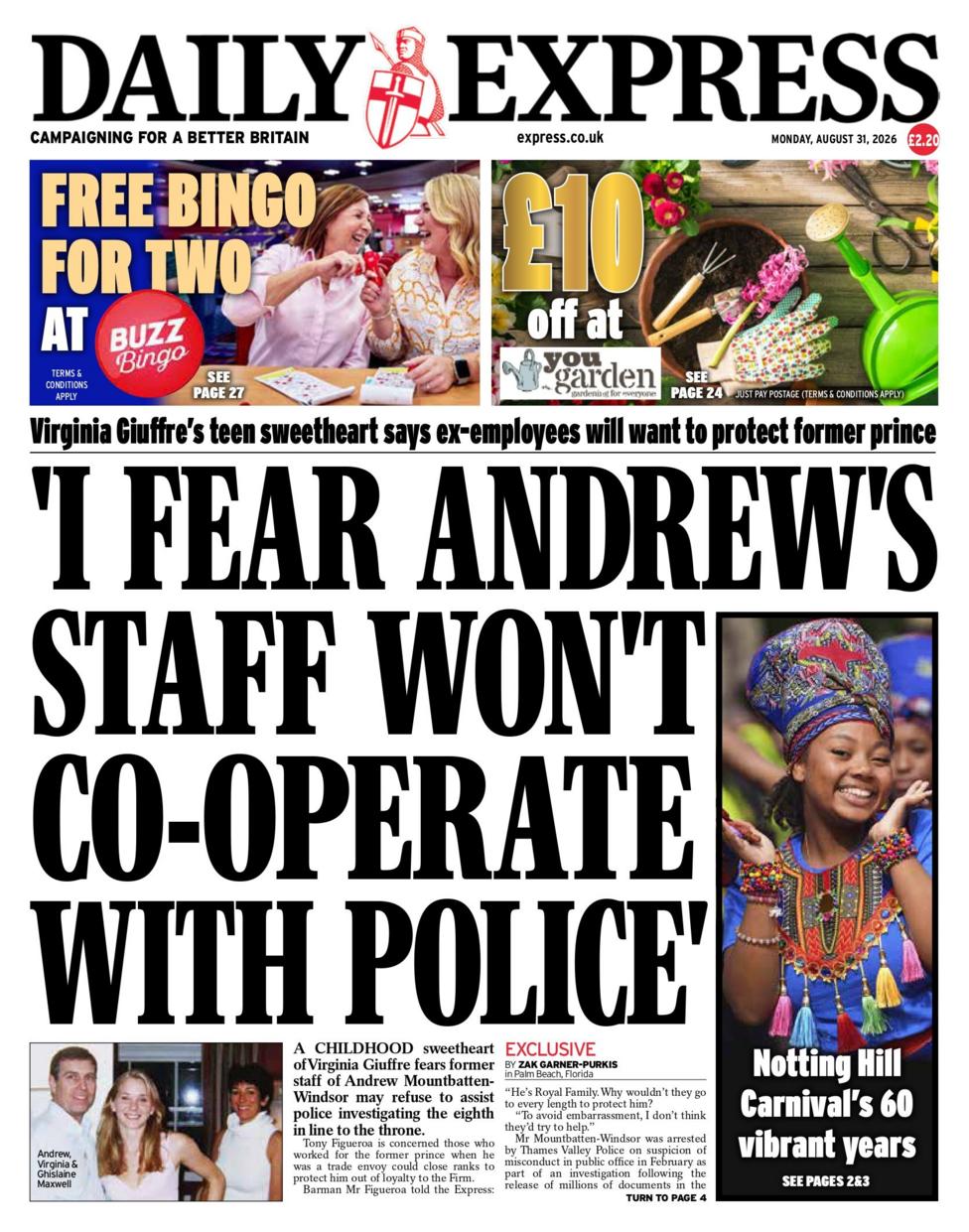
The Daily Express reports that a
childhood sweetheartof Virginia Giuffre fears that staff associated with Andrew Mountbatten-Windsor
won't cooperatewith police investigations. The friend of the late Jeffrey Epstein accuser questions whether royal associates would want to
embarrassthe former prince by assisting authorities.
What happens next?
Parliament is expected to return from recess in early September, when the government is set to present further prison-capacity plans. The early-release scheme itself is scheduled to begin in October 2026, giving the government a narrow window to address ongoing concerns about the prison system's stability and public safety.
Key Facts
- The revised early-release scheme now exempts offenders convicted of murder, manslaughter, unlawful killing, historical grooming offences, causing or allowing the death of a child, and causing death by dangerous driving
- The policy is estimated to affect around 5,000 prisoners and takes effect from 1 October 2026
- Prisoners in some categories will be released at one-third or halfway through their sentences under the new rules
- A majority of Britons (63 per cent) believe the Duke of Sussex should fund his own UK security costs, according to polling by the i Paper
- Major technology companies including Alphabet, Amazon, Nvidia and Microsoft have seen substantial gains from AI investments, though concerns persist about overvaluation