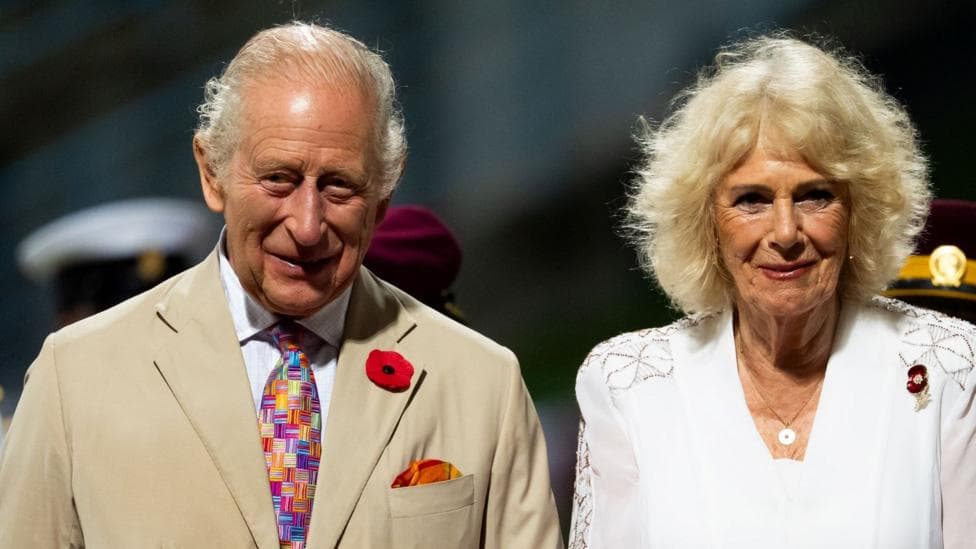
King Charles III and Queen Camilla are attending the Commonwealth Heads of Government Meeting in Antigua and Barbuda as debate intensifies over whether the United Kingdom should formally apologise for its involvement in the Atlantic slave trade and provide financial reparations. Buckingham Palace has moved to clarify the monarch's constitutional position, stating that his role centres on "inspiring and convening, rather than policy making" — a distinction aimed at distancing the Crown from the contentious political discussions unfolding at the summit.
According to BBC News, the Palace statement arrives as Commonwealth leaders gather to address the painful legacy of slavery and its ongoing consequences. The King is scheduled to deliver the summit's opening address on Tuesday, 3 November, where he is expected to acknowledge the historical suffering caused by the slave trade with what the Palace described as "unflinching honesty" and "sincere sorrow."
Prime Minister Andy Burnham has signalled openness to a formal apology, stating on Saturday that the UK "must face up to the past" over the "brutal and barbaric violation" of the slave trade. However, his government has explicitly ruled out financial reparations. On Monday, his official spokesperson clarified that while Burnham had "expressed his sorrow and regret for the pain and suffering caused by the transatlantic slave trade," this sentiment remained "distinct from a formal apology." The spokesperson added that any apology "of this significance should be informed by the people and countries most affected," suggesting that Burnham believes such a decision requires consultation with affected nations and communities.
Foreign Secretary Ed Miliband reinforced this cautious approach, stating that the UK was "self-confident enough to have this conversation." He outlined that "the dialogue we're setting up will consider whether and how a formal apology could help acknowledge the history, help heal the division and support stronger relationships for the future." This framing positions the government as willing to explore the possibility rather than commit to it immediately.
The political landscape remains divided. Conservative Party leader Kemi Badenoch has rejected what she characterised as "endless talk about apologies," calling such discussions a "distraction" from addressing the UK's current domestic challenges. Her position reflects a broader conservative argument that historical accountability should not overshadow present-day priorities.
What is the King's actual role in Commonwealth decisions?
The King's constitutional position means that any formal apology issued in his name must reflect the advice of government ministers, making it fundamentally a political decision rather than a personal one. Buckingham Palace's statement emphasises that the monarch functions as a unifying figure above partisan divisions, with the Commonwealth described as a "family" of nations. The Palace characterises the King's "most significant contribution" as "helping to connect leaders, institutions and investors — many of whom he knows personally from his many years of international diplomacy" — a role focused on facilitating dialogue and creating conditions for Commonwealth-led initiatives rather than determining policy outcomes.
This positioning reflects the constitutional principle that the Crown acts on ministerial advice, ensuring that major political statements remain the responsibility of elected officials. The Palace's clarification serves to manage expectations that the King might independently commit the UK to an apology or reparations framework.
What are Caribbean nations demanding?
Caribbean leaders have made clear that an apology alone would be insufficient to address the historical injustices of slavery. Gaston Brown, Prime Minister of Antigua and Barbuda, has emphasised that the consequences of slavery "have not disappeared with the passage of time" and has called for substantive discussions on reparations. According to The Journal, Barbados Prime Minister Mia Mottley welcomed Burnham's offer of dialogue and indicated she would participate through CARICOM, the Caribbean Community organisation.
Before the King departed the UK, Guyana's President Mohamed Irfaan Ali stated that an apology would represent "the next step" following the King's recognition of slavery as one of humanity's darkest periods. This framing suggests Caribbean leaders view an apology as a prerequisite for deeper negotiations on reparations rather than a final resolution. The Commonwealth Heads of Government Meeting encompasses 56 member states and carries the theme "Accelerating Partnerships and Investment for a Prosperous Commonwealth," though slavery reparations have emerged as a central issue.
What has the King said about colonial history previously?
King Charles has employed notably strong language when addressing colonial-era violence in past engagements. During a visit to Kenya, he spoke of his "greatest sorrow and regret" regarding the "abhorrent and unjustifiable acts of violence" perpetrated during the colonial period. In the Bahamas last week, he referenced the "great suffering of the past," and in Antigua he is anticipated to voice his "sincere sorrow" for historical wrongs. These statements demonstrate the King's willingness to use emotionally direct language about colonial injustices, though they fall short of formal apologies or commitments to reparations.
The King's Caribbean tour, which began in the Bahamas, has included symbolic gestures such as dancing at a Junkanoo parade while simultaneously facing calls for reparations. His itinerary has taken him through nations with deep historical connections to the Atlantic slave trade, positioning the tour as an opportunity for the Crown to engage with the legacy of British colonialism across the region.
What is the government's position on individual liability?
Burnham has articulated a position that contemporary British citizens cannot be held personally liable for historical wrongs in which they took no direct part. This argument underpins the government's resistance to financial reparations, framing the issue as one of historical acknowledgement rather than contemporary compensation. The distinction between expressing regret and accepting financial responsibility has become central to the UK government's negotiating stance.
What happens next at the summit?
The King's address on Tuesday, 3 November, will set the tone for the remainder of the summit, which continues through Wednesday, 4 November. Reparations campaigners have planned demonstrations and are urging Commonwealth leaders to initiate formal negotiations on the issue. The outcome of discussions between the UK government and Caribbean nations during these two days will likely shape the trajectory of slavery reparations discussions beyond the summit itself.
The Palace's clarification of the King's non-political role suggests that any formal apology or commitment to reparations negotiations will emerge from government-to-government discussions rather than from royal pronouncements. This approach preserves the constitutional separation between the Crown and executive policy decisions while allowing the King to acknowledge historical suffering within the bounds of his ceremonial and diplomatic functions.