

Recovery teams began removing carriages from the site of a train derailment near Lewes on 21 August 2026, more than a week after a Southern service carrying around 150 passengers came off the tracks. Thirty people were injured, two of them seriously, when the 14:24 BST service from London Victoria to Eastbourne derailed on Thursday 13 August 2026 at approximately 15:54, according to the official government report, which identifies the train as service 1F34.
Heavy lifting equipment has been deployed to clear the scene, and footage circulated online showed carriages that remained upright being moved through Lewes station overnight as the wider recovery effort continued. Network Rail confirmed that two of the four carriages at the site were lifted and relocated on Thursday, with the remaining two scheduled to be moved the following day.
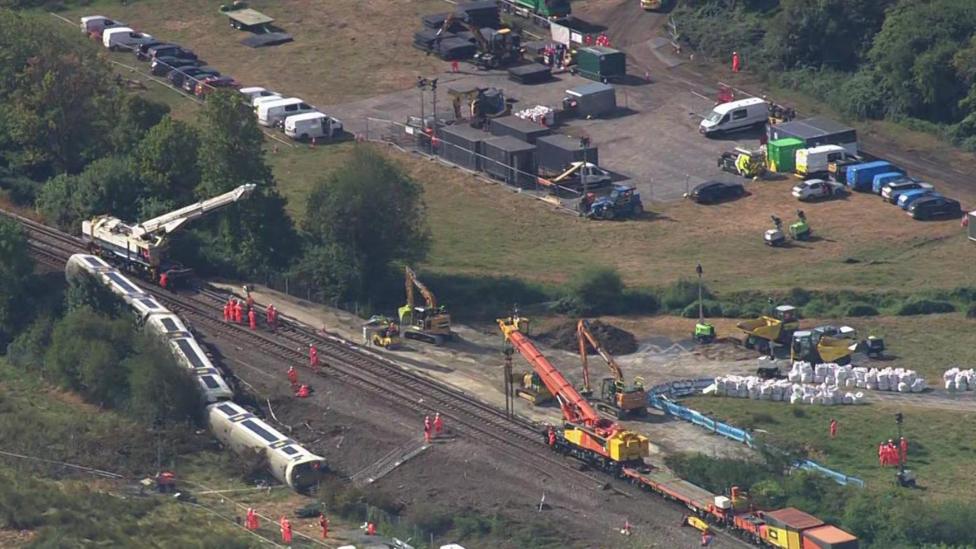
This derailment was the first of two derailments to hit the English rail network within roughly 24 hours, with a separate Greater Anglia train coming off the tracks near Wickford in Essex the same day without injuries. Network Rail has said the extreme summer heat placed what it described as exceptional strain on infrastructure across the country during that period, and initial figures suggested 20 passengers had been hurt before the total was later revised to 30.
What caused the derailment?
A preliminary report from the Rail Accident Investigation Branch (RAIB) identified a defect in the track at the point where the train left the rails. Investigators are continuing to examine how the section of track was inspected and maintained, the condition of the surrounding embankment, and whether the hot weather that day may have contributed to the fault.
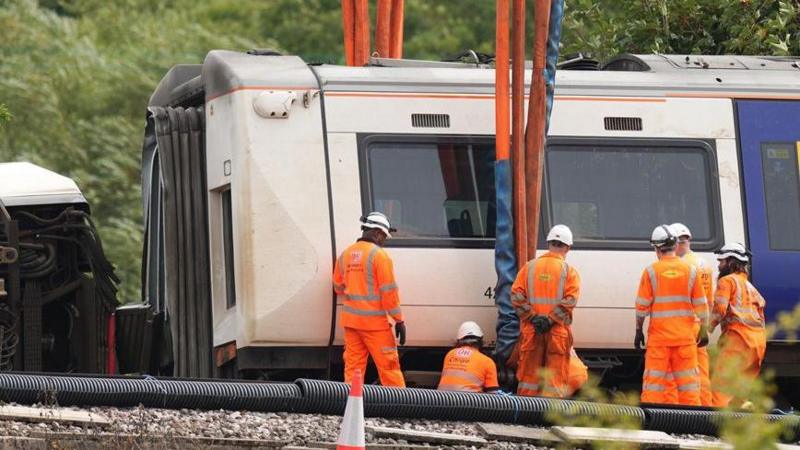
According to a rolling update from investigators, CCTV footage recorded on other trains using the same line showed a track geometry irregularity in the period before the derailment occurred, indicating the fault existed ahead of the incident. The same reporting notes that investigators have found evidence of previous maintenance activity near the site, a detail that has become central to understanding why the condition of the line is under such close scrutiny. Separately, according to a newspaper report, the derailment took place on what was the hottest day of the year so far at the time.
Network Rail and Govia Thameslink Railway (GTR), which operates the Southern brand, have said they will consider the RAIB's recommendations and act on them once the investigation is complete.
How are passengers describing the line?
Regular users of the route say the stretch of track had a reputation for instability well before the accident occurred. Rob Bradley, from Eastbourne, who was travelling with his daughter at the time of the derailment, described the ride as unsettled.
"I never thought at all that you could end up in a derailment because of it."
"You think it's a railway and there's going to be some bumps along the way. I never thought about it leading to such an accident."
Lewes MP James MacCleary said the RAIB's initial findings were "deeply concerning" and confirmed that the roughness of the line was already widely recognised locally.

"It's kind of well-known locally how bumpy that stretch of track is."
He said it was common to see "people's coffee flying around on tables and people struggling to type on laptops" on that section of line, and that he had personally raised concerns with Southern on more than one occasion before the derailment. He added that his main worry was that the problem had been flagged previously, yet a derailment still happened.
Passenger John May recounted how some travellers became trapped inside the carriages after the train came to rest on its side. He said several people managed to climb out unaided, but many others had to wait in hot conditions until firefighters arrived with ladders to help them escape.
When will the line reopen?
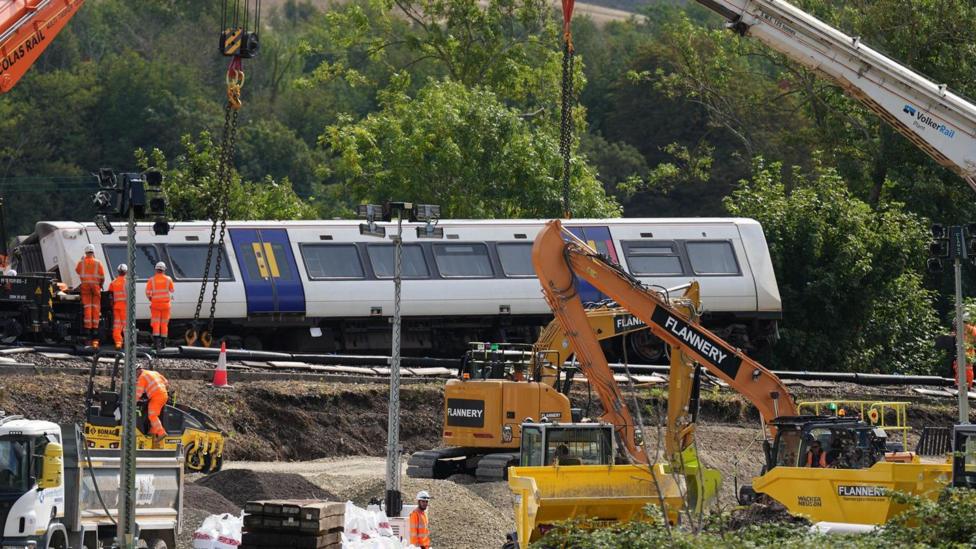
Network Rail and GTR have said the line between Haywards Heath and Lewes is due to reopen on 1 September 2026, following a complex programme of work to move the train and assess damage to both the track and the embankment before repairs can begin. However, according to National Rail's own disruption notice, the closure is now expected to run until at least the end of service on Wednesday 26 August 2026, with officials warning it could extend beyond that date. National Rail also states that there remain no direct services between London and either Eastbourne or Hastings, with disruption continuing to affect routes between London Victoria, Eastbourne, Ore, Brighton and Seaford.
Temporary foundations and platforms have been built to support heavy machinery, and specialist cranes have been brought to the site. Rigorous testing and inspection work is planned before services are allowed to resume.
Lucy McAuliffe, Network Rail's Sussex route director, said the location of the derailment beside the River Ouse had made the reinstatement work particularly difficult.
"The recovery is being carried out with careful consideration for the area around the derailment site, ensuring the area's ecology is protected and being mindful of residents living nearby."
GTR chief executive John Whitehurst said reopening the line before the end of the school summer holidays remained a top priority.
"Getting the line open in time for the end of the school holidays is an absolute priority for us, and we are working closely with Network Rail to achieve this despite very challenging circumstances."
Following the publication of the preliminary RAIB report, McAuliffe and Whitehurst issued a joint statement insisting that the wider rail network in Britain remains among the safest in the world, while stressing it was essential to establish exactly what happened and identify any lessons to be learned.
What happens next?
Investigators handed the site back to Network Rail on 15 August 2026, though RAIB inspectors remained present until 17 August to support the recovery operation and preserve evidence, according to the government's official update. The same source indicates the recovery plan involves lifting the derailed carriages using a rail crane before transporting them by road to secure storage.
The RAIB's investigation remains ongoing and is expected to examine the precise cause of the derailment, the condition of the track and embankment, the weather conditions at the time, the train itself, and the emergency response. Further findings are anticipated once analysis of evidence gathered from the site and from the train's data recorders is complete.
- Southern service 1F34, the 14:24 London Victoria to Eastbourne train, derailed near Lewes at around 15:54 on 13 August 2026
- Thirty passengers were injured, two seriously, out of roughly 150 on board
- A preliminary RAIB report has identified a track defect at the derailment site
- The Haywards Heath to Lewes line is due to reopen either on 1 September or by 26 August, according to differing statements from GTR/Network Rail and National Rail respectively
- CCTV from other trains reportedly showed a track irregularity before the derailment occurred


