Approval Granted for Gym and Pool at Historic Manor Amid Greenhouse Controversy
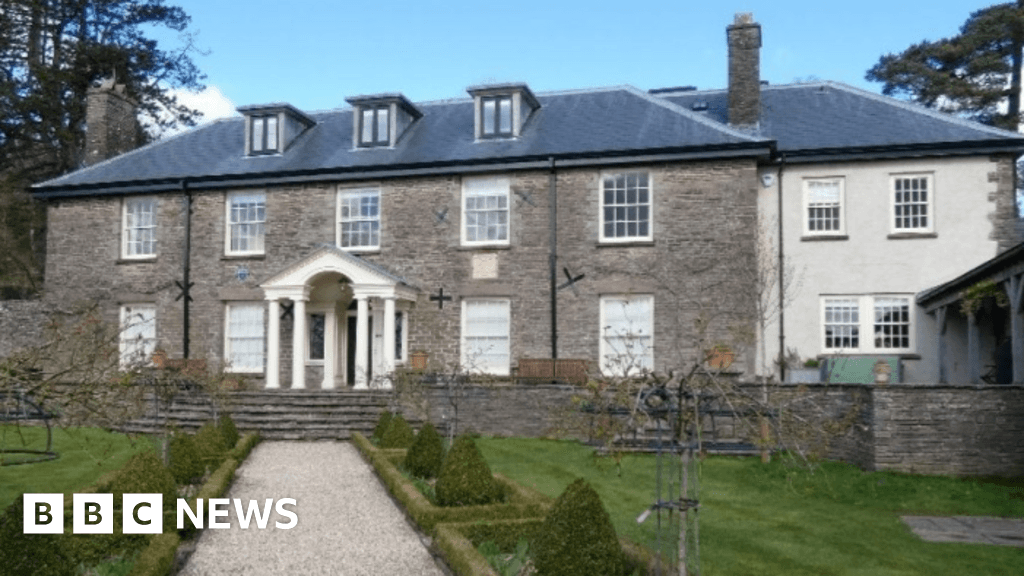
Plans to add a home gym and swimming pool at Great Campston Manor, a historic estate visited by royalty, have been approved despite ongoing disputes over a greenhouse deemed "objectionable" by planners for its overly "domestic" appearance.
Andrew Blowers, owner of the Grade II-listed Great Campston Manor located in Grosmont near Abergavenny, Monmouthshire, oversees the 200-acre estate which was listed for sale in 2018 at £4.5 million.
Without obtaining planning permission, Mr. Blowers constructed a "modern and highly reflective" greenhouse on the property, which holds historical ties to King Charles I.
Local planners reported unsuccessful efforts in a "lengthy negotiation for its removal" but nonetheless granted permission for the construction of the gym and swimming pool, along with listed building consent.
The manor itself is an 11-bedroom residence dating back to the 17th century. It was officially listed in 1952 and underwent a significant enlargement in 2002. Additionally, a barn on the grounds received Grade II listing in 2002. The estate continues to operate as a working farm.
Monmouthshire council's planning department had considered rejecting the application, which was submitted in April of the previous year, primarily due to concerns regarding the greenhouse.
Planning officer Kate Bingham described the greenhouse in her report as:
"domestic, modern and highly reflective" and as such said it was "particularly detrimental in the setting of the listed buildings".
Despite this, the report clarified that the greenhouse would remain but would not be covered or approved by the current application.
"It has been considered objectionable and although lengthy negotiation for its removal on plan and in physical form has failed to reach agreement, it will be conditioned that notwithstanding the application, 'a greenhouse is not consented as part of this consent',"
the report stated.
The council noted that refusing the entire application—which includes changing the use of 226 square metres (2,432 square feet) of the existing farmyard to residential curtilage to accommodate the swimming pool and a new four-bay car port—would be "considered disproportional."
During the application process, the plans were revised, and the design of the new building was "significantly improved" to be acceptable in terms of "scale, form and design."
According to the submitted plans, evergreen planting to the south of the greenhouse is intended to "break up" views, complemented by enhancements to the site's biodiversity.
Historical Significance of Great Campston Manor
A public footpath running along the driveway south of the site was once part of 17 monastic granges belonging to the Cistercian Abbey of Abbey Dore, established in 1147 and colonised by monks from the Champagne region of north-east France.
The estate is also historically notable for the Battle of Campston Hill at Grosmont in 1404, where the last Welsh-born prince, Owain Glydwr, suffered a significant defeat to English forces.
Following the dissolution of the monasteries in 1536, Great Campston was granted to John Cokke of London before being acquired in 1600 by John Pritchard, a prominent figure in the village's history.
King Charles I visited Great Campston Manor in 1645 on his way to Raglan following the Battle of Naseby.