
School and college leaders in England have warned that the annual cycle of pupils failing and then repeatedly resitting GCSE maths and English is not working, after results published on 20 August 2026 showed nearly one in four maths and English GCSEs were taken by candidates aged 17 or older. The Association of School and College Leaders (ASCL) said most of those retaking the exams end up failing again, and the government has responded by confirming plans for a new lower-level qualification aimed at breaking the pattern.
According to ASCL, a substantial share of students never manage to pass GCSE maths or English, and the union says repeated resits leave many young people trapped in what it calls a demoralising loop rather than moving forward with their education or careers.
Why are so many older students still sitting GCSE exams?
The answer lies in the funding and progression rules attached to post-16 education: courses and jobs frequently require a GCSE pass in maths and English, so students who fall short as 16-year-olds are routinely entered for the exam again in subsequent years. The Department for Education (DfE) says resitting is not compulsory, but colleges tend to put students forward once staff judge them ready to try again.
Because 17-year-olds and older candidates pass at much lower rates than first-time 16-year-old sitters, their results drag down the overall national GCSE figures across England, Wales and Northern Ireland. Our earlier analysis of this year's results found rising resit numbers alongside a narrowing gender gap and a widening regional divide in outcomes; see our breakdown of five things this year's GCSE numbers reveal. Students unsure of their next step after receiving results can also consult our guide to appealing, resitting or planning ahead after GCSE results day.
What has the education union said about the current system?
Pepe Di'Iasio, general secretary of ASCL, described the repeated cycle of failure and resitting as akin to force-feeding students an unrelenting diet of GCSE English and maths coursework. He linked the problem directly to wider social outcomes for young people.
"This limits their education and career options and is very likely to be a factor in the large number of young people who end up not in employment, education or training," he said.
ASCL has raised similar concerns before; in commentary published in April 2026, the union described the ongoing demands of English and maths resits as a "treadmill" that harms learners, a criticism that the union's own blog says has only grown louder as resit numbers climb.
How is this affecting individual families?
Marianne, from Cambridgeshire, described results day as a "mixed bag" for her two sons. Her younger son, Jake, achieved a grade 8 in maths, but her older son, Tobias, missed the pass he needed despite sitting the exam for a fifth time.
"He was very upset," Marianne said. "He turns up for his lessons, he puts great effort in, there's just something about maths he doesn't get. What do we do now?"
Tobias had collected solid A-level results the previous week, including a grade B in history and two grade Cs in politics and criminology, but his hopes of training to become a history teacher remain on hold without a GCSE maths pass.

"It's horrendous making him keep doing it. I don't think it's fair, the pressure on them to keep resitting it," Marianne said.
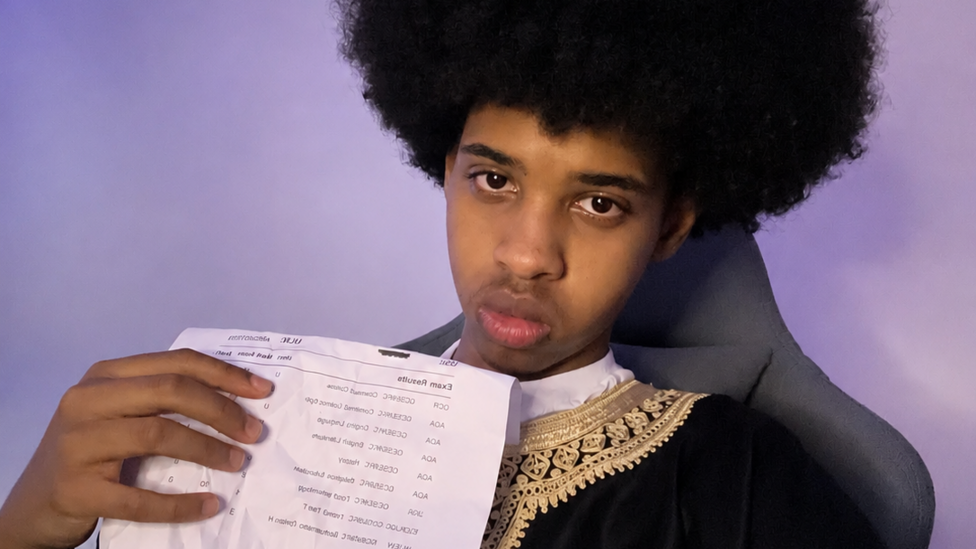
Abdi, 17, from east London, has now failed to pass maths and English GCSE on three occasions and says the pressure to succeed next time is tied directly to his ability to continue his course.
"I have to get my retakes right next time, or they won't let me complete my course at college," he said. "My school has provided extra classes to help prepare for the exams, but you have to be self-disciplined because juggling resits and college is not easy."
Abdi is due to resit both subjects in November 2026.

What is the government's proposed solution?
Ministers say they want to end what they describe as an "endless treadmill of unnecessary resits" and have announced a new Level 1 qualification — one tier below GCSE — due to be introduced from 2028 for students who do not achieve a pass in maths or English. According to guidance published by the Department for Education's qualification reform hub, the new qualification is intended to give students who have not closed their knowledge gaps a structured step before they attempt a GCSE resit, rather than serving as a replacement for the GCSE itself. Coverage from a national broadcaster on 20 August 2026 reported that ministers expect the stepping-stone route to stop future cohorts of students from being funnelled into the current resit cycle, as described in that broadcaster's report.
Further detail from the examining body OCR indicates the new qualification is aimed principally at learners who achieved a grade 2 or below at GCSE, according to OCR's published proposals. Separately, sector title FE Week has reported that the existing condition of funding — which requires 16 to 19-year-olds to keep studying English and maths until they achieve a grade 4 — will remain in place even after the new qualification is introduced, according to FE Week's reporting. Coverage from another national outlet has also linked the reform to broader post-16 changes, suggesting the new pathway will connect into new technical routes launching from September 2028, according to that outlet's report.
The DfE has said a student would typically be directed towards the new qualification only after sitting GCSE maths and English and failing to achieve a pass, with the aim of building essential knowledge and skills before they are entered for exams again — and only when staff judge them ready.
Is this idea genuinely new?
Not entirely. The proposal for a Level 1 stepping-stone qualification was already under discussion in October 2025 as part of wider post-16 reform plans, according to earlier reporting from a national broadcaster, which suggests the government has been developing this response to resit failure rates for close to a year. The current plan follows a government white paper response addressing persistently low resit success rates in post-16 education, according to the DfE's own reform guidance.
What do college leaders make of the proposal?
Catherine Sezen, from the Association of Colleges, said the stepping-stone qualification sounded promising in principle but argued that it should be made available to students long before they reach the point of failing GCSEs.
"We have to look at what happens probably from reception right the way through, because young people who don't achieve very well in their SATs at 11 are really unlikely to achieve a grade 4 at 16."
She described this year's resit figures as disappointing and slightly demoralising for everybody, though not entirely unexpected, pointing to lingering disruption from the coronavirus pandemic among the cohort now sitting these exams.
"I think we're still also seeing the legacy of the pandemic," she said. "These young people would have been in Years 6, 7 and 8, and so possibly haven't necessarily got the basic foundations in these subjects which are really fundamental."
Does the resit system ever work?
Not every story ends in disappointment. Amandeep, 17, a student at Sandwell College in the West Midlands, failed her maths and English language GCSEs a year earlier but discovered on results day, 20 August 2026, that she had achieved a grade 5 in both.
"I teared up, I thought my patience had paid off," she said. "It happened for a reason, it was meant for me this year."
Her results now allow her to progress onto a T-level course in health and social care.

Resitting is not confined to teenagers. Wynne Hindle, 52, a grandmother from Sudbury in Suffolk, passed GCSE maths on 20 August 2026 with a grade 4 after sitting the exam five times.
"I was very happy and shocked to pass," she said. "I just wanted to achieve something and I'm a resilient person."
Hindle, a former nanny and nursery nurse, now hopes to work in a school and says the experience has been part of a longer personal journey. Her advice to others still caught in the resit cycle is simple: "Keep at it."
What happens next?
The DfE has confirmed the new Level 1 qualifications are due to be introduced in 2028, though OCR says the first-teach date has not yet been finalised. Separate reporting suggests the wider post-16 pathway built around the new qualification is expected to unlock additional technical options for students from September 2028. Until then, the funding condition requiring continued study of English and maths up to grade 4 remains in force, meaning current students such as Tobias and Abdi will continue to face resits under the existing system.
Key Facts
- Nearly one in four maths and English GCSEs in England this year were taken by candidates aged 17 or older, mostly resit students.
- The DfE plans to introduce a Level 1 "stepping stone" qualification from 2028 for students who do not pass GCSE maths or English.
- OCR says the new qualification will primarily target learners who scored a grade 2 or below at GCSE.
- The existing funding rule requiring 16 to 19-year-olds to keep studying English and maths until grade 4 will remain in place.
- Individual outcomes on results day, 20 August 2026, varied widely, from repeated failure for students like Tobias and Abdi to eventual success for Amandeep and Wynne Hindle.