The Green Party faces a critical juncture following its adoption of a motion declaring Zionism a form of racism, according to Adrian Ramsay, a former party co-leader who has expressed deep concerns about the direction of the organisation. Speaking to the BBC, Ramsay argued that the party must refocus on its foundational environmental mission and adopt approaches that can appeal to a broad cross-section of British voters if it hopes to deliver meaningful climate action.
According to BBC News, the controversy centres on a motion passed by party members last month that characterised Zionism as an ideology underpinning "an ethnonationalist Jewish state" responsible for the "disenfranchisement and destruction" of Palestinians. The motion also endorsed the establishment of "a single democratic Palestinian state in all of historic Palestine", a position that encompasses the territory of modern-day Israel.
Current party leader Zack Polanski, who abstained from voting on the motion, has defended the party's stance by asserting that
there is "no environmental justice without social, racial and economic justice". However, on 18 October, Polanski announced he would not overturn the motion, stating it would remain party policy until 2028, though he indicated a desire to amend certain provisions at the earliest opportunity.
The motion passed with 1,022 votes to 813, with Polanski seeking amendments to remove the single-state position and to protect Jewish members who attend synagogues identifying as Zionist—both of which were rejected. The policy extends beyond the Zionism definition to encompass Palestinian right of return, support for the Boycott, Divestment and Sanctions movement, and a comprehensive arms embargo on Israel.
What triggered the backlash?
The motion provoked significant opposition from Jewish organisations and senior figures within the Green Party itself. Israel's foreign ministry announced it had banned Polanski, who is Jewish, from entering the country. The Equality and Human Rights Commission subsequently wrote to the Green Party requesting additional information about the motion following concerns raised by dozens of Labour and Liberal Democrat MPs as well as Jewish campaigners. The Board of Deputies of British Jews declared the Green Party a racist organisation in response to the policy. Labour went further, announcing it would terminate power-sharing agreements with the Greens on local councils unless its councillors publicly disavowed the policy.
What does Ramsay believe the party should do?
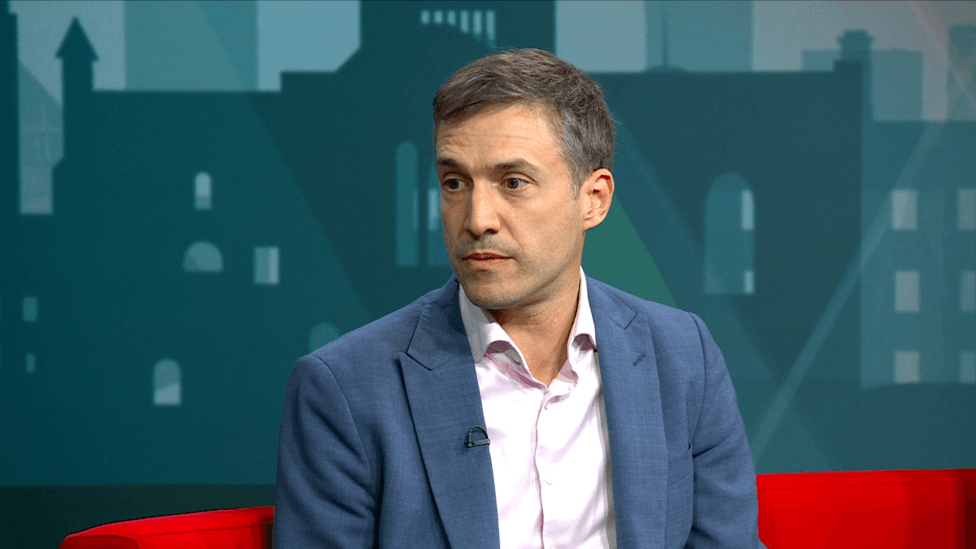
Ramsay, the MP for Waveney Valley who joined the party in 1998, has been vocal about his disagreement with the motion. When asked directly whether he considers Zionism racist, he responded
"no, it's not"before acknowledging his alignment with Polanski and others in condemning developments in Gaza as
"appalling". Unlike Polanski, Ramsay has explicitly stated that he believes Israel has a right to exist—a position the current leader has declined to endorse.
Describing himself as
"deeply uncomfortable"with the adopted motion, Ramsay suggested there exists an opportunity to take action regarding the policy ahead of the party's spring conference next year. He framed the moment as a decisive one for the organisation's future trajectory.
Ramsay articulated his concerns about the party's direction in stark terms:
"I think there's a real crossroads point for the party at the moment. One option is to sort of dig in more down this approach, not only in relation to this motion, but I think that there's a risk it brings with it - a quite divisive, a quite internally focused approach to politics."He characterised this approach as potentially reflective of
"small groups of people on the hard left of politics who go around different parties try to influence how those parties are run".
Instead, Ramsay called for the party to
"really focus back in on our core aims as a party and our core values". He emphasised that this refocusing should include
"consensus-building in how we approach our politics"and meaningful engagement with
"the grassroots of our membership".
How does this affect the party's electoral prospects?
Ramsay stressed that the Green Party can only achieve the transformative environmental changes necessary to protect society if
"the majority of the British public come behind that". This argument suggests that divisive positions risk alienating voters whose support would be essential for implementing climate policies. The tension between appealing to core activists and building a broader electoral coalition has become a defining challenge for the party.
Polanski, who was absent from the conference vote while unsuccessfully campaigning in a Westminster by-election, has previously characterised the motion as
"imperfect"and indicated his desire to see it amended in future. He has maintained, however, that the
"substantial part of the motion", that "the displacement and genocide of the Palestinian people is clearly underpinned by a racist ideology" was "obvious". Israel has repeatedly denied that its military operations in Gaza constitute genocide.
Under Green Party rules, motions supported by members automatically become official party policy, though they are not necessarily incorporated into the party's manifesto for the next general election. This distinction provides some flexibility regarding how prominently the Zionism position features in the party's electoral messaging.
What happens next?
The motion was originally submitted in February but was not addressed at the party's online spring conference due to time constraints. Under the party's procedural rules, the motion cannot be amended before 2028; Polanski has committed to seeking changes at the first available opportunity following that date. This timeline means the policy will remain in place through at least two more years of party activity and potentially through the next general election campaign.

The question now centres on how Polanski and the broader party membership will navigate this period of internal division. Ramsay's intervention suggests that pressure for reconsideration of the motion will persist within party structures, particularly as the spring conference approaches and the party prepares for electoral challenges ahead.