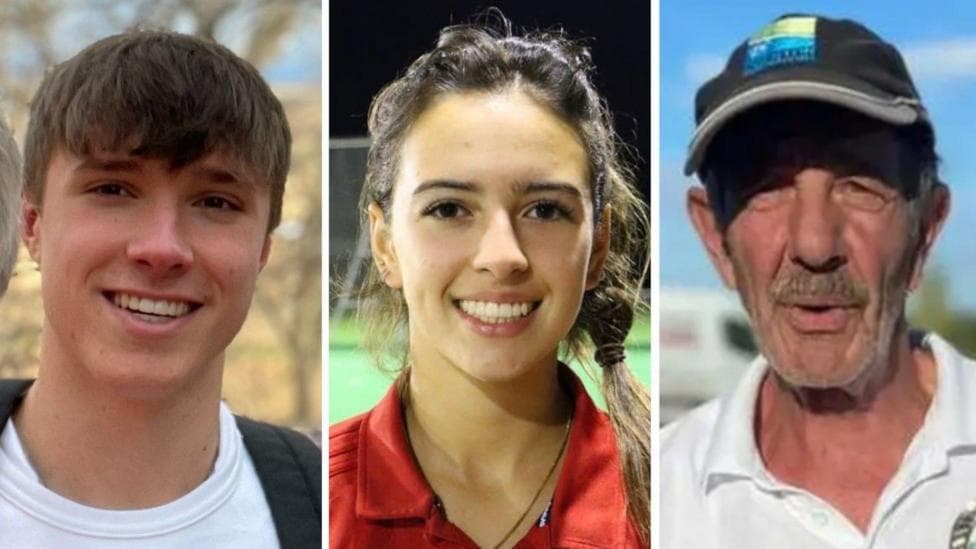
Relatives of three people killed in the Nottingham attacks on 13 June 2023 have accused police of failing to inform them that a man who had taken an interest in their families possessed a documented history of violence and mental health problems. The families learned only recently—through a separate investigation by the police watchdog—that the individual had been on the Prevent register, had been sectioned multiple times, and was known to be a violent offender.
Barnaby Webber, Grace O'Malley-Kumar, and Ian Coates were fatally stabbed by Valdo Calocane, who had received a diagnosis of paranoid schizophrenia in 2020. Calocane also attempted to kill three other people during the same incident. Nottinghamshire Police has now referred a fresh complaint to the Independent Office for Police Conduct (IOPC) over information the force allegedly withheld from the victims' families about a potential witness who had attempted to contact them.
What information were families not given?
Dr Sanjoy Kumar, father of Grace O'Malley-Kumar, stated that he was informed in 2025 by Nottinghamshire Police that a man from Nottingham, who had taken an interest in his family and the Webber family, had visited his medical practice in London. Police provided minimal details about the individual, with no mention of his psychiatric history or risk assessment.
They [the police officers] said it was a very low brow thing. There was no assessment of risk to me or my family. They didn't mention the word 'risk'.
Kumar explained that only through ongoing investigations into Nottinghamshire Police by the IOPC did he learn the full picture about the man's background.
Later, we found out from the IOPC that this guy was on the Prevent register, that he had been sectioned a few times or that he was known to be a violent offender.
Emma Webber, mother of Barnaby Webber, revealed that she and her family were not informed for 18 months that a man with a fixation on the case had travelled to Somerset, including to their home town, in an attempt to locate them. In a social media post, she expressed her anger at the situation.
Now we learn that another mentally ill man with a fixation on us and the Nottingham case travelled to Somerset, including our home town, seeking out victims' families; and the police chose not to tell us.
Why did families feel let down by police communication?
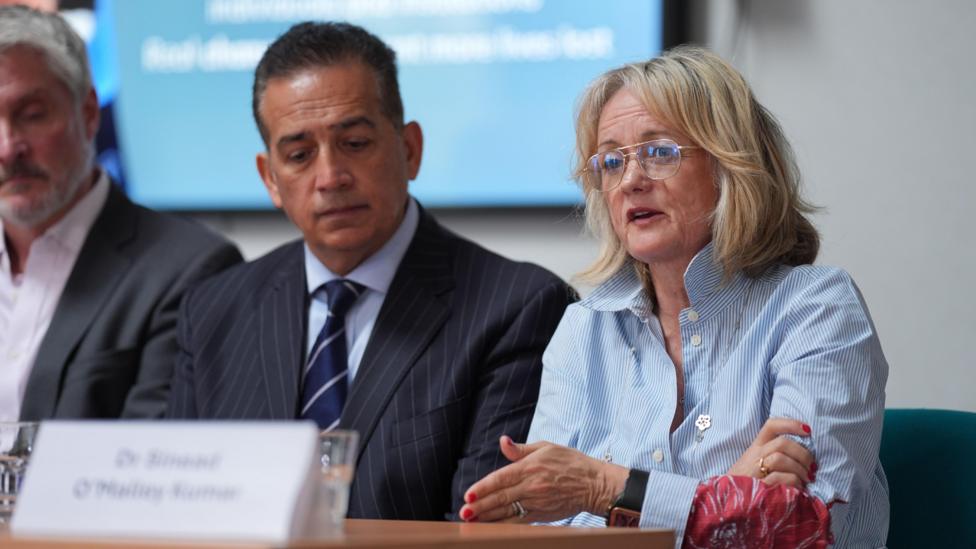
Dr Sinead O'Malley-Kumar, Grace's mother, told BBC Radio 4 that she was deeply troubled by the timeline of events. Police became aware of the man's behaviour in December 2024 but did not inform the families until approximately a year later.
And what's more concerning is that, as victims, we weren't given the proper information. We do not know what this man looks like. Should he ring on our doorbell? Should he come to our place of work again? The information has been minimal.
Dr Sanjoy Kumar called for greater transparency from authorities.
Just be transparent. That's all we wanted.He expressed his frustration at the lack of risk assessment and the failure to communicate the man's violent history.
I'm angry. Don't place my wife, don't place my other child at risk. Do these people not realise the tragedy we've been through?
What has the police watchdog said?
The IOPC confirmed it had received a referral of a complaint from Nottinghamshire Police in relation to information the force allegedly withheld from the families. A spokesperson for the watchdog stated it was assessing the referral to determine what further action was required.

The IOPC explained that it had spoken to the potential witness in January 2025 as part of its investigation into the force's interactions with Calocane prior to the attacks. Initially, it was unclear whether Calocane was the suspect for the matters reported to police by the witness, and the information was assessed as not relevant to the watchdog's inquiries. However, the IOPC made Nottinghamshire Police aware of the information so the force could take appropriate safeguarding measures.
We recognised that the families should have been updated that we'd spoken to this witness at the time and acknowledged that in a recent update to them.
The IOPC's investigation into Nottinghamshire Police was triggered by complaints from the families and will also examine allegations that officers missed opportunities to prevent the killings, including issues around an outstanding warrant for Calocane's arrest. The watchdog is also waiting for statements from former Nottinghamshire Police Chief Constable Kate Meynell as part of its handling of complaints linked to the Calocane case.
What has Nottinghamshire Police said?
A spokesperson for Nottinghamshire Police stated that the force received a complaint and, due to its nature, referred the matter to the IOPC on 24 August. The force is awaiting the watchdog's response.
Unfortunately, we cannot comment any further at this stage while an investigation is underway. We have updated the complainant throughout the process.
What is the broader context of police and NHS failures?
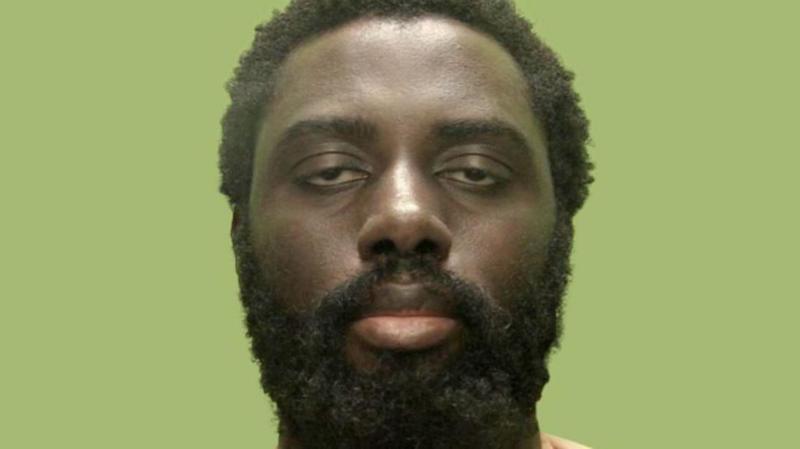
The case has exposed a series of failings by authorities, including police and mental health services, which Calocane was known to. In March 2026, families told the Nottingham inquiry they were "tortured" by authorities, and the hearing heard that Calocane had previously assaulted and stalked a former flatmate and attacked warehouse staff a month before the killings. Evidence presented to the inquiry revealed that Calocane had been committed under the Mental Health Act multiple times between 2020 and 2023.
A psychiatrist had previously warned that Calocane
would end up killing someone, yet this concern was not communicated to the university where he was a student. The inquiry has also examined concerns about officers viewing incident details on police systems without a policing purpose, which added to family concerns about how the case was handled.
The broader investigation into the attacks has prompted Northumbria Police to investigate Nottinghamshire Healthcare NHS Foundation Trust for corporate manslaughter over its treatment of Calocane. Additionally, the former Nottinghamshire Police chief has admitted that Calocane should have been arrested before his 2023 triple killing, with the inquiry revealing missed warrant execution and family concerns over police response.
Communication failures extended beyond the initial attacks. The son of Ian Coates, killed in the Nottingham attacks, learned of his father's death via Instagram, with the family facing delays and confusion in police communication and not being informed about a vigil until contacted by media.
What happens next?
The IOPC said it would speak with the families before finalising the terms of reference for its inquiries and expected to conclude and publish findings from related investigations in the coming weeks. The watchdog will continue communicating next steps to complainants as it reviews the complaint referred by Nottinghamshire Police.
A public statutory inquiry, which is examining the lead-up to the attacks and decisions taken in the aftermath, heard from more than 100 witnesses as the events were examined. The inquiry was set to resume in September 2023 to continue its examination of the case.
Key Facts
- Valdo Calocane, now 34, pleaded guilty to three counts of manslaughter on the grounds of diminished responsibility and three counts of attempted murder in November 2023, and was sentenced to an indefinite hospital order in January 2024.
- Families were not informed that a man with a documented history of violence and mental health problems had attempted to contact them, with some learning details only through the police watchdog's investigation.
- The IOPC is investigating Nottinghamshire Police's handling of information and its interactions with Calocane prior to the attacks, including examining an outstanding arrest warrant.
- The case has exposed systemic failures across police and NHS mental health services, leading to investigations into corporate manslaughter and a public statutory inquiry.
- Communication failures affected multiple families, with some learning of deaths through social media rather than official police notification.