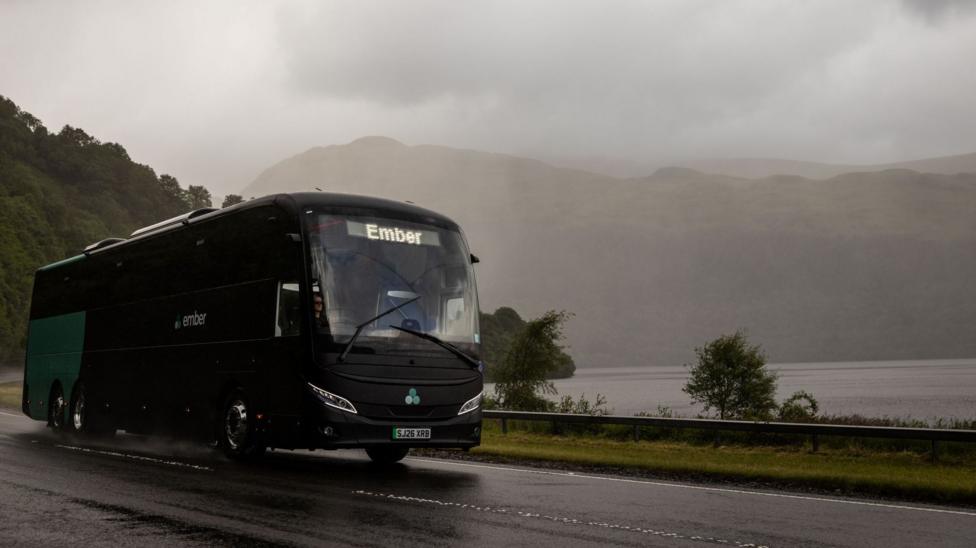
Electric bus operator Ember has expressed reservations about how Scotland's £2 fare cap will function across different regions, despite backing the scheme's underlying objectives. The company, which runs intercity services throughout Scotland, argues that while the policy is well-intentioned, its implementation could be improved to better serve passengers and operators alike.
Transport Scotland maintains that the capped fares will provide meaningful support to households struggling with living costs. The scheme is currently operating as a pilot across six local authority areas in the Highlands and islands, and First Minister John Swinney has announced its expansion to cover journeys in the west of Scotland from Monday 7 September 2026, encompassing Glasgow, Renfrewshire, Ayrshire, Dunbartonshire, Lanarkshire and Inverclyde.
Ember's primary concern centres on the practical mechanics of how the cap operates when journeys cross regional boundaries. The company explained that passengers benefit from the full £2 cap only when their entire trip falls within a designated capped area—such as its Glasgow to Cumbernauld route. However, for intercity journeys that begin or end outside the scheme, such as Glasgow to Dundee, passengers receive only partial protection.
Under the current system, passengers pay £2 for the portion of their journey within a capped zone and the standard fare for the section outside it. Additionally, the cap applies per bus, meaning a multi-change journey could cost £4 for one transfer or £6 for two changes.
What are Ember's specific concerns?
Ember stated that the mechanism for implementing the cap across intercity operators is not straightforward. A company spokesperson said:
In essence, we are strongly supportive of the goals of the scheme and of the underpinning principles of better bus travel. Our concern is around the mechanism proposed to achieve this.
The operator emphasised that while the Scottish government should absolutely make bus travel cheaper and more accessible, the scale of public investment demands careful system design. The spokesperson continued:
But if it is spending hundreds of millions of pounds doing this, the system needs to be built carefully. Public money should support useful journeys, fair prices and sustainable services. It should encourage competition that drives down prices and drives up standards, not distort the market and entrench incumbent monopolies.

Ember offered to contribute technical expertise and data analysis to refine the scheme's design. The company argued that
A £2 fare cap is a good slogan, but Scotland can do better than building a national bus funding system around a slogan.
How does the pilot scheme currently work?
The Scottish government has invested £10 million in the pilot programme, which began on 23 March 2026 and was originally intended to run for one year. The pilot initially covered the Highlands, Western and Northern Isles, Moray, and Argyll and Bute. Under the scheme, a maximum adult single fare is capped at £2, with participating bus operators reimbursed by Transport Scotland.
During the pilot phase, operators have been reimbursed for 90% of the difference between £2 and what an adult single fare would normally cost. Transport Scotland has confirmed that participation is voluntary and grant offer letters are being issued to operators for the west of Scotland scheme.
What is the government's position?
Transport Scotland emphasised that the cost-of-living crisis remains a significant challenge for Scottish households, making affordable public transport a priority. A government spokesperson stated:
The cost of living remains one of the biggest challenges facing households across Scotland, which is why making public transport more affordable through the £2 bus fare cap is such an important priority for the Scottish government. The £2 bus fare will start this coming Monday morning with participating operators in the Strathclyde Partnership for Transport area.
The government has stressed that bus operators can choose whether to participate in the scheme, and that Transport Scotland has engaged closely with operators throughout the development process.
What happens next?
The west of Scotland rollout is scheduled to commence on Monday 7 September 2026. The Scottish Government has indicated that the scheme will eventually be rolled out across Scotland by 2031, representing a significant expansion of the current pilot. Meanwhile, SNP MSP Jack Middleton for Aberdeen Central has called for the cap to be extended to Aberdeen, signalling growing political pressure to accelerate the nationwide rollout.