

South Kesteven District Council has installed new wooden fencing around a veteran oak tree in Manthorpe, near Grantham, after it suffered significant soil compaction and damage from ropes hung on its branches for children to play on. The measure is intended to restrict public access, protect the tree's root system and keep the surrounding area safe.
The council said the oak stands off Londonthorpe Lane, with nearby public access points at Berkshire Drive, Killarney Close and Lytham Close, according to South Kesteven District Council. The authority added that the tree is safeguarded by a tree preservation order because of its status as an established veteran oak in an urban setting.
Why did the council choose fencing over pruning?
According to the council, a recent inspection concluded that a crown reduction and removal of deadwood would normally be required to manage public risk around the tree, but officials opted for fencing instead as a less intrusive alternative, as reported by South Kesteven District Council. A council spokesperson said the approach reflected a strategy of minimal intervention designed to deliver the greatest benefit to wildlife while helping preserve the oak for future generations.
Cabinet member for environment, councillor Rhys Baker, described the significance of the tree and the reasoning behind the restrictions:
This is one of the area's most notable trees and is recorded on the Woodland Trust's Ancient Tree Inventory.
The restriction of access around the tree will also improve the rooting environment and help conserve this historic feature.
How old is the tree and what makes it significant?
Dr Kate Lewthwaite, citizen science manager at the Woodland Trust, said a historic map of Grantham shows the oak was already established by the 1800s.

We know it is at least 200 years old, probably 300 years, as it would need to have been of a significant size to be mapped at that time.
The Woodland Trust's Ancient Tree Inventory lists the oak's girth as 4.65 metres measured at a height of 1.50 metres, and classifies its veteran status as a "Notable tree," according to the Woodland Trust's Ancient Tree Inventory. Separately, the Woodland Trust notes that oak trees are generally regarded as chronologically ancient once they reach around 400 years old, although many display ancient characteristics from roughly 300 years of age, per the Woodland Trust's species guide.
Dr Lewthwaite said the new protective measures put in place by the council should allow the tree to continue growing to "a great age" while remaining in good health.
This is a win for both people and nature.
The Woodland Trust also highlights the ecological importance of native oaks, which are known to support as many as 2,300 different species, of which 326 depend entirely on oak trees to survive.
What is the tree's connection to Sir Isaac Newton?
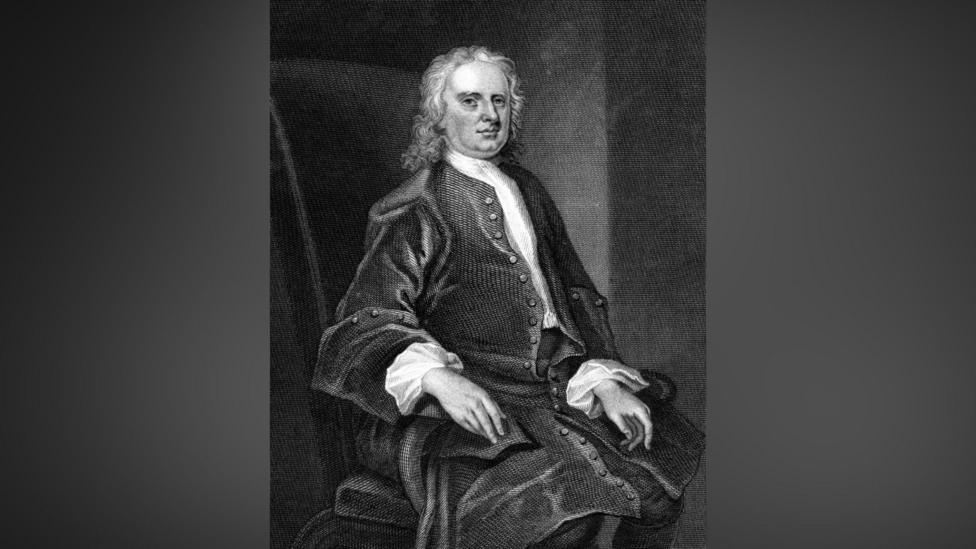
Sir Isaac Newton, who lived from 1642 to 1727, was born at nearby Woolsthorpe Manor and reportedly observed an apple falling from a tree in the manor's garden, a moment said to have inspired his early thinking on the theory of gravity, later detailed in his 1687 work, Principia.
What happens next for the site?
The council said the area enclosed by the new fencing will be left unmown, allowing brambles and natural vegetation to regenerate over time. It also plans to retain deadwood and existing natural growth within the fenced zone to encourage biodiversity while continuing to shield the tree's root zone, according to South Kesteven District Council.
Key Facts
- The oak stands off Londonthorpe Lane in Manthorpe, near Grantham, close to Berkshire Drive, Killarney Close and Lytham Close.
- It is protected by a tree preservation order as an established veteran oak in an urban area.
- Its girth measures 4.65 metres at 1.50 metres height, with veteran status listed as "Notable tree."
- The council chose fencing over crown reduction and deadwood removal as a less intrusive protective measure.
- The fenced area will be left unmown to allow natural regeneration and deadwood retention for biodiversity.


