

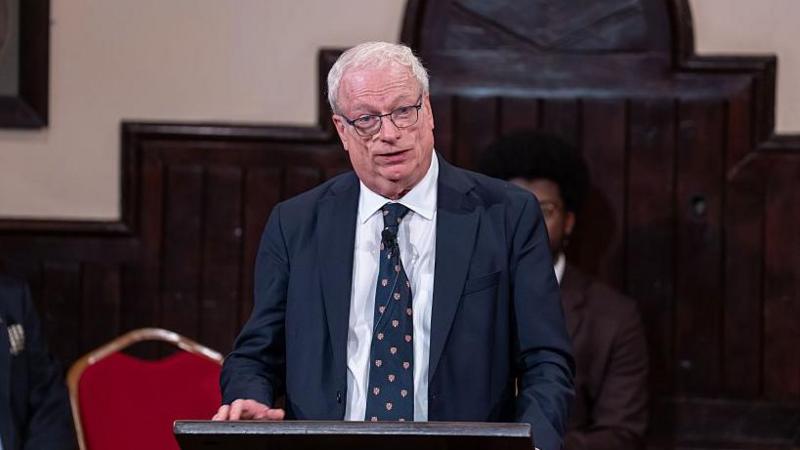
Cambridge University's chancellor, Lord Chris Smith, has spoken out against what he called a "racist feeding frenzy" surrounding Jason Arday, the sociology professor who resigned amid plagiarism allegations before he was found dead in Battersea, south London, on Friday. Arday, 41, had become the university's youngest black professor when he was appointed in 2023, and had spent weeks facing media scrutiny over claims about his academic record, which he denied. His death has prompted an outpouring of tributes, public vigils and calls for a formal inquiry into how the story was covered.
Lord Smith's remarks mark the first time he has commented publicly on the controversy since it erupted. More than 30,000 people, including Diane Abbott and Jameela Jamil, have signed a petition organised by the Good Law Project calling for an investigation into the press coverage, which the petition describes as "two weeks of relentless harassment" preceding Arday's death.
What did Lord Smith say about the coverage?
Lord Smith argued that scrutiny of academic conduct and criticism of how Arday was treated are not mutually exclusive positions.
I do believe it is possible to hold to two principles at the same time: to believe in the importance of academic integrity, and where criticisms of plagiarism arise, about any academic, whoever they are, ensure that they are rigorously investigated.
And also to refuse to join in a racist feeding frenzy over a particular academic.
What did the earlier investigations find?
Cambridge initially said that allegations of plagiarism concerning Arday's doctoral thesis and several journal articles had already been examined by Liverpool John Moores University (LJMU), which awarded him his PhD in 2015, along with the journals involved. LJMU concluded that he had not committed plagiarism.
Why has Cambridge launched a new investigation?
Despite the earlier findings, Cambridge announced last week that it would carry out a fresh, independent investigation into Arday's original appointment. According to The Associated Press, the university said the new probe was triggered by "new information" concerning Arday's academic qualifications and honorary appointments, separate from the plagiarism claims already reviewed. The vice-chancellor has said the inquiry will be conducted by senior academics drawn from both inside and outside the university, according to a national newspaper's report. Senior figures at Cambridge had reportedly pushed for a fully independent process, and the university pledged that the inquiry would be "thorough and transparent," the same report noted.
How did Arday respond before his death?
Arday resigned from his post as Cambridge professor of sociology of education on 5 August, but was careful to distance his decision from any admission of guilt.
be mistaken for an acceptance of the narratives that have surrounded me
He had reportedly cancelled a planned event in London scheduled for the following month after stepping down, according to a broadcaster's report.
What have politicians said about the case?
Shadow housing secretary Sir James Cleverly, Britain's first black home secretary and foreign secretary, said he was angered by the situation and argued it could have been avoided with proper vetting.

people within the university establishment - not just Cambridge - had done the robust due diligence and checking that should happen with any senior academic appointment
Speaking on the Today programme on Monday, Sir James said Arday had effectively been used as "bragging rights by some universities," with commentary focusing on "his age and his ethnicity rather than his talent."
I think it was part of the reason that he was lifted so high so quickly and then when the scrutiny did come - external to the universities - his reputation had so far to fall. I think it was unfair on him and I think it's been a terrible, terrible situation.
He added that he believed much of the coverage was "quite possibly" driven by racism, while maintaining that the underlying plagiarism questions were legitimate regardless of motive.
Housing minister Matthew Pennycook, when asked whether the press had behaved improperly, echoed the prime minister's view that it was too soon to "rush to judgement on this."
I do think the events leading up to his death raised questions about duty of care and the nature of modern media scrutiny, but I don't think the time is now to get into a debate about those, I certainly don't intend to sit here and opine on them myself.
Pennycook said the moment called for reflection and compassion, describing the circumstances as "desperately, desperately sad."
How did the controversy begin?
The row originated with Nathan Cofnas, an academic who describes himself as a "race realist" and who was dismissed from his Cambridge post in 2024. Cofnas said he had identified numerous instances of plagiarism in Arday's work. His earlier removal from Cambridge followed backlash over his claim that, under a genuine meritocracy, black people would "disappear from almost all high-profile positions outside of sports and entertainment."
Why did Arday's appointment carry particular significance?
Cambridge had publicly celebrated Arday's appointment as a rare milestone, given that black academics remain a small and highly visible minority in British higher education. Only 1% of professors at UK universities are black, meaning each such appointment carries outsized symbolic weight.
How has the public responded?
More than 200 people attended a vigil at Cambridge on Sunday, organised by Arday's postdoctoral students. A further vigil, arranged by the campaign group Stand Up To Racism, was scheduled to take place in Trafalgar Square on Monday evening.
What happens next?
Cambridge's independent investigation into Arday's appointment and tenure remains ongoing. The university has said it intends to use the findings to review its broader procedures for appointing senior academics, according to a broadcaster's report, with the vice-chancellor indicating the results will inform wider changes to how such appointments are handled, as reported by a national newspaper. The university has said it does not intend to comment further while the investigation continues, according to The Associated Press.
Key Facts
- Jason Arday, 41, was found dead in Battersea, south London, on Friday, days after resigning from his Cambridge professorship on 5 August.
- More than 30,000 people have signed a Good Law Project petition demanding an inquiry into the media coverage of his case.
- Liverpool John Moores University previously cleared Arday of plagiarism regarding his 2015 PhD thesis.
- Cambridge has since opened a separate independent investigation into his appointment, citing new information about his qualifications.
- Only 1% of UK university professors are black, underscoring the significance attached to his original appointment.


