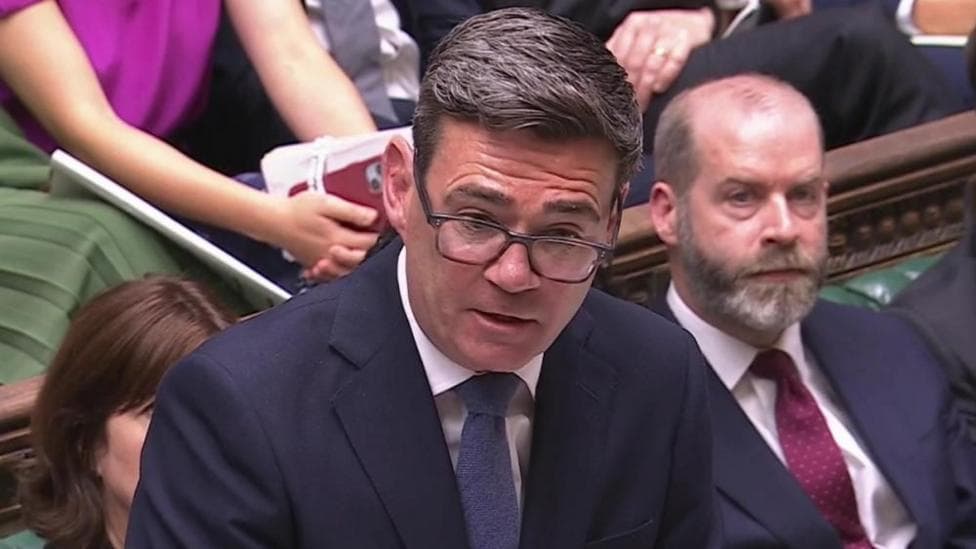
Throughout the summer, Andy Burnham cultivated a new approach to political communication through a steady stream of social media videos designed to speak directly to the public. Yet alongside this digital strategy, the prime minister faced one of Westminster's most enduring weekly rituals: Prime Minister's Questions, a tradition that tests even the most carefully crafted political messaging.
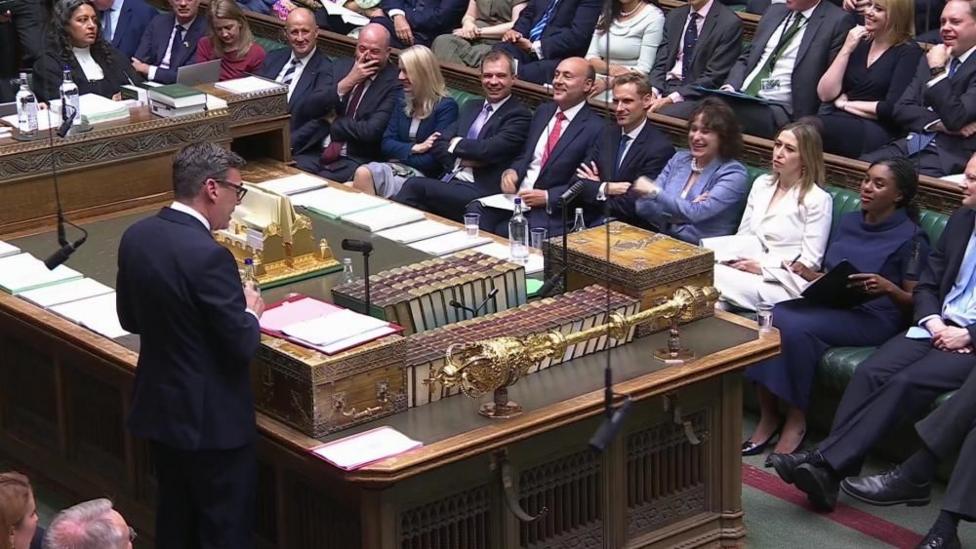
On 2 September 2026, Burnham took his place in the House of Commons chamber for his first PMQs as prime minister, entering to raucous cheers from packed Labour benches. His appearance came nearly seven weeks into his premiership, as Parliament had been in recess during the summer months. The session represented a significant moment of scrutiny—a chance for the public to observe Parliament's workings and a crucial test of his authority among backbench MPs watching and judging the performance of party leaders.
Burnham struck a confident tone from the outset, clearly intent on maintaining the sense of optimism he had promised the country. His initial exchanges with Conservative leader Kemi Badenoch began with a measure of levity. Badenoch opened with a joke about the prime minister's stamina following a marathon Commons session on Tuesday when he had taken questions for more than three hours; the remark drew laughter from MPs and a cautious smile from Burnham.
Yet the early warmth between the two leaders soon gave way to more familiar adversarial terrain. The pair traded sharp exchanges over tax and borrowing, with Badenoch pressing claims of profligate government spending. Burnham, despite his stated commitment to ending what he termed political "point scoring," quickly pivoted to attacking the Conservative Party's economic record, referencing the budget of former Prime Minister Liz Truss while pledging fiscal discipline.
This pattern mirrors a challenge faced by previous prime ministers who have pledged a new style of politics. David Cameron promised to end "Punch and Judy politics" when he became Conservative leader, only to find himself locked in regular political knockabouts across the despatch box. The adversarial nature of PMQs appears resistant to reform, regardless of a leader's stated intentions.
At his first Commons appearance as prime minister on 1 September, Burnham had already signalled his broader agenda. He told MPs his government would deliver "politics done differently" and floated public ownership of water as part of his approach to utilities and services. This framing set expectations for a departure from conventional governance, yet PMQs revealed the limits of rhetorical innovation when confronted with substantive policy disagreement.
What economic pressures shape Burnham's early premiership?
The backdrop to Burnham's first weeks in office has been sharply rising borrowing costs—a global trend but one to which the UK is particularly exposed. This development is likely to constrain the chancellor's room for manoeuvre ahead of the budget scheduled for the end of October. At PMQs, Badenoch pressed Burnham directly on borrowing costs and government spending plans, signalling that the Opposition intends to make economic management a central line of attack.
Burnham faces many of the same challenges that confronted his predecessor, Sir Keir Starmer, including difficult decisions on defence spending, welfare reform and social care. These pressure points are precisely where his political opponents will seek to exploit vulnerabilities. During PMQs, Badenoch quizzed him over plans for taxes, spending and borrowing—questions that will recur throughout the parliamentary session.
In response, Burnham pointed to his early actions in office as evidence of his priorities: cutting VAT on domestic electricity bills and reducing business rates for pubs and music venues. However, he offered little additional detail, falling back on the familiar refrain that prime ministers do not write budgets from the despatch box. While such caution is understandable during a first PMQs session, these are questions his government will eventually be forced to answer comprehensively.
Where do Burnham and Badenoch fundamentally disagree?
Despite the promise of a more consensual style of politics, sharp ideological differences remain across the Commons on matters of substance. Burnham's diagnosis for the country's problems centres on the effects of privatisation and deindustrialisation over recent decades, as well as the consequences of Brexit. Badenoch, by contrast, points instead to high taxes and government spending as the primary constraints on economic growth—a fundamentally different reading of Britain's economic condition.
His first Commons outing came against a backdrop of Labour backbench pressure over electoral reform, which some MPs were expected to raise at PMQs, adding another layer of internal party dynamics to the session.
While Burnham's early weeks in office have featured a visible shift in style—a summer tour around the country and a heavy social media presence—the underlying economic arguments between him and his political opponents remain unresolved. Now that Westminster is back in full session, there will likely be sustained pressure for more detail about his planned direction and how he intends to navigate the economic constraints ahead.
What comes next for Burnham's government?
The prime minister faces an immediate parliamentary agenda beyond PMQs. The Assisted Dying Bill was due back in Parliament on 11 September 2026, presenting another test of his legislative management and party unity.
Today's Prime Minister's Questions served as a taste of what lies ahead. While Burnham has demonstrated a more comfortable communication style than his predecessor, his real challenge will be delivering substantive change rather than merely a shift in tone. As well as smart communications strategy, the choices he makes against a tricky economic background will require careful navigation if he is to deliver the optimistic future he has promised the country.