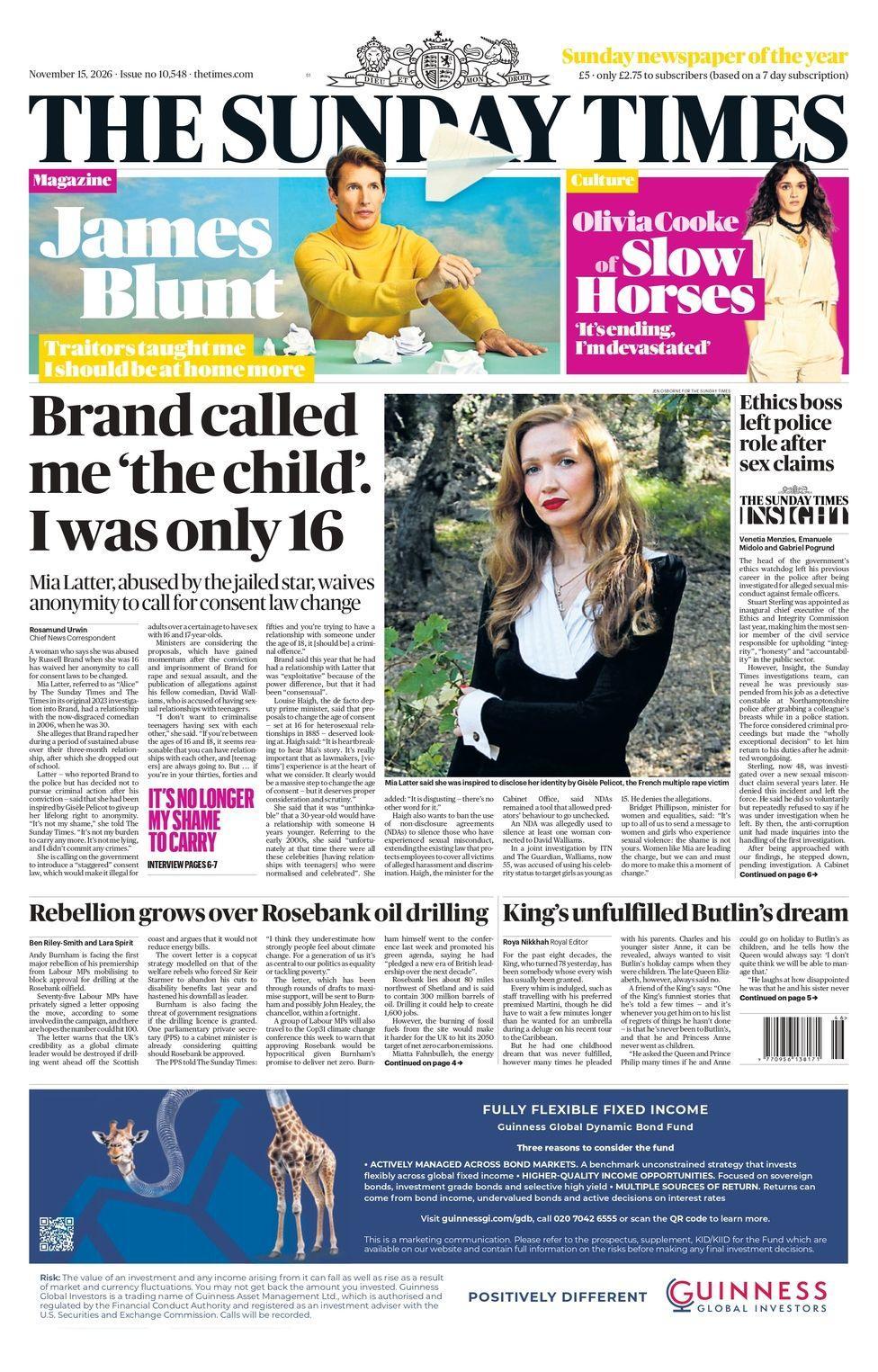
Mia Latter, who alleges she was raped by Russell Brand when she was 16 years old, has publicly identified herself and is now campaigning for changes to the age of consent law. According to BBC News, Latter was one of six women who made allegations against Brand in 2023 as part of an investigation by the Times, Sunday Times and Channel 4's Dispatches programme. Brand denied all allegations at the time, and none of the women from that 2023 investigation were complainants in his recent criminal trial.
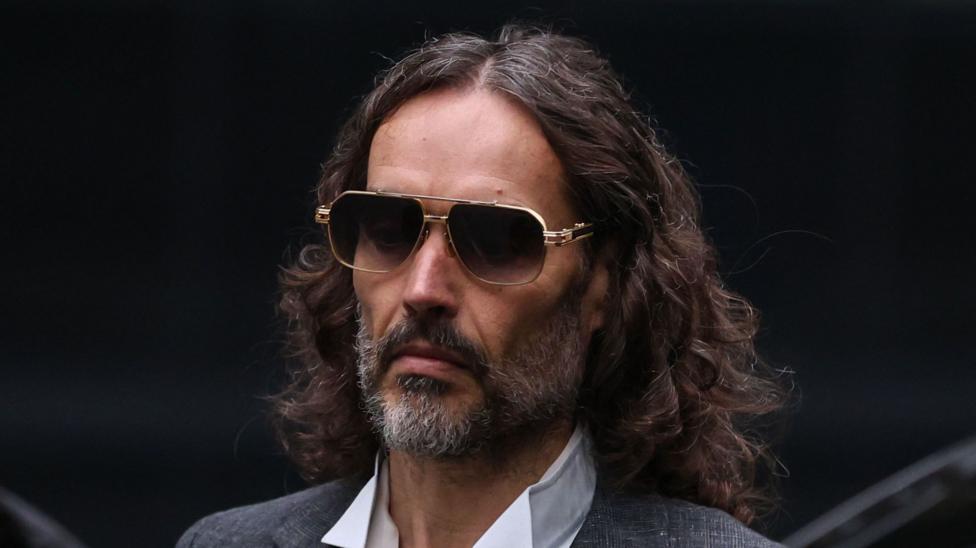
On Monday, Brand was sentenced to 10 and a half years in prison after being convicted of one count of rape and three counts of sexual assault. He was acquitted of two counts of rape and one allegation of attempted indecent assault. Latter's decision to waive her anonymity comes as she intensifies her push for legislative reform to protect young people from relationships with significantly older adults.
Latter, now 37, first described her allegation to journalists as a sexual assault, which is how it was reported in the 2023 investigation under the pseudonym 'Alice'. She has since characterised the incident as rape. She told the Sunday Times that she was 16 when she encountered Brand, then 30 years old, while returning home from a shopping trip. Brand was working at MTV at the time.
According to Latter's account, Brand instructed her to keep their relationship secret from her school friends and referred to her as "the child" in front of his entourage. The relationship lasted approximately three months, and it was towards the end of this period that Latter alleges Brand orally raped her.
"I think people were so struck by my story because of the age difference and the clear imbalance [in power]," Latter told the Sunday Times.
What changes is Latter proposing?
Latter is campaigning for the introduction of a "staggered" age of consent that would create different legal protections depending on the ages of those involved. Under her proposed framework, relationships between 16- and 17-year-olds would be permitted with each other, but any relationship between someone under 18 and an adult in their thirties, forties or fifties would become a criminal offence.
"I don't want to criminalise teenagers having sex with each other," she told the paper. "If you're between the ages of 16 and 18, it seems reasonable that you can have relationships with each other, and [teenagers] are always going to. But … if you're in your thirties, forties and fifties and you're trying to have a relationship with someone under the age of 18, it [should be] a criminal offence."
Notably, Latter had raised the age-of-consent issue when she first spoke out in 2023, though it received little public attention at that time. Her renewed campaign comes at a moment when the issue has gained greater visibility following Brand's conviction.
How are politicians responding?
Cabinet Office Minister Louise Haigh described the proposal as a "massive step" to change the age of consent law, but stated that it "deserves proper consideration and scrutiny". She also characterised the cultural environment of the 2000s as "disgusting", noting that it "normalised and celebrated" relationships between celebrities and teenagers.
Beyond the government, Liberal Democrat justice spokesperson Jess Brown-Fuller backed examining a staggered age of consent and called for stronger protections for young women and girls. The proposal has thus attracted support from across the political spectrum.
What is the status of Latter's own case?
Latter has decided not to continue with the criminal process against Brand so she can focus on her campaign for legislative change. According to the Sunday Times, the Crown Prosecution Service determined not to include her as part of Brand's criminal trial, though police indicated they wanted her to be part of a subsequent prosecution.
The Metropolitan Police confirmed that its investigation into Latter's allegation remains open, with officers beginning their investigation in January 2026. The CPS advised that further information was needed before a charging decision could be made. A Met Police spokesperson stated: "We understand the delay has been distressing for this victim-survivor. However, our focus has been on putting forward the best possible evidence."
A Crown Prosecution Service spokesperson said it would "continue to work closely with investigators to provide advice and make sure cases progress as quickly as possible".
How does this fit into broader consent law debates?
The campaign for consent law reform has gained momentum in recent months. The campaign Close the Consent Gap was founded by Layla Stone in April 2026, reflecting growing public concern about power imbalances in relationships involving young people. Some jurisdictions have already implemented tiered approaches: Florida's age of consent is 18, with an exception allowing consent at 16 when the partner is no older than 23.
Latter's case has become emblematic of concerns about how the current legal framework may fail to protect young people from exploitation by significantly older adults, particularly those in positions of power or celebrity.