Introduction
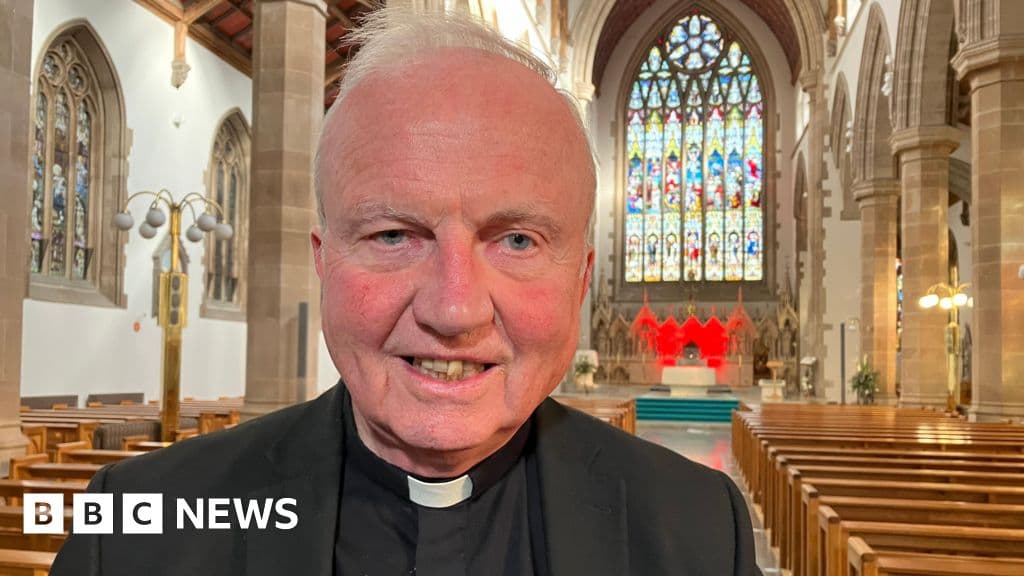
The Bishop of Derry has raised concerns over the decision not to prosecute former soldiers investigated for allegedly providing false testimony related to Bloody Sunday.
Background of Bloody Sunday
On 30 January 1972, thirteen individuals were fatally shot when soldiers opened fire on civil rights demonstrators in the Bogside area of Londonderry.
PPS Decision on Prosecution
In April 2024, the Public Prosecution Service (PPS) decided not to prosecute 15 former soldiers and a former Official IRA member for perjury following the Bloody Sunday Inquiry. Last week, the PPS reaffirmed its decision specifically regarding eight surviving soldiers among those investigated for perjury.
Bishop Donal McKeown's Remarks
During an event commemorating the 54th anniversary of Bloody Sunday, Bishop Donal McKeown emphasized the importance of truth and justice.
"Truth and justice have to come out at some stage" and "sometimes it seems impossible through the legal systems."
He further stated on BBC Radio Foyle's North West Today programme:
"The struggle continues"
McKeown expressed support for the families affected by Bloody Sunday:
"The Bloody Sunday families deserve our full support and our full encouragement."
"We will encourage them to keep going as far as they can, for as long as they can."
Families' Response
Mickey McKinney, whose brother William was killed on Bloody Sunday, conveyed dissatisfaction with the PPS decision.
"Not happy"
He indicated that the families are considering legal action:
"The families will now consider a judicial review of the PPS decision and added: 'If that's what it takes, that's what it takes.'"
Commemoration March
On Sunday, hundreds participated in a march in Derry, proceeding from Creggan to Free Derry Corner in the Bogside, to honor those who lost their lives on Bloody Sunday.
Reverend David Latimer's Statement
At a separate commemoration earlier that day, Reverend David Latimer, formerly minister at First Derry Presbyterian Church, voiced his disagreement with the PPS decision.
"That's why all the more I'm happy to stand with these families, let's unite on them, justice must be top of the agenda,"
Latimer reflected on the impact of the PPS ruling, which followed the acquittal of a former paratrooper known as Soldier F on charges related to Bloody Sunday.
"Enough to knock these families down."
He also noted the resilience of the families:
"But you know something, we've learnt from observing them in the past, if they do go down they don't stay down for long and they're up."
Historical Context and Inquiry Findings
In 2010, Lord Saville's report on Bloody Sunday concluded that some soldiers deliberately provided false accounts.
PPS Explanation
In April 2024, the PPS cited "insufficient" evidence to prosecute the 15 former soldiers and the former Official IRA member for perjury. Following requests from some families, the PPS reviewed the decision concerning the eight surviving soldiers but maintained the original stance.
The PPS communicated the decision to both the families and the soldiers last week.
In an official statement, the PPS clarified the standards required for criminal convictions and the differences between inquiry findings and court proceedings.
"Criminal convictions required proof beyond reasonable doubt and prosecutors must assess the prospects of conviction based on admissible evidence."
"These decisions do not diminish the findings of the Bloody Sunday Inquiry."
"Public inquiries and criminal trials follow very different rules and much material available to the inquiry cannot be used in court."