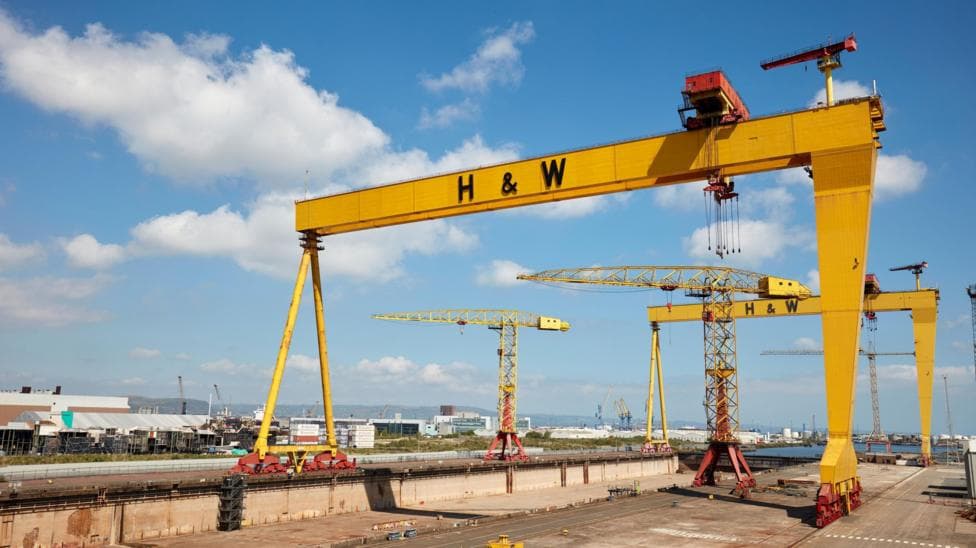
Harland and Wolff in Belfast has officially opened a new manufacturing facility designed to construct support vessels for the Royal Navy, marking a significant milestone in the shipyard's revival. The fabrication hall, named Resurgent, was inaugurated on Monday and will be instrumental in building three supply ships for the Royal Fleet Auxiliary. According to BBC News, the facility is equipped with advanced technology to deliver vessels that will serve UK defence needs for decades ahead.
Navantia UK, which acquired Harland and Wolff in 2025, is delivering the new hall as part of a broader £157 million investment programme spanning four UK shipyards. The company is also refurbishing the shipyard's iconic yellow cranes, Samson and Goliath, as part of this modernisation effort. Around £100 million of the total investment is being directed specifically to the Belfast site, according to UK government sources.
The three vessels being constructed—RFA Resurgent, RFA Reliant and RFA Resourceful—represent a £1.6 billion Ministry of Defence commitment to modernising the Royal Fleet Auxiliary's logistics capability. These ships will transport munitions, spare parts, provisions and other supplies to Royal Navy vessels operating at sea, enabling extended deployments including during carrier strike group operations. The keel of the lead ship was laid at Navantia UK's Appledore yard on 3 September 2026, with the sister ships' names revealed at that ceremony.
The Royal Fleet Auxiliary contract is expected to support 900 jobs and apprenticeships in Belfast. The refurbished and extended hall will add 5,000 square metres of manufacturing space to the shipyard, equipped with robotic plasma-cutting technology and a mechanised panel line that became operational in July 2026.
What does this mean for Belfast's shipbuilding future?
The opening represents a turning point for a city with deep roots in maritime construction. Harland and Wolff was established in 1861 and once employed 35,000 people at its peak during World War Two, making it one of Northern Ireland's largest employers. The company has faced significant challenges in recent decades, entering administration multiple times despite substantial government support. The Navantia takeover and this new facility signal renewed confidence in the sector's viability.
Navantia UK's chief executive Donato Martinez stated:
Shipbuilding is returning to Belfast. We are turning Harland & Wolff into one of the most advanced shipyards in Europe. Our new fabrication hall will be equipped to build state-of-the-art ships to serve and defend the UK for generations to come.He added that the hall's name was deliberately chosen to reflect the sector's resurgence, noting that
Jobs, investment and activity are resurgent in shipbuilding. Belfast is at the heart of that revival, and the fleet solid support programme is the first of many projects we aim to deliver here for the Ministry of Defence.
The Navantia acquisition covers four UK shipyards beyond Belfast: Appledore in Devon, Methil in eastern Scotland, and Arnish on the Isle of Lewis. The Belfast fabrication hall has been positioned as the centrepiece of the company's investment strategy across these sites.
How are government officials responding?
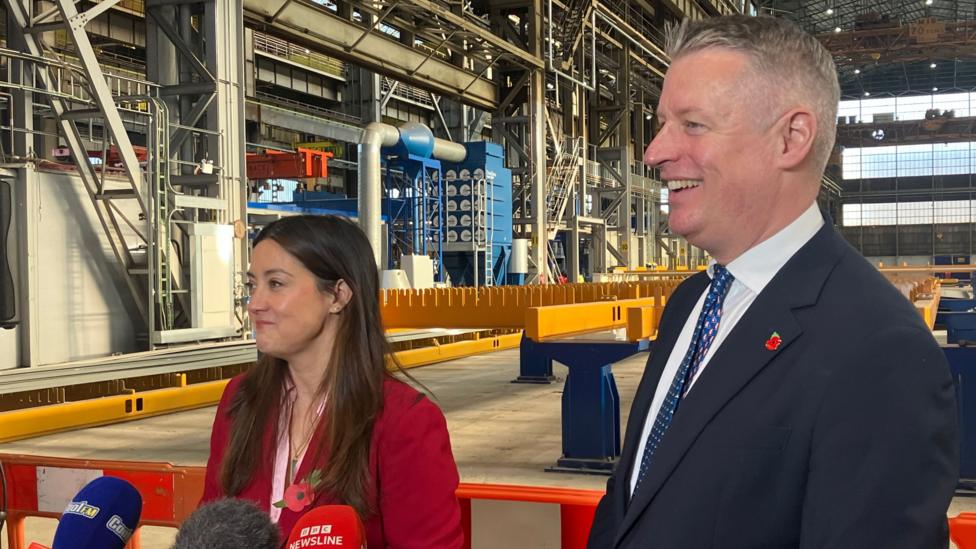
UK Minister for Defence Readiness and Industry Luke Pollard praised the facility's symbolic and practical significance.
Few sights in the UK are more evocative of our industrial heritage than the Samson and Goliath cranes, and it's fitting that this new hall sits on the shoulders of these iconic giants,he said.
Belfast continues with its proud shipbuilding history by building the modern shipbuilding capability the country needs today, with this new fabrication hall at the heart of it.Pollard highlighted how the investment demonstrates the returns generated by sustained commitment to the sector, delivering employment, skills development and the vessels required by the Navy.
Northern Ireland Minister Sarah Owen emphasised the facility's role in the UK government's broader defence strategy.
This impressive facility is a key milestone in the UK government's fleet solid support programme, which has invested around £100m in Belfast alone,she said.
Navantia is building on Belfast's historic shipbuilding legacy while supporting hundreds of skilled jobs and apprenticeships, ensuring that it remains at the heart of the UK's defence industry while boosting economic growth.Owen noted that Northern Ireland's Ministry of Defence spending reached £460 million in the previous year, equivalent to £240 per person.
What is the broader context for UK shipbuilding?
The Belfast project sits within a wider government strategy to strengthen domestic naval construction capacity. The UK government has committed £6 billion to build three floating dry docks at Faslane naval base, with work reserved for British shipyards, according to government announcements. The chancellor has also pledged £115 million for a new marine research vessel. These investments reflect a strategic push to consolidate UK shipbuilding expertise and capacity.
The sector has also attracted international interest. Glasgow shipyards have begun constructing Type 26 frigates for Norway before completing the Royal Navy's eight-ship order, with Norway's £10 billion deal representing the UK's largest warship export to date. However, other yards have faced challenges; Ferguson Marine in Scotland announced plans to cut around 70 jobs—roughly a quarter of its workforce—while awaiting promised government contracts that remain in due diligence.
When will the ships enter service?
All three Royal Fleet Auxiliary support ships are scheduled to enter service in the early 2030s. The government has stated that the programme is progressing on schedule and within budget, providing confidence that the vessels will be delivered as planned to meet Royal Navy operational requirements.