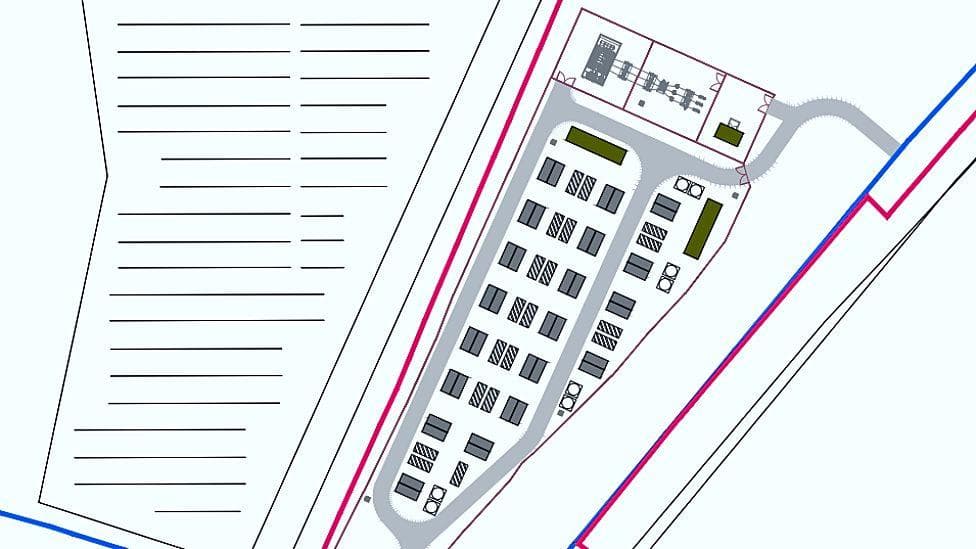
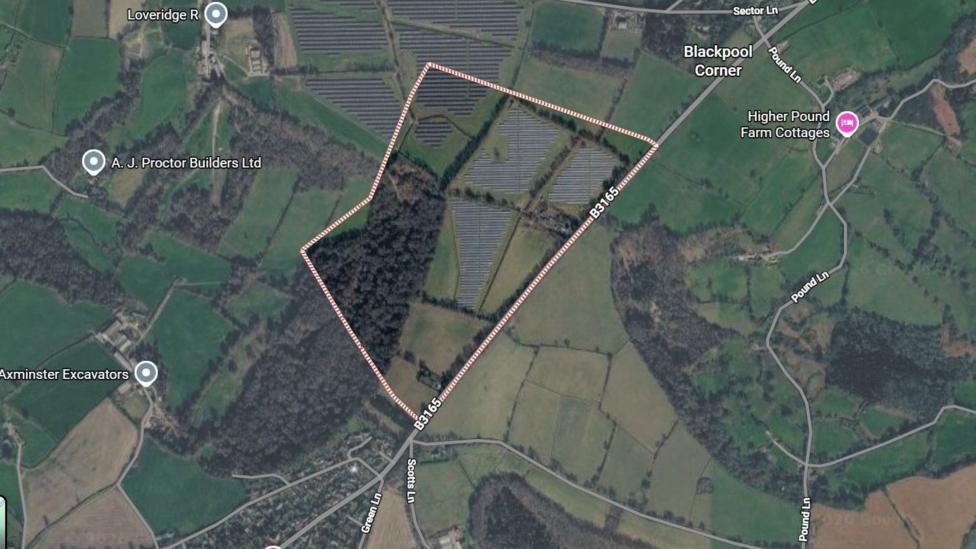
A major battery energy storage system proposed for land near Raymond's Hill in Axminster will not proceed after a planning inspector dismissed the developer's appeal against East Devon District Council's refusal.
Sky UK Development had sought permission for the 150MW facility on land south of Hazelhurst, which the council's planning committee rejected on 14 May 2025. The company then appealed to the Planning Inspectorate, submitting revised designs intended to address concerns about groundwater contamination and the risk of battery fires.
Inspector RC Kirby concluded in her decision that the proposed mitigations
"would not be effective" in ensuring an acceptable balance between harm and benefit, and that the proposal was
"not suitable for its location".
What were the main safety concerns?
The central issue in the planning debate centred on fire risk and water management. If a battery unit ignited, the volume of water required to suppress the fire and prevent it spreading could run off into nearby watercourses, potentially contaminating drinking water sources. Opponents of the scheme raised concerns that firewater runoff posed an unacceptable threat to the local water environment.
Sky UK Development argued that approximately eight years would elapse before water used to fight a hypothetical fire at the site would reach the drinking water source. However, the inspector found there had been
"insufficient evidence"to support this claim.
What changes did the developer propose?
The appeal submission included several design modifications that had not been formally considered by East Devon's planning committee. These comprised an increase in water tank capacity, relocation of some tanks, a minimum separation distance of 6 metres (20 feet) between pairs of containers, and other alterations designed to reduce environmental risk.
Notably, at the appeal inquiry itself, East Devon District Council withdrew its sole reason for refusal and agreed with the developer that permission should be granted. Despite this shift in the council's position, the inspector nevertheless dismissed the appeal, finding that the risks to water quality remained unacceptable.
Inspector Kirby acknowledged that while the scheme's benefits would
"outweigh the moderate harm that would be caused to the Dorset National Landscape", they were
"insufficient" to outweigh the "very substantial, overriding, unacceptable risks in respect of pollution of the water environment".
How have local campaigners reacted?
The Campaign to Protect Rural England's Devon branch and the Hawkchurch and Monkton Wyld Action Group expressed relief at the outcome. Dr Phil Bratby, energy spokesperson for Devon CPRE, stated:
"For years, Devon CPRE has been highlighting the risks from the hazardous materials that could be released and contaminate the groundwater."
This decision follows a similar outcome in October 2026, when a separate 150MW BESS proposal at nearby Newlands Farm was also dismissed on appeal. That inspector similarly found the evidence did not establish that firewater could be safely contained. The area has become a focal point for disputes over battery storage development, with the Planning Inspectorate having upheld East Devon's refusal of another BESS near Pound Road in Hawkchurch in 2023, a precedent cited by residents during earlier committee debates.
Why are battery storage systems important for energy policy?
Battery energy storage systems use technologies such as lithium-ion batteries to store electricity when supply exceeds demand, then release it when needed. The UK government has identified them as critical infrastructure for replacing fossil fuels with renewable energy and achieving net zero targets. However, their deployment in sensitive locations raises environmental and safety questions that planning authorities must weigh against their strategic benefits.
Key Facts
- The 150MW battery storage proposal on land south of Hazelhurst near Axminster was refused by East Devon District Council on 14 May 2025 and rejected on appeal by the Planning Inspectorate
- The inspector found insufficient evidence that firewater from a potential battery fire could be safely contained and would not contaminate drinking water sources
- The developer submitted revised designs including larger water tanks and increased separation distances between battery containers, but these did not overcome the inspector's concerns
- A second BESS appeal at nearby Newlands Farm was dismissed in October 2026 on similar grounds regarding firewater containment
- Local campaign groups welcomed the decision, citing long-standing concerns about groundwater contamination risks from hazardous battery materials