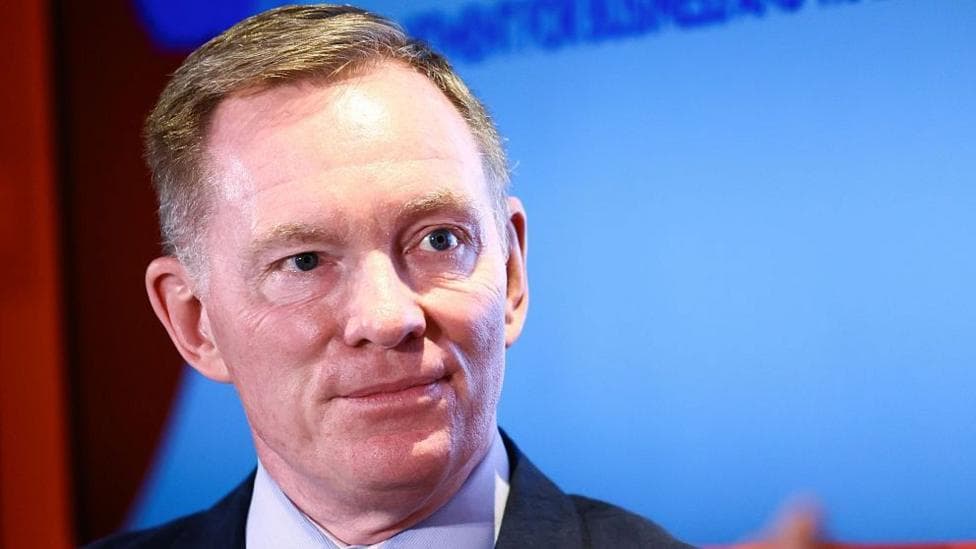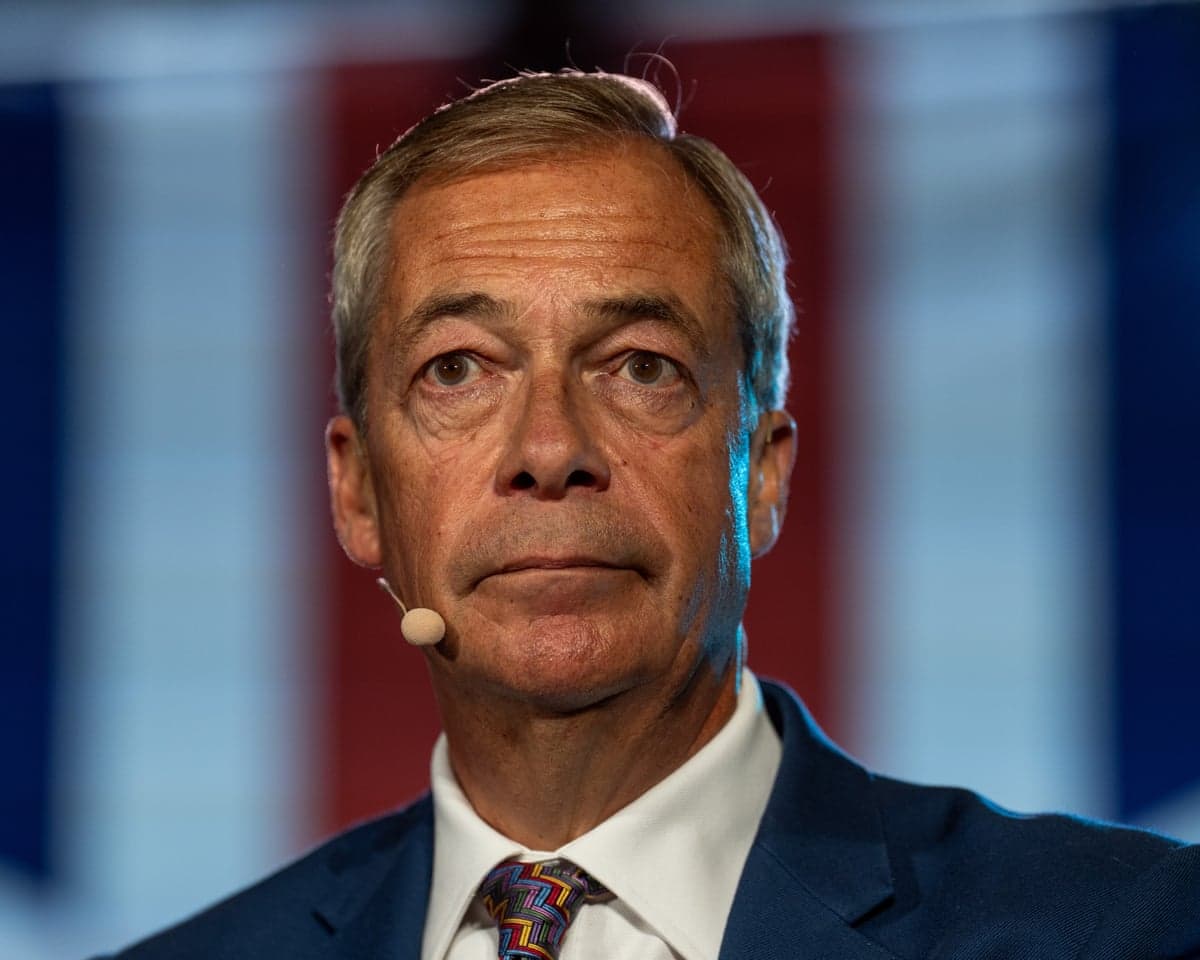
A sharp dispute has erupted between Kemi Badenoch, leader of the Conservative Party, and Nigel Farage, head of Reform UK, over how Britain should handle the Chagos Islands—a territory that has become a flashpoint in opposition politics as both parties vie for dominance on the right. The row centres on remarks Farage made to a US podcast in which he suggested offering the islands to President Trump, a proposal Badenoch has condemned as demeaning to the nation.
What did Farage say about the Chagos Islands?
Farage told a US podcast that he would have handed control of the Chagos Islands to President Trump as part of a broader negotiation. In his remarks, he explained that Diego Garcia, the military base located within the archipelago, represents the most strategically important American military installation outside the continental United States, serving as a critical hub for nuclear submarines and long-range bombers. According to reporting on the exchange, Farage framed his proposal as a trade: Britain would secure American guarantees to cease discussing the Falkland Islands in exchange for granting the US perpetual use of Diego Garcia.
I'd have gone in and said, 'Right, you know what, mate? Chagos, it's yours. Diego Garcia, in perpetuity, the most strategic American military base in the world, which it is. Outside mainland America, Diego is the most important thing America has for nuclear subs, for long-range bombers, for all of it. I'd have said, 'Right, I'm guaranteeing you that. I'm giving up on this surrender. In return, just please stop talking about the Falkland Islands. I know you like [Argentina's president Javier] Milei, but this really matters to us'. And there's a trade, you see. I give him something. I ask for something back. He'd get that. He'd understand that. He's a businessman. He's a trader.
How did Badenoch respond?
Badenoch rejected Farage's proposal with sharp language, characterising it as beneath Britain's dignity. She argued that trading away British territory merely to secure silence from a foreign leader constitutes a capitulation rather than a negotiation, and she questioned Farage's fitness to hold high office given his willingness to make such concessions.
Giving away British territory in return for someone keeping quiet is not a deal. It is humiliating. There is no pride in our country in the way he talks about us. This is careless, loose talk from a man who wants to be responsible for Britain's national security. The Chagos Islands are British. And the Falklands are British and will remain British, irrespective of what the American president says. When Donald Trump is right, we should say so. When he is wrong, we should have the confidence to tell him.
Badenoch elaborated further on her criticism, emphasising that Farage's framing of the arrangement as a deal was fundamentally flawed. She stressed that national sovereignty cannot be bartered away to appease another nation's leader, and she positioned herself as willing to stand up to Trump when necessary rather than defer to his preferences.
It is mad for someone who wants to be prime minister to say we should give away one piece of British territory just to stop an American President talking about another. Nigel Farage has made such a huge fuss about defending the Chagos Islands. He calls this making a deal. Giving away British territory in return for someone keeping quiet is not a deal. It is humiliating.
What was Farage's response to the criticism?
Farage disputed the characterisation of his remarks, claiming that both the Telegraph newspaper and Badenoch had misinterpreted his position. He asserted that he had never proposed surrendering sovereignty over the entire Chagos archipelago to the United States; rather, he said he was proposing only that Britain grant the US guaranteed perpetual use of the Diego Garcia military base. He also defended his record on the islands, claiming to have fought harder than either major party to prevent their transfer to Mauritius.
This is totally dishonest journalism. I make it clear that I am opposed to the surrender of sovereignty to Mauritius. I would offer the use of Diego Garcia to the USA in perpetuity. In return I would want America to go quiet on the Falklands. No one has fought harder to save the Chagos Islands from being given away than I have, unlike the Tories and Labour trying to give them away. I have even helped repopulate the islands with Chagossians.
According to additional reporting, a Reform UK spokesperson confirmed that Farage had been involved in efforts to repopulate the islands with Chagossians, the indigenous people displaced from the territory decades earlier.
What is the broader context of the Chagos Islands dispute?
The Chagos Islands have been at the centre of a long-running diplomatic and political controversy. The UK government negotiated a £3.4 billion agreement to transfer sovereignty of the islands to Mauritius while retaining a 99-year lease on Diego Garcia to continue operating the joint US-UK military base. This arrangement has drawn opposition from multiple quarters, including the Conservative Party and Reform UK, though for different reasons and with different proposed solutions.
The dispute has intensified following President Trump's renewed criticism of the sovereignty transfer agreement. In response to Trump's opposition, the UK government initiated a formal review of the Chagos Islands sovereignty agreement with Mauritius, with Defence Secretary Wes Streeting confirming the reassessment. According to White House statements, American officials view Diego Garcia as critical to countering threats from China and Iran, underscoring the strategic importance both nations place on the base.
What does this row reveal about opposition politics?
The Farage-Badenoch clash over the Chagos Islands illuminates three significant developments in British opposition politics. First, it demonstrates that the rivalry between the Conservative Party and Reform UK has become increasingly acrimonious. Despite holding broadly similar positions on many issues—both parties have opposed Labour's proposed sovereignty transfer—they are now engaged in a bitter struggle to establish which party should lead the right-wing opposition. This contrasts sharply with informal discussions about a potential electoral pact that circulated a year earlier.
Second, the dispute reveals a shift in how Badenoch approaches her relationship with Donald Trump. Two years ago, she found it difficult to criticise the American president publicly. However, as Trump's behaviour has become more erratic and his popularity has declined, Badenoch has grown increasingly willing to challenge him directly and to argue that association with him poses a political liability. For Farage, whose political brand has long been built on alignment with Trump, this represents a growing vulnerability.
Third, the row reflects changing media dynamics in British politics. Publications including the Telegraph, the Daily Mail, and the Sun, which until recently appeared more sympathetic to Farage than to the Conservative Party, now appear to be shifting their editorial alignment toward Badenoch's Conservatives. This shift in media support could prove consequential for both leaders as they compete for dominance on the right of British politics.
What else is happening in UK politics today?
Prime Minister Andy Burnham is scheduled to face questions in Parliament at noon, though his most significant engagement is expected to be a meeting with Ukrainian President Volodymyr Zelenskyy at Downing Street later in the afternoon. Burnham is using the occasion to reaffirm Britain's commitment to Ukraine and to announce an acceleration of military support.
Burnham stated that Britain's backing for Ukraine remains unwavering and that the country will intensify its assistance to the Ukrainian armed forces. He emphasised that supporting Ukraine serves both moral and strategic interests for Britain, as Russian aggression in Europe poses a direct threat to British security.
Our rock-solid support to Ukraine is vital for keeping us safe here in the UK and ensuring those on the frontlines have the equipment they need to push back Russia. My message to the Ukrainian people could not be clearer, we are with you for as long as it takes, and we will go further and faster in our support to back your courageous fight for peace in Europe. It is not just the right thing to do, but it's the necessary thing to do. Russia's aggression cannot be allowed to succeed on our continent.
The government is announcing an acceleration of deliveries of British Lightweight Multirole Missiles (LMMs) to Ukraine. These weapons have proven effective against jet-powered drones that Russia is deploying to strike targets far behind the front lines, including in Kyiv and surrounding areas. A Downing Street statement explained that Russian drones represent a more difficult challenge than earlier generations of unmanned aircraft, as they fly faster and at higher altitudes than propeller-driven Shaheds, making them harder to detect and intercept before impact.
Britain has already committed £1.6 billion to deliver more than 5,000 LMMs to Ukraine over the next four years. The government is now accelerating £10 million of a £45 million package of missiles announced today to address Ukraine's most pressing winter requirements. This announcement comes as Trump has signalled reduced enthusiasm for continued American military support to Ukraine, making British backing increasingly significant for Kyiv's defence efforts.
What is the parliamentary agenda for today?
At 10:30 in the morning, Dominic Cummings, the former chief adviser to Boris Johnson, will give evidence to the House of Lords constitution committee on the subject of constitutional safeguards. At noon, Burnham will answer questions from opposition MPs at Prime Minister's Questions. Following that session, MPs will debate a Conservative opposition day motion opposing the government's plan to house asylum seekers in a military camp near Piddington and calling for Britain to withdraw from the European Convention on Human Rights in order to facilitate the deportation of migrants deemed to have entered the country illegally. In the afternoon, Miatta Fahnbulleh, the energy secretary, will provide evidence to the Commons energy committee.