Switzerland Faces Vote on Population Cap Proposal
Can a country impose a fixed limit on its population? This question will be answered by Swiss voters on Sunday as they decide on a proposal to cap the nation's population at 10 million. The initiative has sparked debate over immigration in the Alpine country.
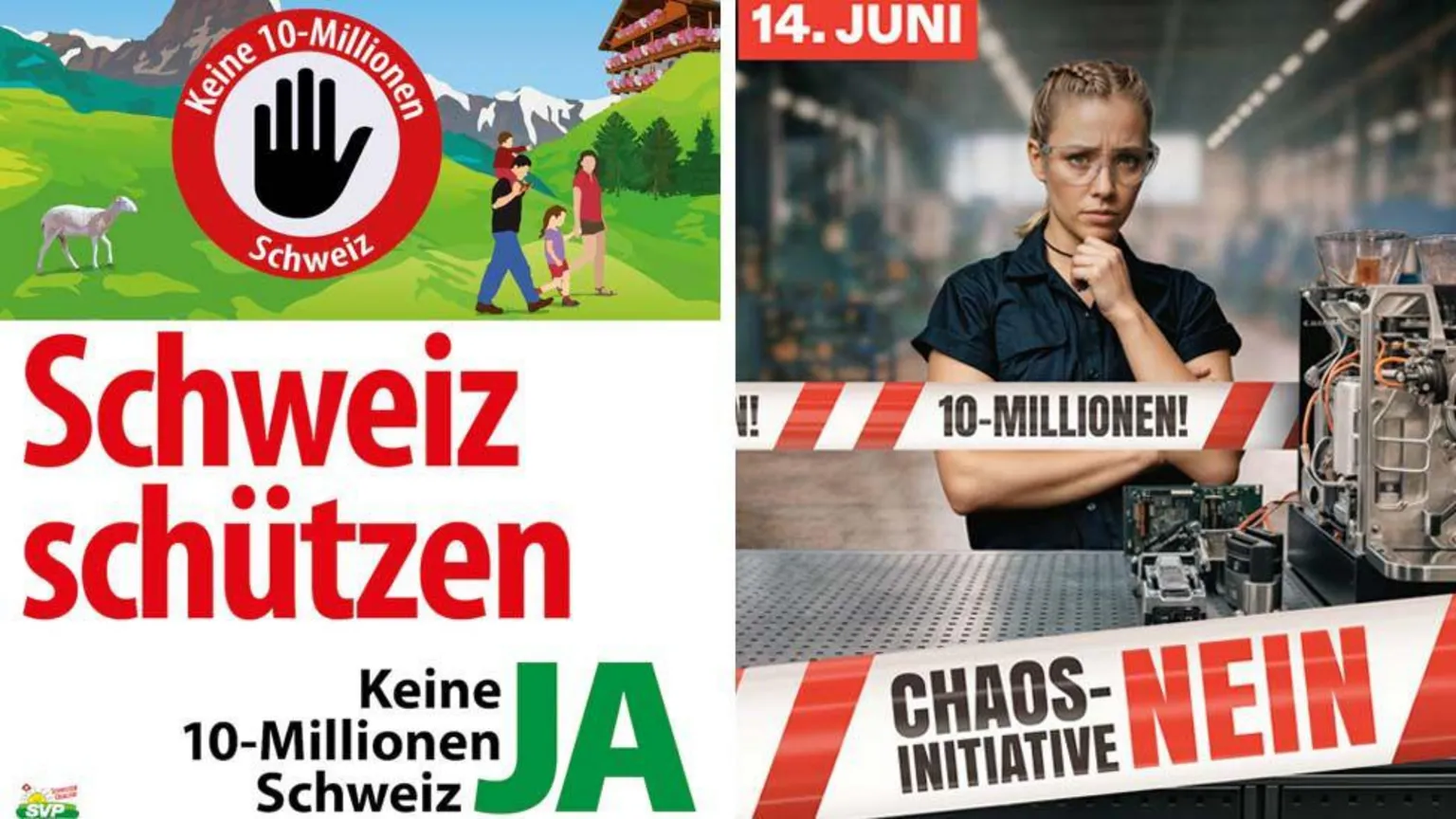
The proposal is supported by the right-wing Swiss People's Party, which calls it a "sustainability initiative" designed to alleviate pressure on housing, public services, and the environment.
Opponents, including the government, other political parties, business leaders, and trade unions, label it a "chaos initiative." They argue it would deprive hospitals and hotels of essential staff and damage Switzerland's carefully maintained relations with the European Union, potentially isolating the non-EU member in a complex global environment.
Switzerland's population has increased rapidly since 2002, when it was 7.3 million. Currently, it stands at 9.1 million, with 27% of residents born abroad.
Switzerland’s direct democracy system means major decisions are made by referendum. Campaigners need only gather 100,000 signatures to trigger a nationwide vote.
Many voters express concerns about overcrowded trains, high housing costs, and rising health expenses.
Recent opinion polls suggest the vote could be very close. They indicate a slight lead for the no vote at 52%, while 45% support the proposal, and a notable portion of voters remain undecided.
Polarized Views Among Young Politicians
Helin Genis and Nils Fiechter, both young local politicians from immigrant families, embody the polarized opinions surrounding the referendum. Fiechter, 29, represents the Swiss People's Party in Bern's cantonal parliament, while Genis, 31, is a Social Democrat elected to Bern city council. Helin’s parents are originally from Turkey, and Nils’s mother is Canadian; he holds dual citizenship.
Fiechter states,
"We have lost control. Unchecked immigration is leading to Switzerland no longer being Switzerland."
He attributes Switzerland’s challenges — including housing shortages, traffic congestion, overburdened schools, and strained social services — directly to immigration.
Genis rejects these claims as scapegoating. She told ,
"It is not migrants who determine rent levels. It is not migrants who raise health insurance premiums. Nor is it migrants who make political decisions on housing, infrastructure or social investment."
She adds,
"Viewing problems through the lens of migration does not lead to solutions, but to division."
How Would the Population Cap Work?
For undecided voters, a key question is the mechanism of the proposed population cap. No other country has implemented a fixed population limit, although China’s now-defunct one-child policy aimed to slow population growth.
The Swiss proposal mandates that the population must not exceed 10 million before 2050 and instructs the government to take action once the population reaches 9.5 million.
Potential measures could include restricting asylum admissions and ending family reunification rights for foreign workers.

If the 10 million cap is reached, Switzerland would have to terminate international agreements it has signed, including the EU’s free movement of people.
Concerns Over EU Relations and Labor Shortages
This possibility has alarmed Switzerland’s business association, Economiesuisse. Chief economist Rudolf Minsch warns that passing the motion could challenge Switzerland’s relationship with the European Union.
He explains,
"The EU is still by far the most important trading partner for Switzerland,"adding,
"It is in our interest to have stable and clear relationships with our main trading partner."
Swiss employers worry about labor shortages and losing access to a Europe-wide pool of skilled workers. Immigrants constitute half of the workforce in Swiss hotels, and hospitals and care homes also depend heavily on foreign workers.
The Swiss People's Party argues that immigration drives increasing demand for hospital beds and school places, and that limiting immigration would reduce this pressure.
Opponents counter that this is unrealistic, noting that 20% of the Swiss population is now over 65 years old.
They warn that young workers and taxpayers are essential to support an aging population, and Switzerland is not producing enough young workers domestically.
Political Perspectives on Isolation and Security
Jon Pult, a Social Democrat member of parliament, expresses concern about Switzerland’s potential isolation. He says his greatest fear is being
"alone in this unstable and dangerous world."
Switzerland, like other European countries, is increasing defense spending and planning closer defense cooperation with neighbors despite its neutrality. It has been affected by rising fuel prices due to Russia’s invasion of Ukraine and the conflict in Iran, and its products have faced punitive US tariffs.
Pult warns that jeopardizing treaties with the EU could result in losing Brussels’ goodwill.
Fiechter dismisses these concerns as fearmongering, stating,
"I am certain that the EU will not allow this to happen,"and argues that agreements with Switzerland are
"entirely in the EU's own interest."
However, fear of isolation may influence some voters. The Swiss public was alarmed when Washington imposed 39% tariffs on Swiss goods, and a deal to reduce them to 15% has yet to be finalized.
Now, posters urging voters to reject the population cap feature a leering image of US President Donald Trump, with shadowy profiles of Russia’s Vladimir Putin and China’s Xi Jinping behind him. The poster’s headline asks,
"Break with Europe, at a time like this?"
Arguments For and Against the Initiative
Fiechter insists the population cap is about preserving a way of life. He says,
"Anyone who loves Switzerland, whether with or without a migrant background, wants it to remain a place worth living in, safe and prosperous. That is exactly what this initiative is about."
Genis, however, sees no benefits. She states,
"The key question is not how to exclude people... [it is] how we create enough affordable housing, ensure good working conditions, and invest in a strong public service.
That's why I am convinced this initiative does more harm than good to Switzerland."