Hungarian Parliament Approves Term Limits for Prime Minister
The Hungarian parliament has approved a constitutional amendment that restricts the term of a prime minister to eight years in office. This move fulfills a pledge by Prime Minister Péter Magyar aimed at preventing Viktor Orbán from returning to the premiership.
Orbán had led Hungary continuously for 16 years until Magyar's Tisza party won a two-thirds majority in April's election, enabling it to amend the constitution.
The amendment stipulates that no prime minister since 1990 may serve more than two terms, regardless of whether those terms are consecutive or separated by time.
Opposition and Reactions to the Amendment
Orbán's diminished Fidesz party opposed the measure. Orbán, who was re-elected as Fidesz leader over the weekend, criticized the amendment sharply.
"The Orban law has just been voted through. That was the most pressing issue. If I'm needed, I'll be here," he wrote on Facebook.
He also expressed dissatisfaction with the Tisza government, stating it had been in power only a month and should not be "dreaming of eight years" ahead.
The Tisza government’s super-majority facilitated the amendment’s passage with 135 votes in favor and 50 against. The law now awaits the signature of President Tamás Sulyok to become effective.
Balázs Orbán, former political director to Viktor Orbán, accused Magyar of leveraging political power to exclude a rival from democratic competition.
Implications and Limitations of the Amendment
Although the amendment could theoretically be reversed by a future government with a super-majority, it also limits Magyar’s own tenure as prime minister to 2034.

Magyar assumed office last month, promising to dismantle some of the controversial state structures established by Fidesz during its 16 years in power.
Corruption Concerns and EU Funding
For four consecutive years, Transparency International has ranked Hungary as the most corrupt country in the European Union. Due to concerns over rule of law, corruption, and democratic backsliding, the EU withheld billions of euros in funding.
Last month, the European Commission agreed to release €16.4 billion (£14.2 billion) in funding, contingent upon parliamentary approval of reforms aimed at combating corruption.
Additional Constitutional Changes
Besides limiting the prime minister’s term, Monday’s amendment removed the requirement for an independent agency to protect Hungary’s "constitutional identity." This effectively ended Orbán’s Sovereignty Protection Office, established in 2023 to monitor "undue political interference" by foreign interests.
The amendment also targets "Kekva" public trust foundations created under the previous government through the transfer of state assets, including companies and educational institutions.
The government plans to return these assets to the state or reduce funding for institutions such as the vocational college Mathias Corvinus Collegium (MCC). MCC maintains close ties to Fidesz, with its board of trustees led by Balázs Orbán, the ex-prime minister’s political director.
Parliament Focuses on Anti-Corruption Measures
On Tuesday, Hungary’s parliament turned to further legislative changes required to unlock some of the billions of euros withheld by the European Commission. These include enhancing the role of Hungary’s anti-corruption watchdog, the Integrity Authority.
Commemoration of the 1956 Revolution
Parliament also marked the anniversary of the execution of the leaders of Hungary’s 1956 revolution against Soviet rule. The six leaders, including then-Prime Minister Imre Nagy, were named by Magyar, and MPs commemorated the date of their reburial in 1989.
Parliamentary Clash Over Reforms
During the session, Balázs Orbán accused Magyar of implementing reforms that have left thousands of Hungarian students facing an uncertain future, leading to a confrontation with the prime minister.
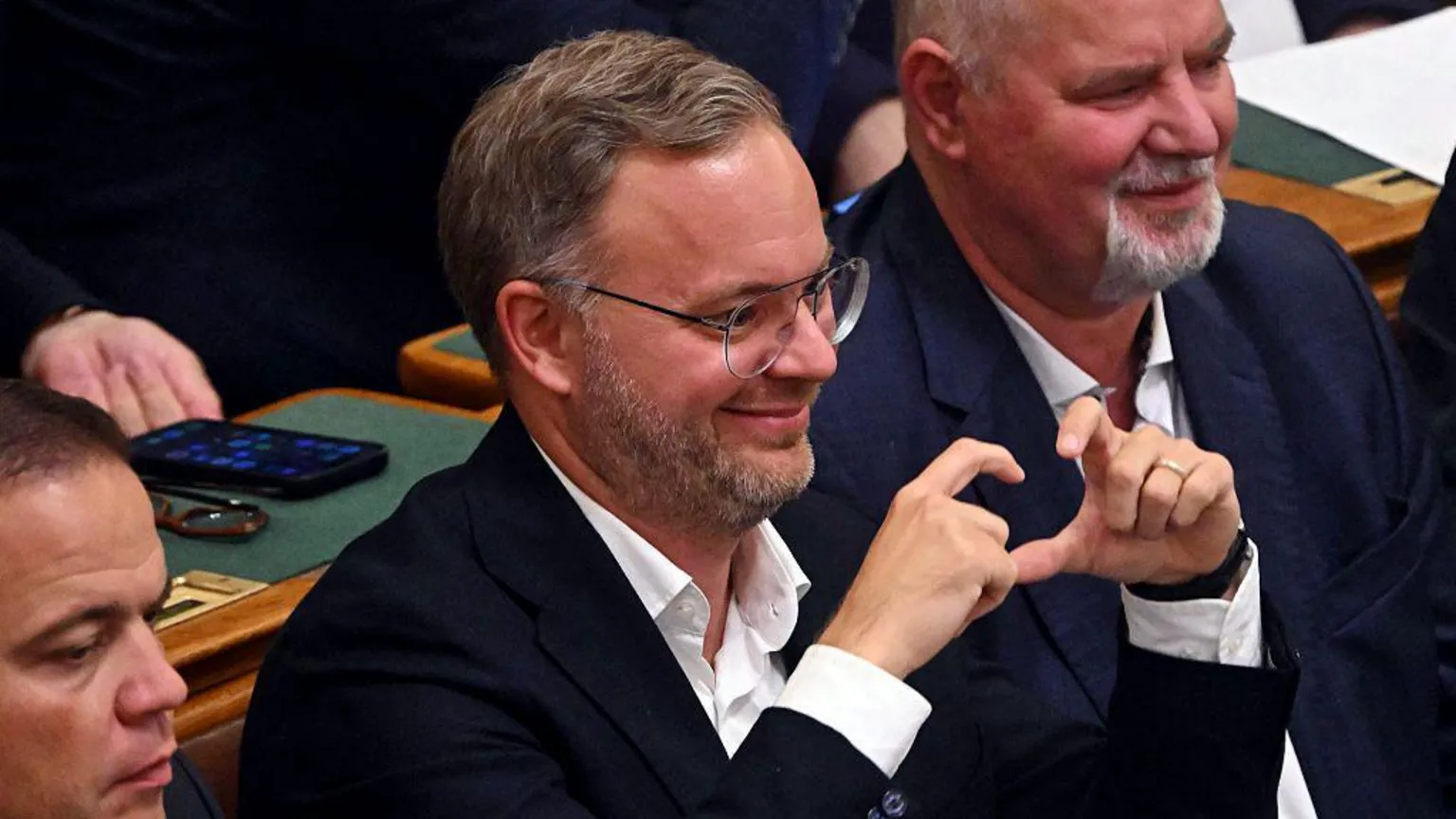
Magyar said that, in October, Hungarians would mark the 70th anniversary of the 1956 revolution, having turned over a new page in their history to become part of the "free world."