

Youth Engagement Crisis in the UK
A landmark report published last month revealed that Britain is facing a significant youth engagement crisis, with nearly one in eight individuals aged 16 to 24 classified as not in education, employment, or training (Neet).
Alan Milburn, the former health secretary and author of the report, cautioned that unless urgent measures are implemented, one in six young people could become Neet within five years.
He highlighted that the UK could benefit from adopting elements of the Dutch approach, noting that the Netherlands has one of the lowest Neet rates globally, at 4.9% among 18 to 24-year-olds, compared to 15.1% in the UK.
"No Dead Ends": The Dutch Philosophy
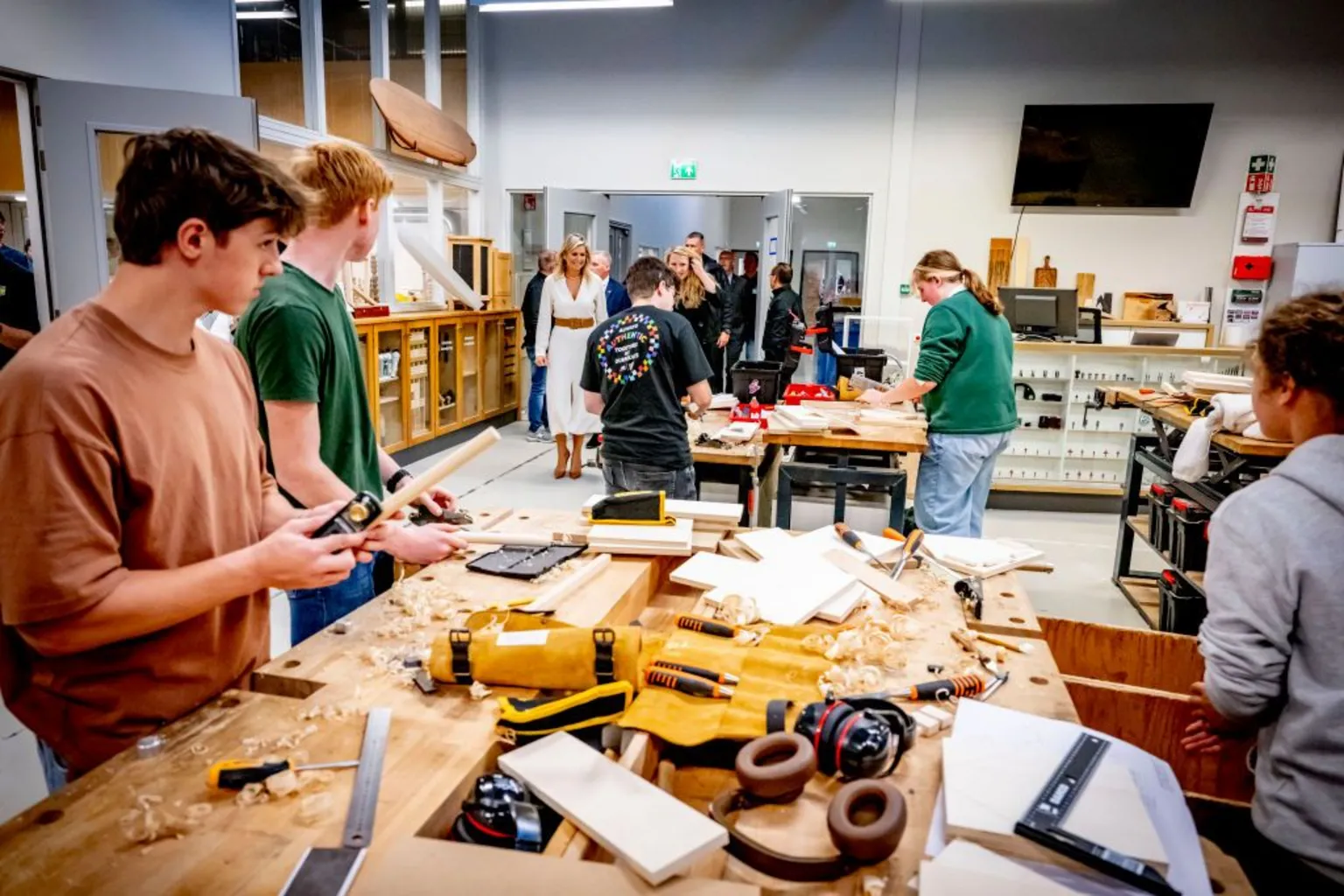
The Dutch education and youth employment system is founded on the principle of "no dead ends," ensuring that every stage of a young person's educational journey leads to further opportunities.
Under Dutch law, children aged five to 16 are required to attend school, and they must remain in education or training until they either obtain a qualification or reach 18 years of age.
A critical mechanism to reduce school dropout rates is the kwalificatieplicht (qualification requirement).
From approximately age 12, Dutch students are streamed into one of three secondary education tracks based on teacher recommendations and primary school test results:
- Preparatory vocational secondary education (VMBO)
- Senior general secondary education (HAVO)
- Pre-university education (VWO)
This streaming system is subject to debate, with critics arguing that early tracking may disadvantage some children and negatively affect their self-esteem.
In the UK, students can leave school at 16, but post-16 education requirements vary. In England, young people must remain in education or training until 18, which can include full-time study, apprenticeships, or part-time learning combined with work.
In Scotland, Wales, and Northern Ireland, there is no legal obligation to continue education or training after 16, although schools and public agencies encourage ongoing engagement.

Amelie's Educational Experience
At age 10, Amelie was advised to pursue the vocational VMBO track in high school, which affected her confidence since VMBO is considered the less academic path in the Dutch system.
However, when she began exploring secondary schools at 12, she felt more hopeful due to the variety of practical classes available, such as textiles and blacksmithing.
Amelie later studied fashion but struggled to secure an internship and left her course at 17. She then spent six months working and traveling, feeling that her academic trajectory had deviated.
She reflected that if leaving education had been an option, as it is in the UK, she might have chosen it.
"If I had the freedom to drop out of school, I don't know what would have happened," she said.
However, without a qualification, leaving education was not an option for her.
From Education to Sustainable Employment
The Dutch system offers numerous hands-on experiences through work-study pathways, partnerships with employers, and state-supported apprenticeships. Companies can even request customized college programs tailored to their specific needs.

Compensation and the availability of full-time employment after training vary by profession. Amelie noted that businesses actively seek students graduating with in-demand trades.
Through the beroepsbegeleidende leerweg (vocational training pathway), students aged 16 and older can combine part-time employment with study, typically working most of the week and attending school one or two days.
Vocational students are regarded as valuable assets to society and worthy of investment, according to Asja van der Helm, a high school teacher in The Hague.
"Many skilled tradespeople - electricians, roofers, installation specialists, technicians and craftspeople - are earning excellent incomes and are desperately needed by society," Van der Helm explained. "It's a very money-driven society for young adults. When they see a carpenter doing what they like and making a lot of money fast, they see that as aspirational."

Destiny, who moved to the Netherlands from Bonaire in the Caribbean, was attracted by the educational opportunities available. Through a beauty therapy course, an internship transitioned into paid employment at a salon.
Her experience exemplifies the Dutch policy goal of enabling young people to transition smoothly from education into work, preventing disconnection.

For students who face challenges with formal pathways, various alternatives are available, funded through school budgets.
Alternative Pathways
Alexander Koppelle, owner of Mooi Jong (Beautiful Young) in The Hague, works with school-referred pupils at risk of becoming Neet.
He describes the system as a spider's web, where each strand represents a potential dropout point, but at every junction, there is an organization, intervention, or opportunity to re-engage.
"I'm not sure we have the golden key," Koppelle said, "yet both my experience and the data suggest that there are lessons to be learned from the Netherlands."
Schools receive state funding for health and wellbeing, which can be used to engage specialist organizations like the Mooi Jong Academy, creating a layered safety net to keep students engaged and reduce dropout rates.
Tackling Truancy
Every absence is recorded, and repeated lateness prompts conversations. Schools notify municipal attendance officers to activate support mechanisms before a student disengages entirely.
Some pupils are signed off due to mental health issues such as anxiety. While awaiting referrals, they are classified as "thuis zitters," literally "people sitting at home." Schools continue to receive funding for these students, which can be allocated toward external support.
Unexplained truancy can lead to sanctions including fines, community service orders, or juvenile supervision measures.
In England, local councils and schools can use legal powers, including fines, to address unauthorized school absences.
Despite these efforts, youth unemployment in the Netherlands is rising. In response, the government is facilitating easier access to benefits for young people, supported by the Dutch Employee Insurance Agency (UWV), which administers welfare payments and connects jobseekers with employers.
For young people at risk of becoming Neet, the UWV serves as a comprehensive resource for support, guidance, and opportunities.
Reflecting on her educational journey, Amelie believes that the flexibility to change paths prevented her from dropping out entirely.
Now 20 years old, she is training to become a teaching assistant at ROC Mondriaan, a vocational college in The Hague, with aspirations to support young people facing similar challenges.


