

Horace Mason, a 74-year-old British man who has lived in Sweden for 25 years and requires round-the-clock care for dementia, has been ordered to leave the country within 10 days after losing a post-Brexit residency case. The removal order follows a July 2025 ruling by a Swedish appeals court that prioritised the government's immigration-reduction policy over the needs of a man in full-time institutional care. Judges concluded that the state's interest in controlling immigration outweighed Mason's personal circumstances, despite medical evidence detailing his extensive care requirements.
The appeals court stated its reasoning plainly:
"The state's interest in regulated immigration outweighs Horace Mason's interest in continuing to reside" in Sweden.
Mason's ordeal mirrors that of Joyce Thomas, a 78-year-old widow whose case was reported this week involving late Brexit paperwork despite her having lived in Sweden for 21 years.
How did the family learn of the deportation order?
Mason's son, known as Carl (formally George), said the British embassy informed him on Friday that Swedish authorities had set a deadline of 20 August for his father's departure. He described the difficulty of shielding his father from the news given his condition.
It made me feel sick. We've been trying to keep as much information from him as possibly because with the illness he is confused and worried.
But I had to tell him on Friday what had happened and there was just a thousand questions: 'What is going to happen? Are the police going to come and take me away. Are they going to kick the door down?'
I had dinner with him again today [Monday] and it was the same: 'What is going to happen now? Where am I going to go in England? Are they going to arrest me and put me in prison.
It's inhumane.
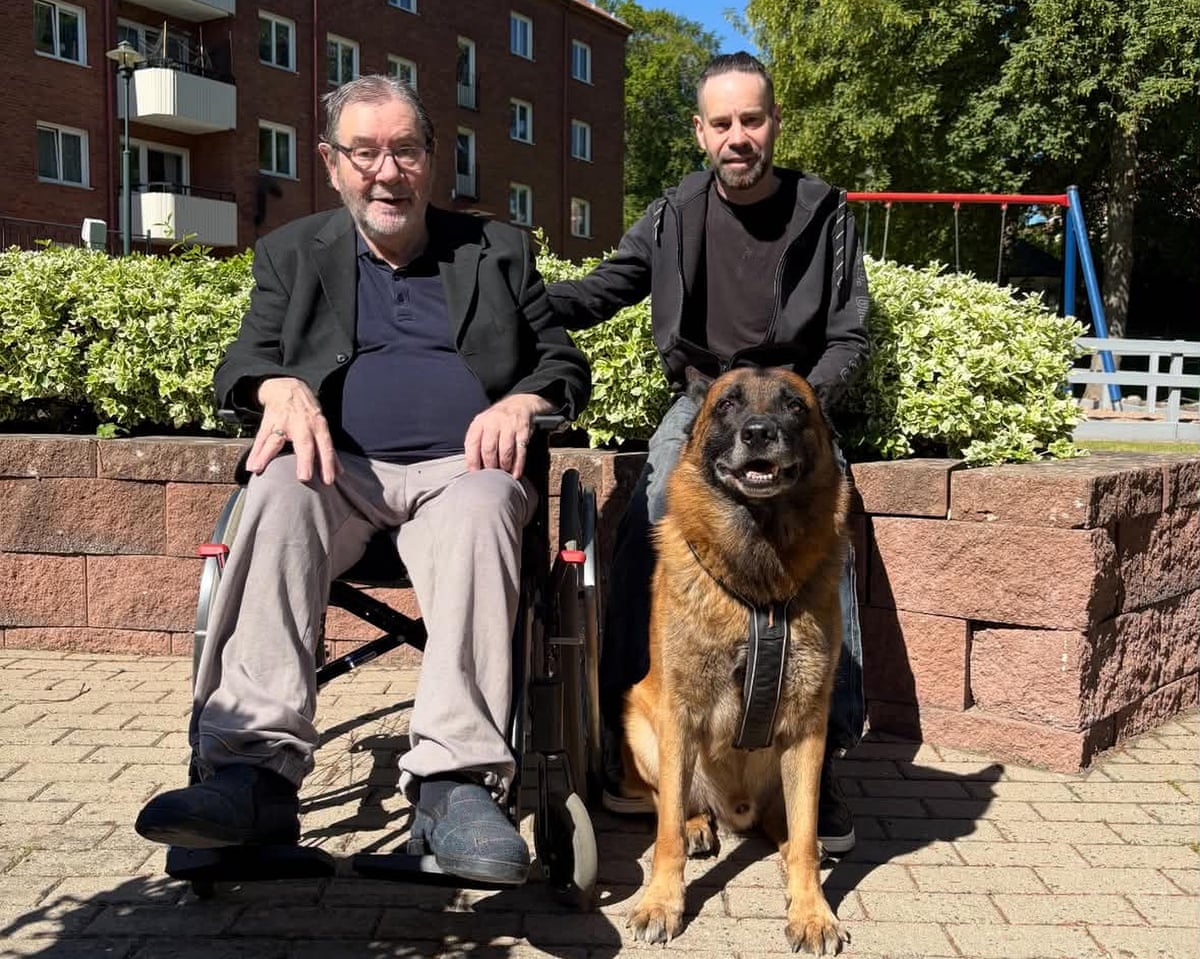
A UK government spokesperson confirmed awareness of the situation, saying officials are supporting Mason and his family and remain in contact with Swedish authorities regarding the case. Mason's situation follows an earlier case two years ago involving another British national who died in a Swedish care home amid a similar dispute.
Why did Mason move to Sweden, and what is his medical condition?
Mason relocated from Hinckley in Leicestershire to Sweden around the year 2000 to be near his son and grandchildren. Carl described his father's condition in stark terms, emphasising the severity of his dependency on others.
He is elderly and extremely vulnerable. He has advanced vascular dementia and vascular parkinsonism, together with other serious health problems. He is immobile, requires help with virtually every aspect of daily life and is in full-time residential dementia care in Sweden. He is not capable of simply travelling to Britain and starting a new life independently.

As his father's cognitive abilities declined, a Swedish court appointed a trustee with power of attorney over his affairs. Carl says this marked the beginning of the family's legal difficulties.

That is when all the problems started.

What was the legal process that led to this outcome?
The family first applied for a residence permit in December 2021, but the Swedish migration agency rejected the application in November 2024, stating that Mason had not provided sufficient documentation proving he met residency requirements. A subsequent appeal was also denied. The family then escalated the matter to the migration court of appeals, invoking Chapter 5, Section 6 of the Aliens Act, which allows residency on the basis of "particularly distressing circumstances."
New medical evidence was submitted detailing Mason's need for continuous supervision and round-the-clock care, alongside arguments under Article 8 of the European Convention on Human Rights, which protects the right to private and family life. On 23 July 2025, the court upheld the deportation order, noting that dementia care facilities exist in the UK and that Mason has a daughter living there — although private medical testimony indicated she is unable to provide the level of care Carl currently gives.
The court's final assessment read:
Upon balancing the state's interest in regulated immigration against what has emerged regarding Horace Mason's private life and his adaptation to Sweden, the migration court concludes, on balance, that his deportation appears proportionate in relation to article 8.
Carl remains bewildered by the decision as he races against the clock to keep his father in Sweden.
I just can't see the reasoning behind why they think that deporting a vulnerable citizen is in anybody's benefit. It's just beyond me.
Is this part of a wider pattern?
Mason's case is not isolated. A British woman with Alzheimer's, Kathleen Poole, faced a similar deportation threat from Sweden in 2023 due to post-Brexit paperwork issues, according to an earlier report from a national broadcaster. Campaigners and the UK's Foreign, Commonwealth and Development Office have said roughly 2,500 British nationals have been ordered to leave Sweden under post-Brexit rules, according to a separate report published in August 2026.
David Milstead of the grassroots campaign group British in Sweden, who has long tracked the difficulties faced by British nationals in the country, argues that Sweden's approach is unusually strict compared with the rest of the European Union. Of 14,233 applications submitted by the end of 2024 seeking to remain in Sweden, 27.5% (3,918) were refused — a rejection rate three times higher than any other EU member state and well above the bloc-wide average of 3% to 4%.
The Swedish authorities resemble the proud parent at a military parade insisting that everyone except their own child is out of step.
For applications made both on time and after the deadline, Sweden's approach to the withdrawal agreement ignores key protections in that treaty and is highly restrictive compared with other countries. As a consequence, lives are still being ruined.
Could a similar case offer any precedent?
A related legal precedent may work against Mason's chances of overturning the decision. According to a March 2026 judgment from the European Court of Human Rights, the court found that Sweden could lawfully remove a man with vascular dementia without breaching Articles 3 or 8 of the Convention, suggesting the Strasbourg court has already signalled tolerance for such removals in comparable circumstances. However, a Swedish dementia advocacy organisation has noted on its website that migration authorities halted a deportation in a similar dementia case pending new evidence from the affected person's legal representative, indicating that administrative pauses remain possible even after a removal order has been issued.
What happens next?
Carl is preparing to bring a further challenge before the European Court of Human Rights in Strasbourg and has launched a GoFundMe campaign to cover an estimated 50,000 kronor (£3,900) in legal costs. Based on the pattern seen in the Kathleen Poole case, where Swedish authorities paused a deportation while awaiting fresh material from a representative, a similar administrative review could theoretically be sought in Mason's case, though no such pause has yet been confirmed by Swedish officials.
Key Facts
- Horace Mason, 74, has lived in Sweden for 25 years and requires round-the-clock dementia care.
- Sweden's migration court of appeals ruled on 23 July 2025 that his deportation is proportionate under Article 8 of the European Convention on Human Rights.
- He has been given until 20 August to leave the country.
- Sweden rejected 27.5% of 14,233 post-Brexit residency applications by the end of 2024 — three times the rate of any other EU state.
- Roughly 2,500 British nationals have reportedly been ordered to leave Sweden under post-Brexit rules, according to campaigners and the UK's FCDO.


