Massive Banquets Draw Thousands in Alsace
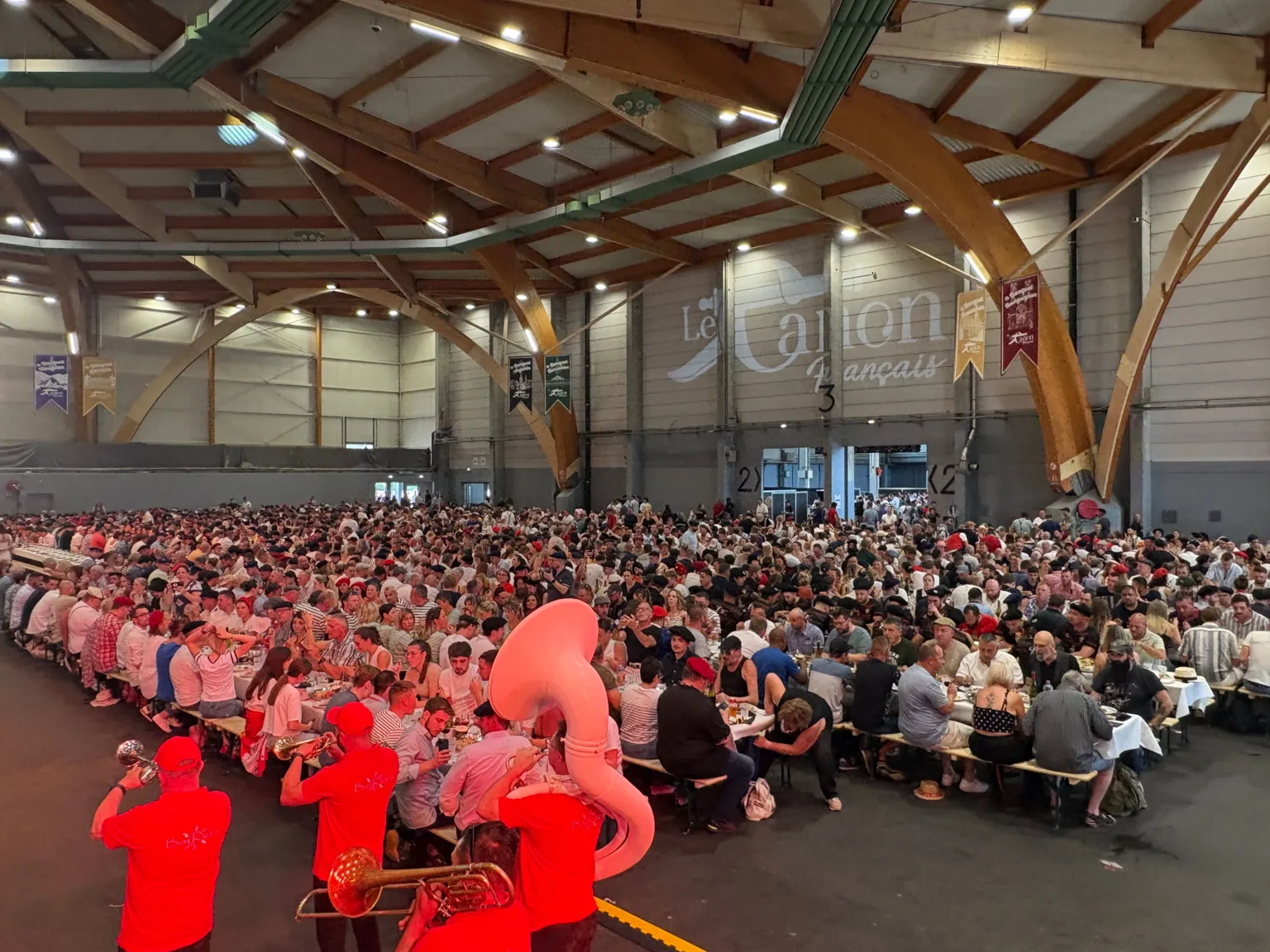
Three-and-a-half-thousand hungry Alsatians gather to enjoy platters of charcuterie and intermittently break into lively song.
This is not a police dogs' annual convention but the latest edition of a feasting trend sweeping across provincial France.
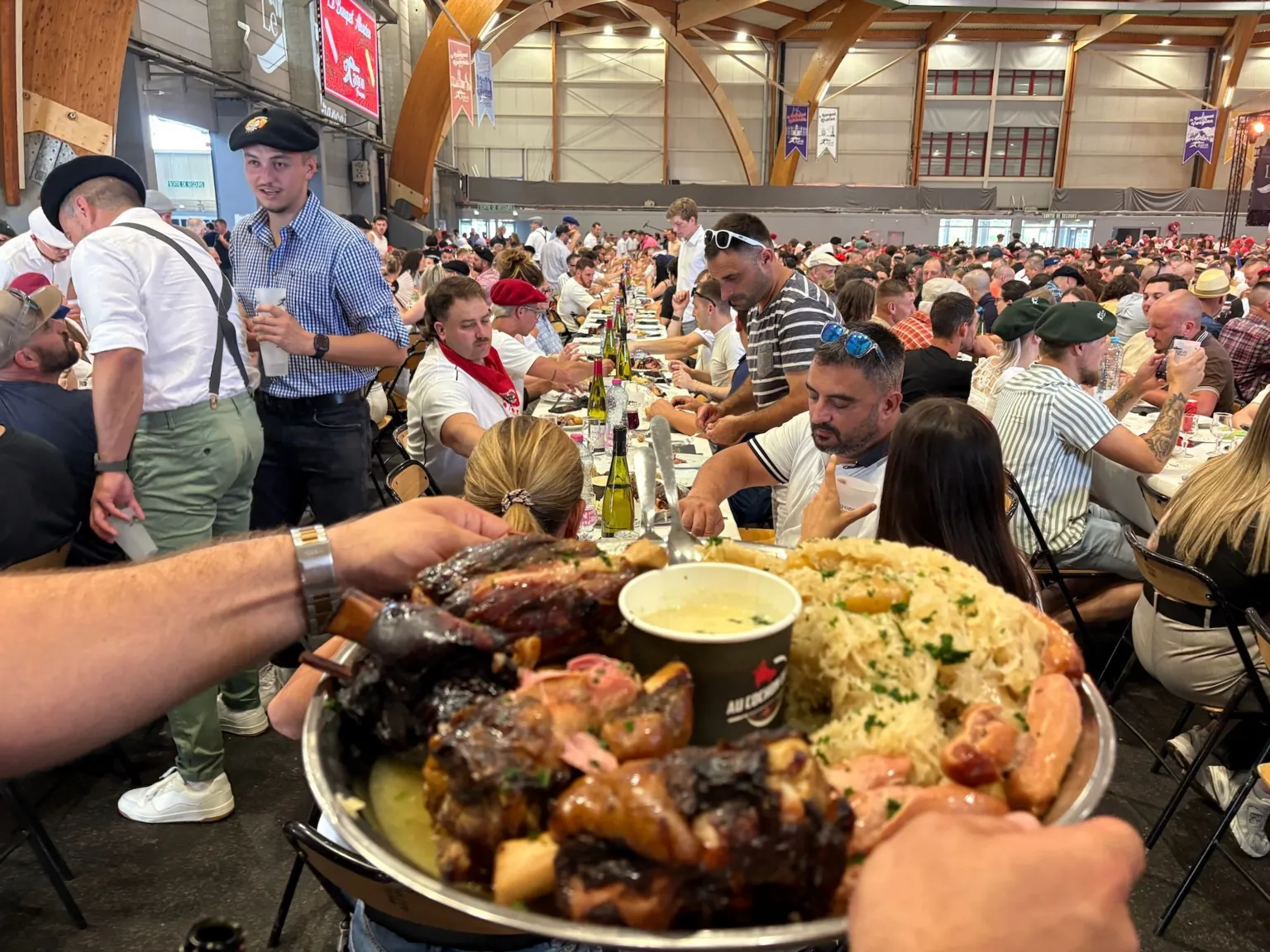
The Alsace town of Colmar, renowned for its half-timbered medieval centre, hosted one of the "banquets géants" last weekend – large-scale banquets whose rising popularity has sparked political debate nationwide.
Organized by Le Canon Français (The French Cannon), these events attract large crowds. For €81 (£70), attendees receive a four-course meal featuring local specialties, unlimited wine, and several hours of communal singing and socializing.
Political Criticism from the Radical Left
However, not all reactions have been positive. The radical left party La France Insoumise (LFI - France Unbowed) has expressed concerns about the banquets.
LFI claims to have evidence of racist chants and reports of immigrant staff being insulted. They highlight the frequent inclusion of pork on the menu, suggesting the feasts are intentionally exclusionary toward Muslims and vegetarians.
Moreover, LFI points to the financial involvement of ultra-conservative entrepreneur Pierre-Edouard Stérin as indicative of a hidden political agenda aimed at promoting far-right ideologies.
Stérin, a billionaire who amassed wealth in the experience gift-voucher industry, founded a think tank advocating right-wing positions such as immigration reduction, abortion restrictions, and the promotion of France's Christian heritage.
"If they were in good faith, Le Canon Français would never have accepted Stérin as an investor. But they did - they took his money," says Emma Fourreau, an LFI member of the European Parliament.
"And that is because they share the same political ecosystem, whose aim is to bring the far right to power."
Atmosphere at the Colmar Banquet
The Colmar event took place in a large hangar-like venue on the town's outskirts. Accusations of exclusion and racism were dismissed by attendees and organizers alike.
Participants sat at long tables with 50 people on each side. Many men wore what has become a sort of Canon Français uniform: berets and braces. Some women donned traditional Alsace attire.
Before the meal, management gave a brief speech reminding diners of the "charter" that commits them to respectful and orderly conduct. Then the festivities commenced.
Servers brought out platters featuring choucroute, followed by Alsace cheeses and the traditional kougelhopf dessert. Wine was served liberally.

Periodically, diners put down their forks to join in singing. Classic songs by artists like Michel Delpech and Joe Dassin were favorites. Though these tunes hail from an earlier era, the predominantly young crowd, mostly in their 20s and 30s, knew the lyrics by heart.
"We come for four things: atmosphere, friends, alcohol and food," said one young man, a sentiment echoed repeatedly.
Most attendees avoided discussing politics, except to suggest the controversy was exaggerated.
"None of this was an issue, but then Stérin became a shareholder and that gave the LFI an excuse to attack. Don't forget there are elections next year," said Quentin from Besançon.
The crowd was mainly white but not exclusively so. Many expressed appreciation for the opportunity to celebrate traditional culture among friends. The BBC observed no offensive behavior or language during the event.
Origins and Purpose of Le Canon Français
Le Canon Français was founded by entrepreneurs Pierre-Alexandre de Boisse and Géraud de la Tour. They initially sold wine online to support a struggling winegrower during the Covid-19 pandemic. This evolved into hosting events to fund heritage projects, eventually leading to the large banquets.
De Boisse describes the banquets as a revival of an ancient French tradition of communal dining with local cuisine, dating back to medieval times. Following the French Revolution, "banquets républicains" celebrated the new political order, and until recently, villages held annual "banquets populaires" or people's feasts.
"Nowadays people waste so much of their time alone, in their homes, on social media. They've lost the habit of being together and talking. What gives us the most pleasure is when we see the lawyer sitting next to the baker, chatting away," said de Boisse.
Response to Criticism
De Boisse expressed frustration at the accusations from the hard left, insisting they are baseless.
"Of course we cannot police the minds of all the people who come. And occasionally maybe someone drunk says something stupid. But our rules are quite clear and set out in the charter, to which everyone signs up when they buy a ticket," he said.
He refuted claims that only pork is served, acknowledging it is a regular feature due to its place in French rural tradition but not exclusive. He also dismissed allegations of Nazi salutes at banquets, stating,
"I spoke to the guy and he said the accusation was total nonsense."
Describing himself as a Catholic from an impoverished aristocratic background and an entrepreneur, de Boisse said excluding people would contradict both his ethics and business interests.
Regarding Stérin, he stated he had never met the investor, who acquired a 30% stake purely because the venture was profitable.
Political Perspectives and Investigations
LFI's Emma Fourreau characterized the banquets as "backward-looking – a caricature."
"They don't represent modern France, which is a place rich in its diversity."
The party is lobbying local authorities to halt the banquets and has achieved initial success in Quimper, Brittany.
In Caen, where a banquet took place in April, police have opened a preliminary investigation into allegations of racial provocation by attendees.

De Boisse acknowledged that many attendees likely lean politically right or far right, reflecting broader voting trends in rural areas.
"But look at the elections. That is how more and more people in the countryside are voting," he said.
"Look, I create jobs, I create happiness for the people who come to the banquets. OK, these politicians don't like the shareholder, they don't like the people who come to the banquets, they don't like my name – but why do they have to go on the attack?
"Why can't they just leave us alone?"