Social cohesion's lost optimism
The phrase should evoke optimism, positive expectations about the future, trust and belonging. That seems almost out of reach in a chaotic world.
One term has become the well-intentioned weasel word of 2026: “social cohesion”. A phrase that can be dropped into speeches, inquiries and legislation, its meaning shape-shifts depending on the audience. Is it about “glue” or the rule of law? About community resilience or countering fear? Does it mean finding places of real exchange, or shutting up and getting on?
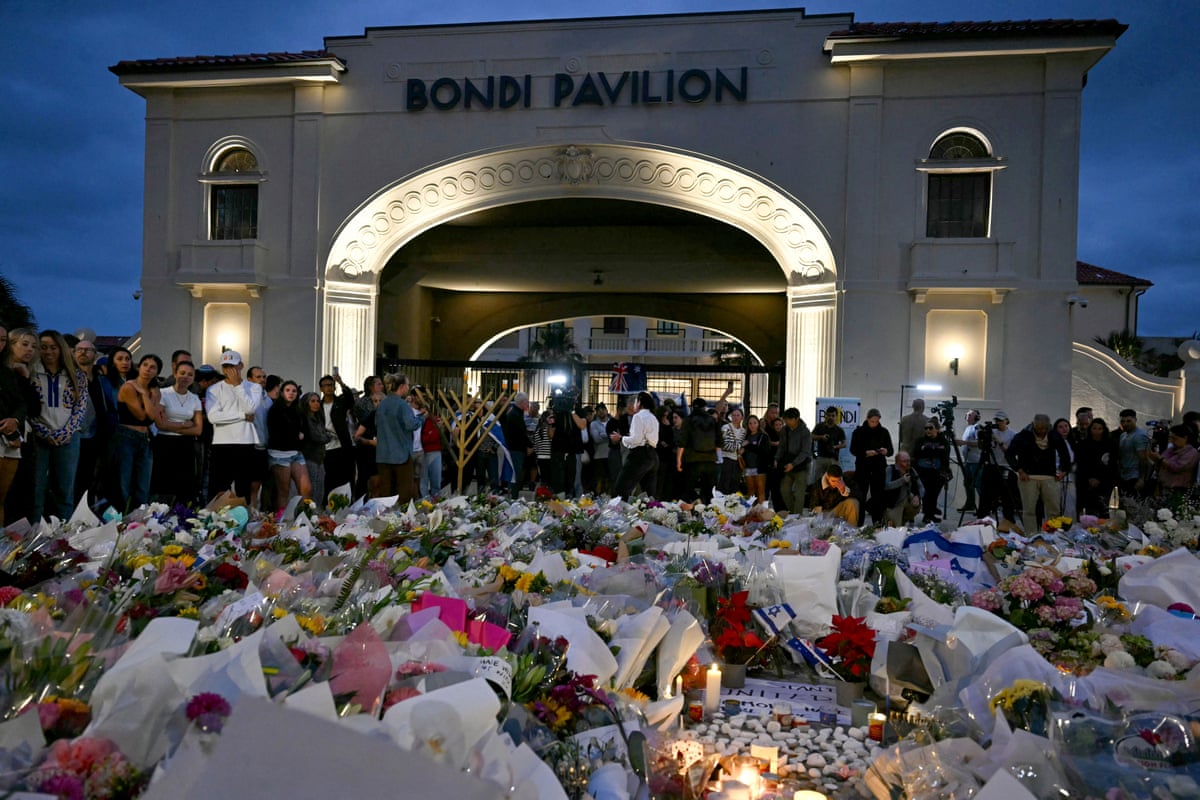
Although it has been in the political lexicon for years, the targeted Jewish people celebrating Hanukah in Bondi last December brought social cohesion to the fore as an urgent problem to solve.
Social cohesion should evoke optimism, positive expectations about the future, trust and belonging. That seems almost out of reach in a chaotic world that amplifies feeling, makes thinking hard and is overflowing with institutions (and leaders) who encourage hate.
As a result of the Bondi tragedy, antisemitism has become the bellwether of diminishing cohesion.
For many people in Australia, social cohesion has lost its feelgood vibe.
Now, the term provokes cynicism, confusion – even anger. Some hear social consensus or social conformity. No dissent allowed. It doesn’t yet come with an embedded action plan grounded in the distinctively Australian commitment to a fair go.
Psychoanalyst Allan Shafer diagnoses the loss of optimism as deriving from widespread social depression: a collective state of despair, anxiety and polarisation driven by global violence, political manipulation, trauma and the collapse of nuanced dialogue. This he argues, and we all see, produces hate and undermines the capacity to recognise our shared humanity.
Transforming this demands hard, unglamorous work, and emotionally intelligent leaders who can deflect and reframe. It takes time, robust institutions, respectful dialogue and being prepared to correct the missteps of the past that have created institutions that foster inequality.
Instead, over the past two decades no government has dismantled the social and ethical architecture that John Howard set in place. Recognition of First Peoples has stalled. Education has become more expensive. Universities more expensive. Visas more complicated and costly. Family reunion harder. Childcare, disability and aged care services have become “investable industries” propped up by public money. There is still no national anti-racism strategy. Welfare payments leave many in poverty. Public housing is still not being built at scale. Despite several inquiries and overwhelming public support we still have no reforms that would level the playing field for everyone.
Palpable fear
In the royal commission, social cohesion is framed as a “national consensus in support of democracy, freedom and the rule of law”. These are essential parts of the nation’s ethical infrastructure, not tools for belonging. If the royal commission’s deliberations confine social cohesion to opposition to antisemitism, crucial though that is, it will miss the bigger even more complex problem.
Now fear is palpable. Isolation normalised. Schools, synagogues and mosques protected by armed guards. Police are deployed to corral demonstrations. Words banned and some subjects pushed off limits. Meanwhile, social media fosters and provokes suspicion and hate. Almost everyone navigates a real and virtual world full of hostility.
Life is still better for most than in many other countries, but this is a long way from the relaxed and comfortable Australia where social cohesion seemed to dawn for most almost as naturally as a clear day after a summer storm.
Three decades ago, inquiries declared Australians were over the endless seminar on national identity as one inquiry after another revealed a more complex and conflicted history and contemporary reality. Instead, a cliched ideal of fairness was plonked on the mantelpiece like a trophy from a past triumph. Nation building is about imagining the future where belonging is meaningful. To do that effectively the past needs to be interrogated and addressed.
The market, personal wellbeing, the family and likes on social media are poor substitutes for a sense of collective connection.
When the Scanlon Foundation first started surveying social cohesion, a deliberate omission was wealth and income disparities. At the time it noted,
“few would immediately consider wealth and income disparities in relation to social cohesion”
Two decades on few would agree. The data is unequivocal: the economically marginalised are less socially cohesive.
Reflecting on this, the Organisation for Economic Co-operation and Development definition is more helpful, although beyond the scope of the royal commission. It describes an ongoing process,
“A cohesive society works towards the wellbeing of all its members, fights exclusion and marginalisation, creates a sense of belonging, promotes trust and offers its members the opportunity of upward mobility.”
In Australia today, too many pathways seem designed to cap social mobility. Opportunities to participate and flourish are harder to find. Churches, unions, political parties, service clubs and community organisations continue to shrink.
Meanwhile many hanker after community connection in lives that are too busy, too fraught with financial anxiety or too focused on individual happiness.
Politicians love to boast that Australia is the “greatest multicultural nation on Earth” but hide behind the flag and disappear into a vapour of cliches when asked about nation building and what being Australian might actually mean in the 21st century.
Instead, social cohesion has become shorthand for multiculturalism. The Scanlon Foundation, which has been mapping the national sense of belonging, inclusion, worth, participation and acceptance for nearly two decades, has shown the complexity of this issue.
The same politicians who love to point to the overwhelming support for cultural diversity, rattle off the numbers that suggest the stain of the white Australia policy has been scrubbed clean: more than half the population was born overseas or has a parent born abroad, there are 320 different ancestries, with people speaking 429 different languages – including the 183 Indigenous languages that were once banned.
They are less likely to point out that nearly half the people who have moved to Australia on skilled visas are in insecure employment, or that racism is rife on university campuses and sporting fields. They don’t like to mention that we now have the highest rates of inequality – by gender, ethnicity, religion and class – in the OECD, or that industries at the lower end and visa holding workers face exploitation.
They prefer to boast that the 48th parliament is the most diverse in the nation’s history, even though less than 10% of our elected representatives come from a culturally or racially marginalised group. They rarely take the next step of pointing out how unrepresentative that is of the population.
The possibility of dual citizenship – which many Australians cherish as a birthright – explicitly precludes standing for parliament, as 15 MPs found when they lost their seats. Many comparable countries allow dual citizens to stand for elected office – but not here, in the most successful multicultural country in the world.

Maybe the white Australia policy has moved from the bloodstream to the national DNA. If so, talk of social cohesion will sound more like social consensus or social conformity to those who feel like their belonging is conditional.
In 2007, the Scanlon Foundation found that a comfortable majority had a strong sense of being Australian and took great pride in the way of life and culture. The pride was partly a legacy of determined efforts since the 1970s to build social capital and a richer more diversely inclusive sense of Australian identity.
Since the Covid years, and the conspiracies it unleashed, this has crumbled. Now less than half feel that pride of attachment, and only a third of young people, recent immigrants and those struggling financially, have a strong sense of belonging.
Exploring what being Australian really means in the volatile 21st century was the task I set myself when writing and working with Rachel Griffiths and Blackfella Films on the SBS series of the same name.
We found a lot of confusion and uncertainty, but also a passionate aspiration to grasp the extraordinary opportunities of life in “the lucky country”.
Moral imperatives
It is time to resume the national seminar on Australian identity that John Howard deliberately shut down. To take a critical eye to our history, to describe values so they reach beyond motherhood statements, rebuild the social, economic and cultural infrastructure that encourages civic participation and allows power and decision-making authority to be shared. It requires politicians to be boldly inclusive, embrace civic values, remake flawed institutions.
A successful modern nation cannot be based on ethnicity or religion. It is likely to be open, secure, positive and warm-hearted, appealing not just to dry reason, but the deep human need for belonging and the heart.
There is nothing that frightens modern politicians quite so much as moral imperatives. Easier to ban protests and words, shut down debates, leave racism unchallenged, human rights un-legislated and retreat to comforting half truths.
But unless nation building is taken very seriously as the crucial next step towards a meaningful and shared sense of belonging, the flag-draped Aussie Aussie Aussie Oi Oi Oi crowd will hold the whip hand, and their freedom-restricting harassment will push many into tribal groups.
As recently as five years ago, Australia ranked among the happiest nations on Earth, according to an Ipsos global snapshot.
Covid tested the resilience of this. Initially trust in government spiked but soon fell away and provided fertile ground for ethnically and ideologically inflected conspiracies and antisemitism.
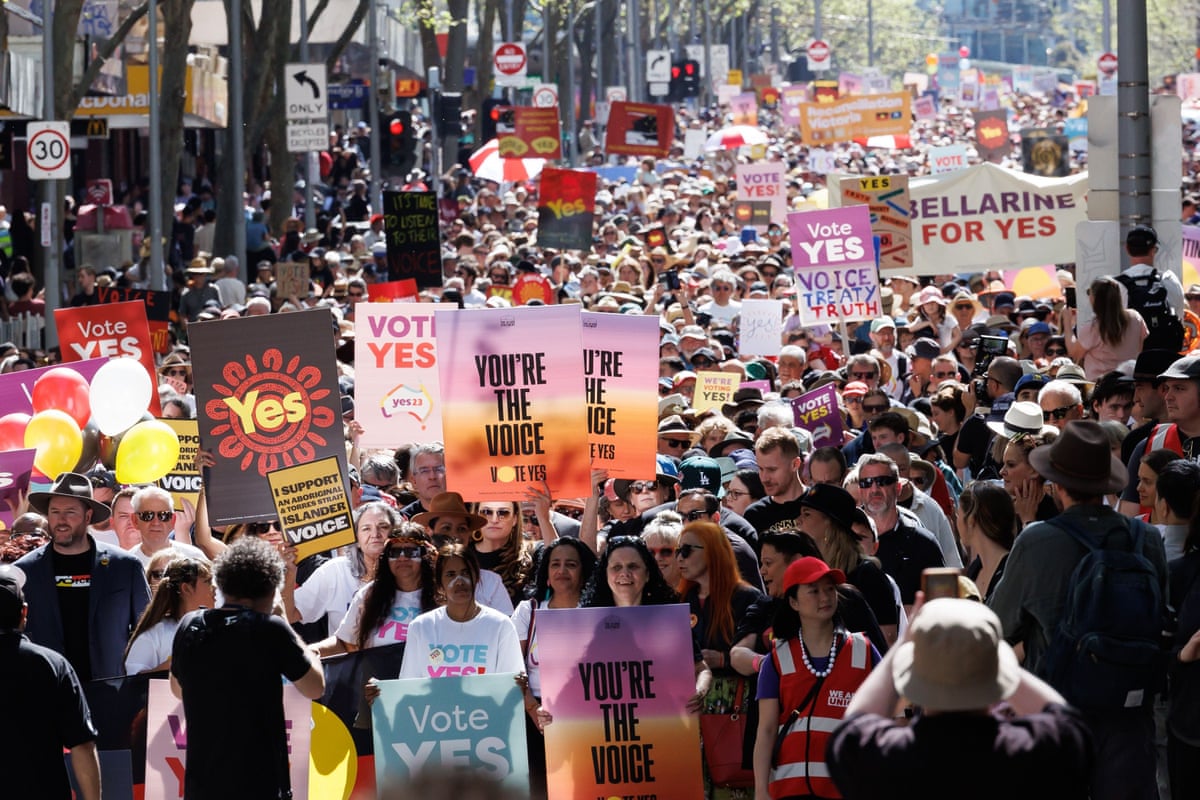
The racist abuse that flooded the internet during the voice referendum set the scene for the fractured, febrile environment we now reluctantly take for granted. The murderous Hamas attack on Israel in 2023 and the subsequent devastating war in Gaza touched many deeply – even from a distance the threat felt existential – and then the massacre of 15 Jewish Australians in Bondi and the bomb-throwing at an Australia Day protest in Perth brought it home.
There are few textbooks for building a truly robust and inclusive multi-ethnic society with an easy intercultural, cosmopolitan spirit. By the mid 1990s, after two decades of community activism, bipartisan political leadership, inquiries and serious policy work, Australia was considered to have written one of the best.
And then it stalled and sputtered after 1996. As John Howard wrote in his memoir,
“Multiculturalism was a policy with which I had never felt comfortable.”
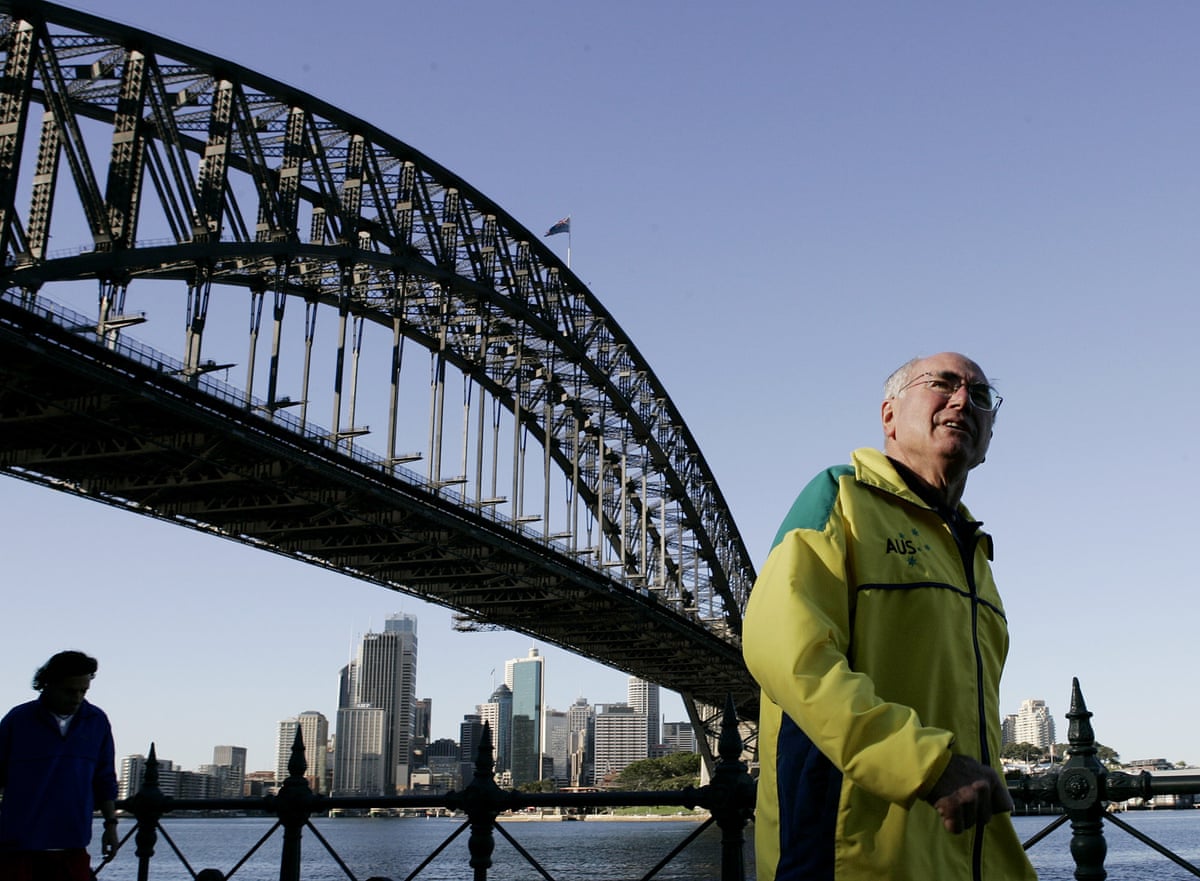
But well before he thumped the table and shipped refugees offshore, Howard had dismantled most of the intercultural and multicultural architecture, including the Office of Multicultural Affairs; helped enable one of the most segregated school systems in the world to flourish; pursued privatisation at a world leading rate; and dispensed the benefits of the mining boom to foster individualism.
It was as though Australia, once characterised by a spirit of collectivism, was being used as a Petrie dish to test Margaret Thatcher’s dictum that there is “no such thing as society”.
During those years, communities took on the responsibility of looking after their own. Parents wanting their children to feel safe sought out schools that emphasised their religious or cultural values. In the process, this weakened one of the most resilient sites of intercultural exchange.
It’s easy to forget, as immigration has again become a political target, that multiculturalism enjoyed real bipartisan support from 1973 to 1996.
Now the poison of the global anti-immigration project and far-right populism is leaching into local politics thanks to Pauline Hanson, the internet and the failure of the mainstream parties to nip it in the bud.
After Angus Taylor was elected Liberal leader he kept talking about “the Australian way of life”. No one asked him to define it. Instead he talked about good and bad migrants, the wonder of cappuccino in country towns and rule of law as an Australian value. As the new Nationals leader, Matt Canavan is poised to fight One Nation by advocating for more Australian babies, jokes and barbecues.
Their mentor, Tony Abbott, has suggested that our diversity is not our strength, and that what is needed is a return to the good old days of assimilation. What seemed natural to his English family – which emigrated mid-century – was much more challenging for countless others, as research unequivocally showed.
The phrase du jour
In 2022, for the first time in decades, the government commissioned a review of multiculturalism, which found Australia had muddled on, but squandered its world-leading status and recommended the government create a minister, a permanent commission and department for multiculturalism.
Labor MP Dr Anne Aly was appointed multicultural affairs minister in 2025. She is uniquely qualified for the role. The Egypt-born de-radicalisation and counter terrorism academic grew up in a family who experienced the limits of early multiculturalism – changing their name, not mentioning their faith and having foreign professional qualifications unrecognised.
In parliament last November, Aly declared it was time to end
“the conditional form of multiculturalism, that kind of gritted-teeth tolerance that, ‘You are welcome here as long as your food tastes good, your celebrations are colourful, and your music is present to the ears.’ But any questioning, any speaking out, any disruptive participation in any practice of citizenship will not be tolerated. Instead, acts of citizenship afforded to the broader community are viewed as acts of defiance when performed by the other and are met with cries of, ‘Go back to where you came from,’ and ‘Love Australia or leave it.’”
She issued a call to all Australians to reimagine multiculturalism, and the real social cohesion that would befit the title of the most successful multicultural nation in the world.
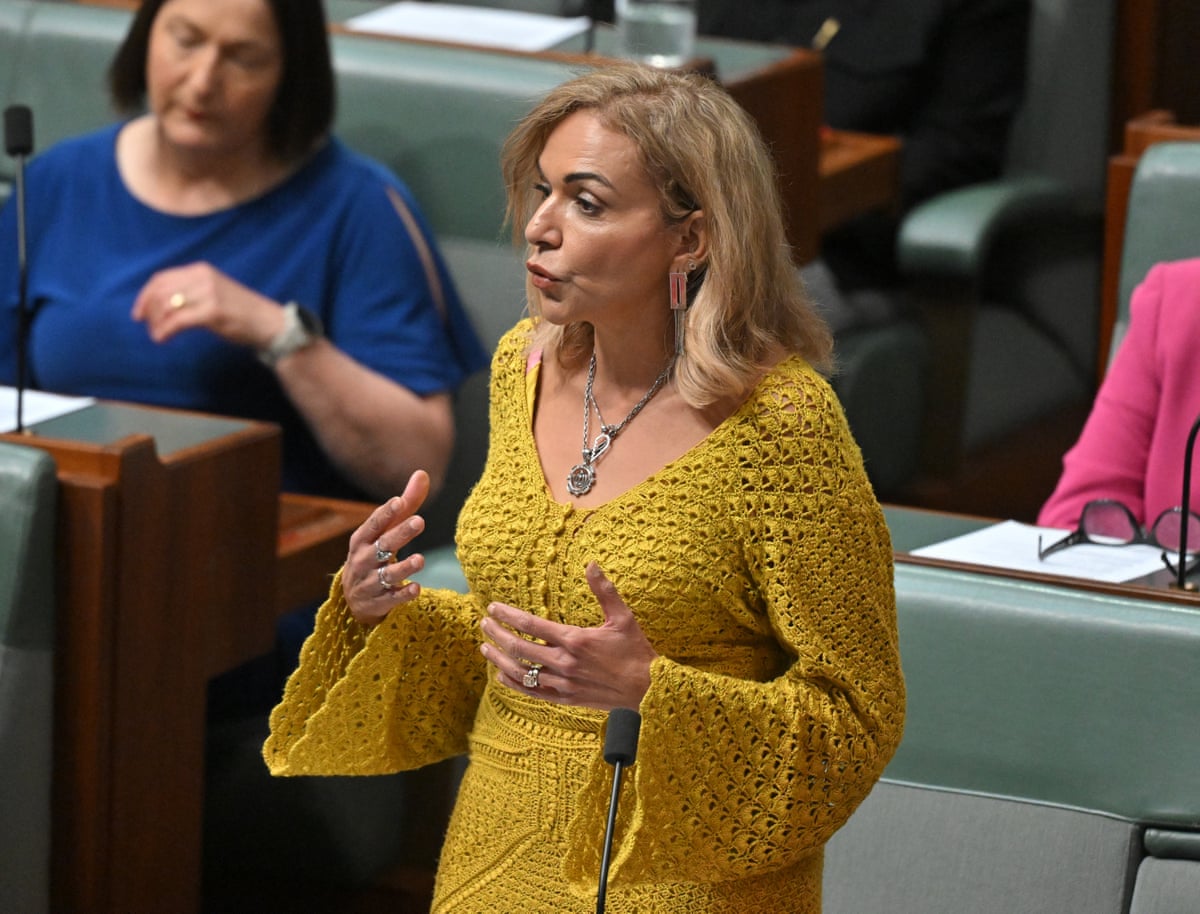
A month later the Bondi shooting occurred, the threat that many had feared, to Australians of Jewish heritage, became manifest. The push back against Australians of Islamic faith who were equally horrified by the attack, escalated. Social cohesion became the phrase du jour as Australia struggled to make sense of the horror and ensure it never be repeated. Aly’s vision of how social cohesion and multiculturalism could really deliver the promise on rights to cultural identity, equal opportunity, and the recognition of migrants’ diverse skills and talents, was lost in the noise.
Rather than arguing about numbers, good and bad migrants, countries to ban and nostalgic white-washed memories of assimilation it is time to listen to practical wisdom about how to create real belonging and trust in a socially depressed world that is too eager to blame and hate.