

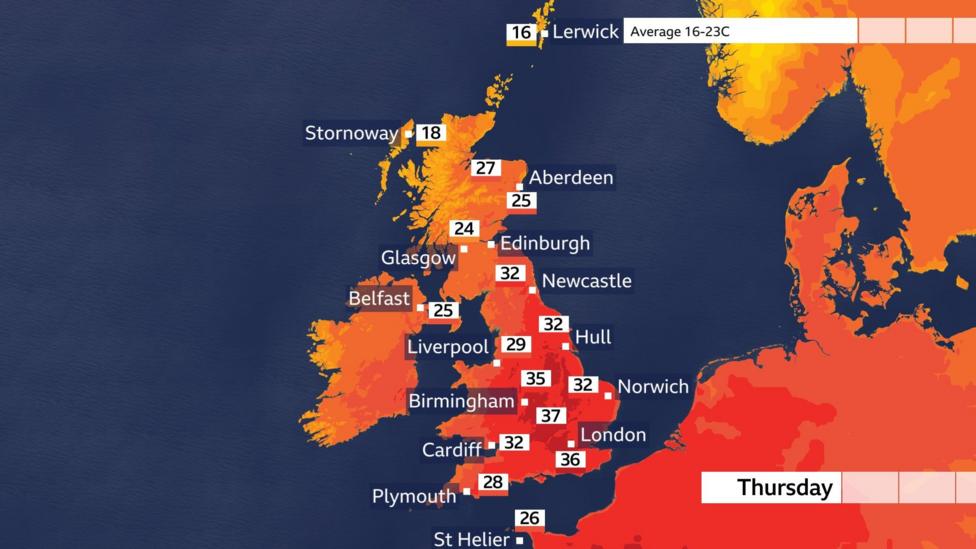
An amber extreme heat warning covering large parts of the UK is in force on Thursday, 13 August 2026, with temperatures forecast to reach as high as 38C (100F). The alert marks the peak of the country's fifth widespread heatwave of the year, with most of the warning zone expected to see highs in the mid-30s Celsius.
Alongside the Met Office warning, amber heat-health alerts covering the whole of England remain active until 21:00 BST on Friday, 14 August. These alerts, issued by the UK Health Security Agency, flag a heightened risk to health and social care services, including possible rises in mortality, particularly among people aged 65 and over or those with existing health conditions.
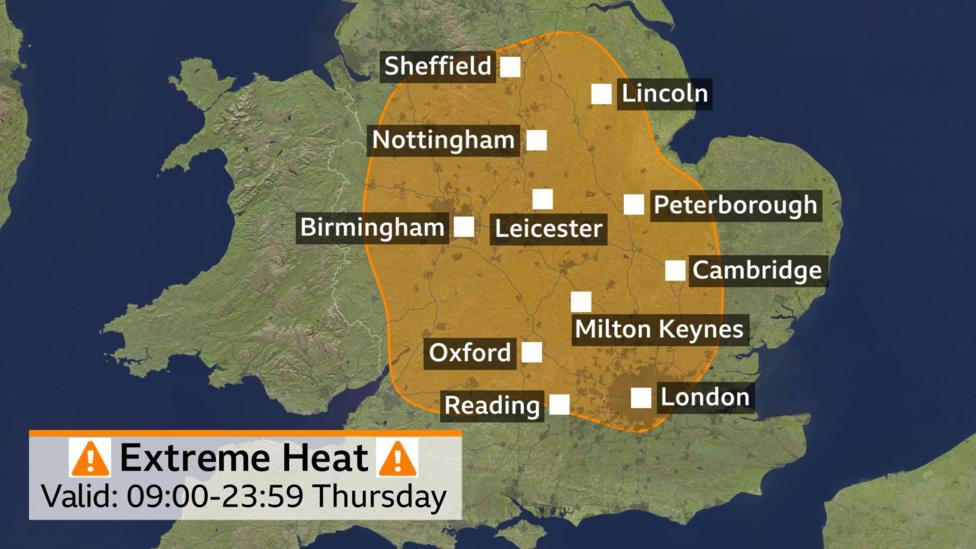
According to the Met Office's warning map, the amber alert began at 09:00 BST on Thursday and is due to expire at 23:59 BST the same day, with the agency rating the likelihood and impact of disruption as medium. The Met Office's updated warning confirms the affected area now stretches across parts of southern and eastern England and the Midlands, with additional coverage extended into north-west England and sections of the south-west.
Which parts of England are covered by the alerts?
The Met Office warning applies to Eastern England, London and the south-east, the Midlands, north-west England, south-west England, and parts of Yorkshire and Humber, running until midnight on Thursday. Separately, UKHSA's updated guidance states that its amber heat-health alerts extend across Yorkshire and the Humber, the West Midlands, the East Midlands, the East of England, the South East, London, the South West and the North West. UKHSA also noted that an amber alert for the North East took effect from 9am on Tuesday, 11 August, while amber alerts already in place elsewhere in England were left unchanged.
Local authorities have also flagged the scale of the affected zone. Oxfordshire County Council said that all but the westernmost parts of the county fall within the extreme heat warning area, according to a council statement.

What risks does the heat pose?
The intense heat could trigger power cuts, delays to rail and air travel, and serious health effects such as dehydration and heat exhaustion. Compounding the danger, forecasters expect a few tropical nights — when temperatures stay above 20C overnight — as increasingly humid air moves into western parts of the country. Sustained heat during both the day and night can place extra strain on the body, since there is little opportunity for people to cool down and recover.
How long will the heatwave last?
Despite the intensity, this spell of extreme heat is expected to be brief, lasting no more than three days in total. Temperatures should begin easing by the weekend, though even after the heatwave breaks, conditions are likely to remain at or slightly above the seasonal average for mid-August.
How does this compare with earlier heatwaves this year?
This is the fifth widespread heatwave the UK has experienced in 2026, following earlier warnings in June and July. An amber extreme heat warning was first issued in June for southern and eastern England and south Wales as temperatures approached 35C, and the Met Office later extended that warning to four days as highs reached 38C amid concerns over infrastructure strain and high pollen levels. A further spell of amber heat-health alerts began in late July as the UK faced a brief but intense 35C peak, and earlier this month amber alerts spread across nearly all of England as the current fifth heatwave brought temperatures up to 36C, with drought conditions then covering 71.3% of England and wildfires still burning in the New Forest.
Are temperature records being broken?
Several long-standing temperature records look likely to fall this week, adding to a series already broken in 2026. Wednesday became the first day in August to reach 35C or higher, marking the fourth consecutive month this year in which that threshold has been reached. By Thursday, the UK had already recorded a temperature above 36C, with 36.4C measured at Charlwood in Surrey.
Provisionally, this makes 2026 the first year on record in which the UK has logged four separate days at or above 36C. Forecasters say it is plausible that a handful of locations, potentially including London, could reach 38C. Should that happen, it would match the summer's highest reading so far — 38C, recorded at Lingwood in Norfolk on 26 June — and would be only the second time the country has hit that mark this year. The current record for the hottest August day remains 38.5C, set in 2003. According to the national broadcaster's weather report, this is confirmed as the fifth heatwave of the summer, with Thursday marking its peak. Should average or above-average temperatures continue through the rest of August, 2026 is on track to overtake 2025 as the UK's warmest year on record.
What happens next?
The Met Office's amber extreme heat warning is set to expire at 23:59 BST on Thursday, 13 August, after which any further alerts will depend on how conditions develop. UKHSA's amber heat-health alerts, however, remain in force across England until 9pm on Friday, 14 August, meaning health and social care services will continue to be asked to prepare for possible impacts even after the hottest weather has passed.
- An amber extreme heat warning is active across large parts of England until 23:59 BST on Thursday, 13 August 2026.
- Temperatures have already exceeded 36C, with 36.4C recorded at Charlwood in Surrey, and up to 38C is possible in places such as London.
- UKHSA amber heat-health alerts cover all of England until 9pm on Friday, 14 August, warning of increased health risks, particularly for those aged 65 and over.
- This is the UK's fifth widespread heatwave of 2026, and continued warmth could make this summer the warmest on record, overtaking 2025.
- The current hottest August day on record stands at 38.5C, set in 2003.


