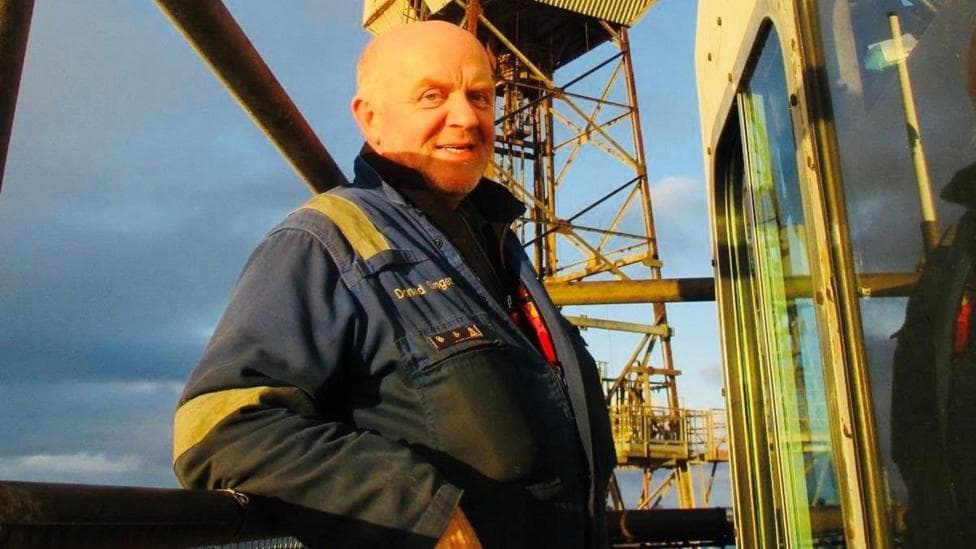
A North Sea offshore worker who subsequently died from Covid-19 was evacuated by rescue helicopter after his condition deteriorated on an oil platform, a fatal accident inquiry has heard. Donald Singer, 66, from Aberdeen, worked as a crane operator on the Ninian Southern installation, located 75 miles east of Shetland. He was airlifted to shore on 3 April 2020 and died a month later on 4 May at Aberdeen Royal Infirmary.
The inquiry, presided over by Sheriff Christine McCrossan, marks a significant legal milestone. According to reporting on the case, this is the first discretionary fatal accident inquiry (FAI) into a Covid-related death in Scotland. Discretionary inquiries are ordered when Scotland's senior law officer, the lord advocate, determines that a death raises serious public concern and that an investigation serves the public interest.
What happened on the platform?
Witness Adam Whittaker, an offshore worker, told the opening day of the inquiry that Singer had been placed in isolation on the platform as a precaution after displaying some, though not all, symptoms consistent with Covid-19. The UK's first lockdown had been announced on 23 March 2020, which occurred after Singer had already travelled offshore.
Singer was confined to an isolation cabin in a designated corridor on the Ninian Southern platform for approximately a week while running a raised temperature. He was scheduled for repatriation on a routine crew-change flight, but this was cancelled due to adverse weather conditions. As his symptoms worsened, a Coastguard search and rescue helicopter was called to conduct an emergency evacuation, with Whittaker assisting Singer onto the aircraft using a stretcher chair.
Whittaker explained that at the time of evacuation, there remained an assumption that Singer had not contracted Covid-19. This belief changed when subsequent testing confirmed he was positive for the virus. The discovery prompted concerns among the workforce about the possibility of other workers developing symptoms and potentially transmitting the infection to their families upon returning home. Workers were subsequently informed they could remain on the platform longer than scheduled to monitor whether they developed any symptoms.


How did colleagues describe his condition?
Andrew Henderson, a crane mechanic who was also in isolation, characterised Singer's deterioration as a "slow and steady decline." Henderson reported feeling disappointed by the limited support he received after returning onshore, flying back while wearing a mask and gloves. He secured a holiday let for three weeks to attempt recovery, and a Covid test later revealed evidence of previous infection.
Michael Feathersone, a retired deck foreman who had maintained a close friendship with Singer, told the inquiry that Singer had "taken a bad turn" and was wearing an oxygen mask before his evacuation. Feathersone maintained telephone contact with Singer after his return to shore but subsequently learned that Singer had been placed on a ventilator and eventually died.
Mark Connor, a team leader, reflected on the early stages of the pandemic, noting that at the time workers "realised what Covid actually was" only gradually, given how recently the virus had emerged as a global threat.
What is the scope of the inquiry?
According to the Crown Office's statement on the case, the inquiry will examine Covid safety measures at multiple locations: the airport and heliport Singer used for transport, the offshore platform itself, and the arrangements for his transfer to Aberdeen Royal Infirmary. The Crown identified these three areas as the main issues requiring investigation.
The family had raised concerns about the medical resources available on the platform, including questions about the presence of medical staff, which form part of the inquiry's remit.
What happens next?
The inquiry is scheduled to begin in September 2026, according to later reporting on the case. A preliminary hearing was set for 25 February, with Sheriff McCrossan continuing to oversee proceedings. The investigation will determine whether safety protocols were adequate across all stages of Singer's journey from the platform to hospital, and whether the medical care available offshore met required standards during the early pandemic period.