Family's Struggle with ME and Long Covid
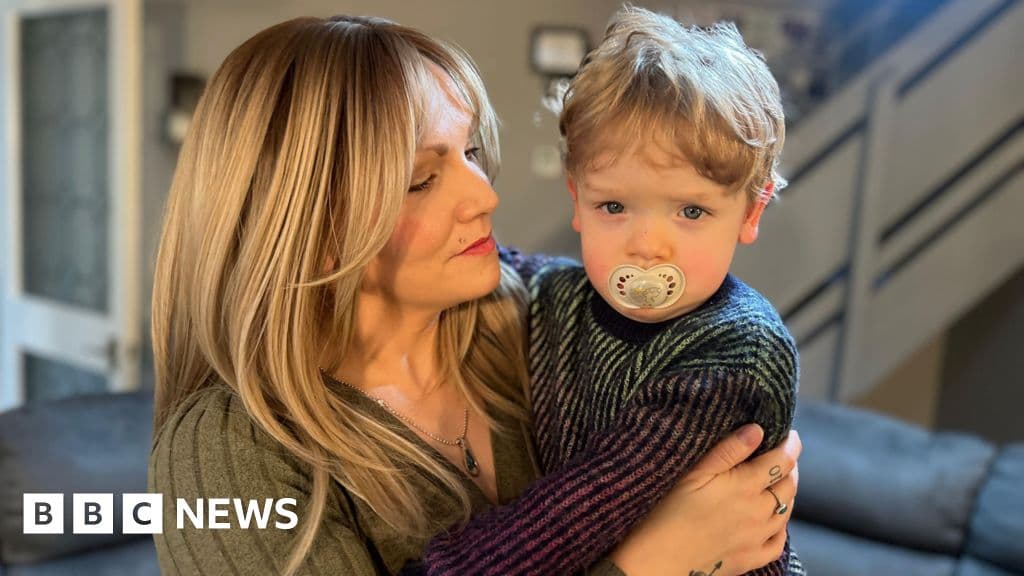
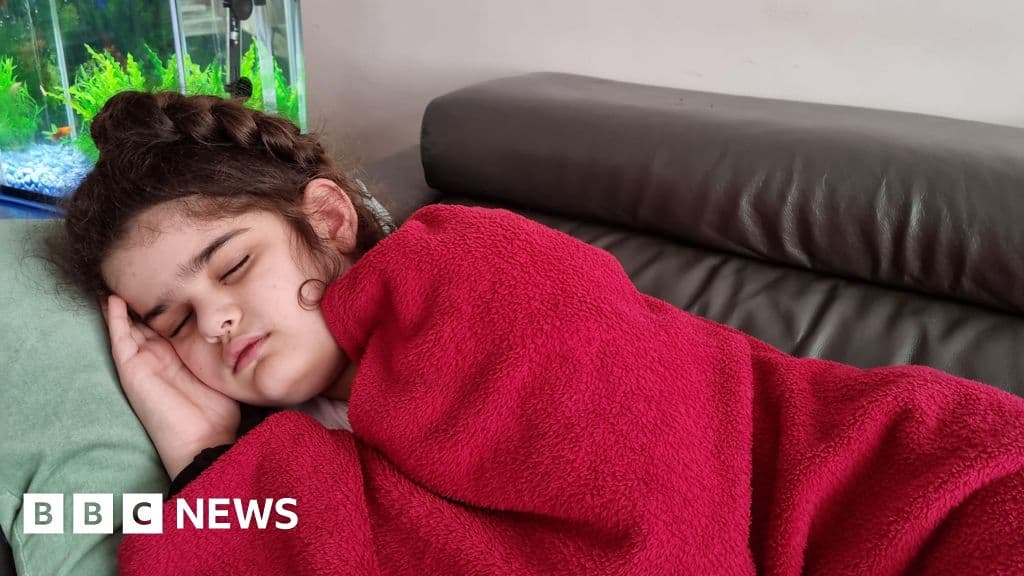
Harbinder recalls a time when her children were "on track to have a bright future." Currently, all three of her children have been diagnosed with myalgic encephalomyelitis (ME), also known as chronic fatigue syndrome (CFS). Her son Talvin was additionally diagnosed with Long Covid after experiencing three bouts of Covid-19 by the age of eight.
Each child suffers from "overwhelming fatigue," sleep disturbances, and cognitive difficulties. Two of them require the use of a wheelchair. Despite these challenges, Harbinder expresses optimism about a new £1.1 million study aimed at investigating the connections between Long Covid and ME, conditions believed to affect approximately 1.3 million children and adults in the UK.
The study, funded by the Buckinghamshire-based ME Association and conducted at Imperial College London, is named the Rosetta Stone study. It seeks to identify biomarkers and "decode the immunological profile" of both illnesses.
Children's Background and Symptoms
"My eldest daughter, who's now 15, was academically very bright and also sporty – she played cricket at Essex county level," says Harbinder, who lives in Redbridge, north-east London.
"My twins Tara and Talvin, now 12, were also very able, and all three were healthy. As a family, we went camping; we were outdoorsy people, keen skiers."
Harbinder explains the impact of the illnesses on her children’s cognitive abilities:
"They essentially now have learning difficulties. They can't remember what things are called, can't finish a sentence, have trouble comprehending a text."
Each child experiences distinct symptoms. Harbinder shares details about her eldest, Simrun:
"My eldest [Simrun] has also been diagnosed with PoTS, meaning she faints when she stands up. She has been bed-bound at times. She is under Great Ormond Street Hospital and is now mobile to a degree, but we still haven't got it under control. There are no answers. She lives with blurry vision, ringing in her ears, pain in her joints and back, constant nausea, inability to eat."
Talvin has endured daily "debilitating headaches" for the past four years.
Harbinder describes the difficulties in accessing appropriate education for her children:
"We have struggled to access any suitable education for them. No-one really knows what to do with these kids - we're operating in a vacuum. Their lives have come to a standstill."
Despite the hardships, Harbinder welcomes the new study and hopes it will provide answers. She reflects on her family's experience:
"Although my family have been through some very dark times, we have made peace with the world as it is. We laugh every day. We can still watch films together and occasionally venture out to a cafe, and perhaps even the park."
Personal Account of Tim Goodwyn
Tim Goodwyn, 37, from Bury St Edmunds, Suffolk, shares his experience living with ME. He wishes he could "go out on adventures" with his wife and young son but is confined to his home.
"I mostly have to rest in bed. I can't stand for long or walk more than a few steps. I can't shower – I can manage a bath once a week and my wife washes my hair. She pushes me in a wheelchair to medical appointments."
Tim was working as a software developer when he contracted a virus in November 2023. Although he tested negative for Covid-19, he experienced symptoms similar to a bad cold.
"Even after the virus went away, I was still really achy and run down and didn't get my energy back."
His energy levels never recovered. Despite reducing strenuous activity and continuing to work and walk, he took long-term sick leave in August 2024.
"My body has lost the ability to recover from exertion. If I do something, I'll have even worse fatigue a day or two later, along with things like headaches, nausea, heart palpitations, and going from hot to the chills. The closest thing there is to a treatment is having rest. We still don't know what's causing this illness. It's a complex illness. It affects your brain, nervous system, muscles, heart – all sorts."
Tim notes that research into ME has historically been underfunded but acknowledges increased efforts in the past five years, partly due to Covid-19.
"This piece of research is not magically going to find a cure, but it could get us closer."
Details of the Rosetta Stone Study
The three-year study will involve 250 individuals with ME and 250 with Long Covid, alongside matched healthy control groups. Researchers will analyze stool, blood, and saliva samples to develop "an immunological profile" of both conditions.
Imperial College London states:
"Researchers still don't fully understand what happ...