The UK's Saltiest Sandwich Revealed
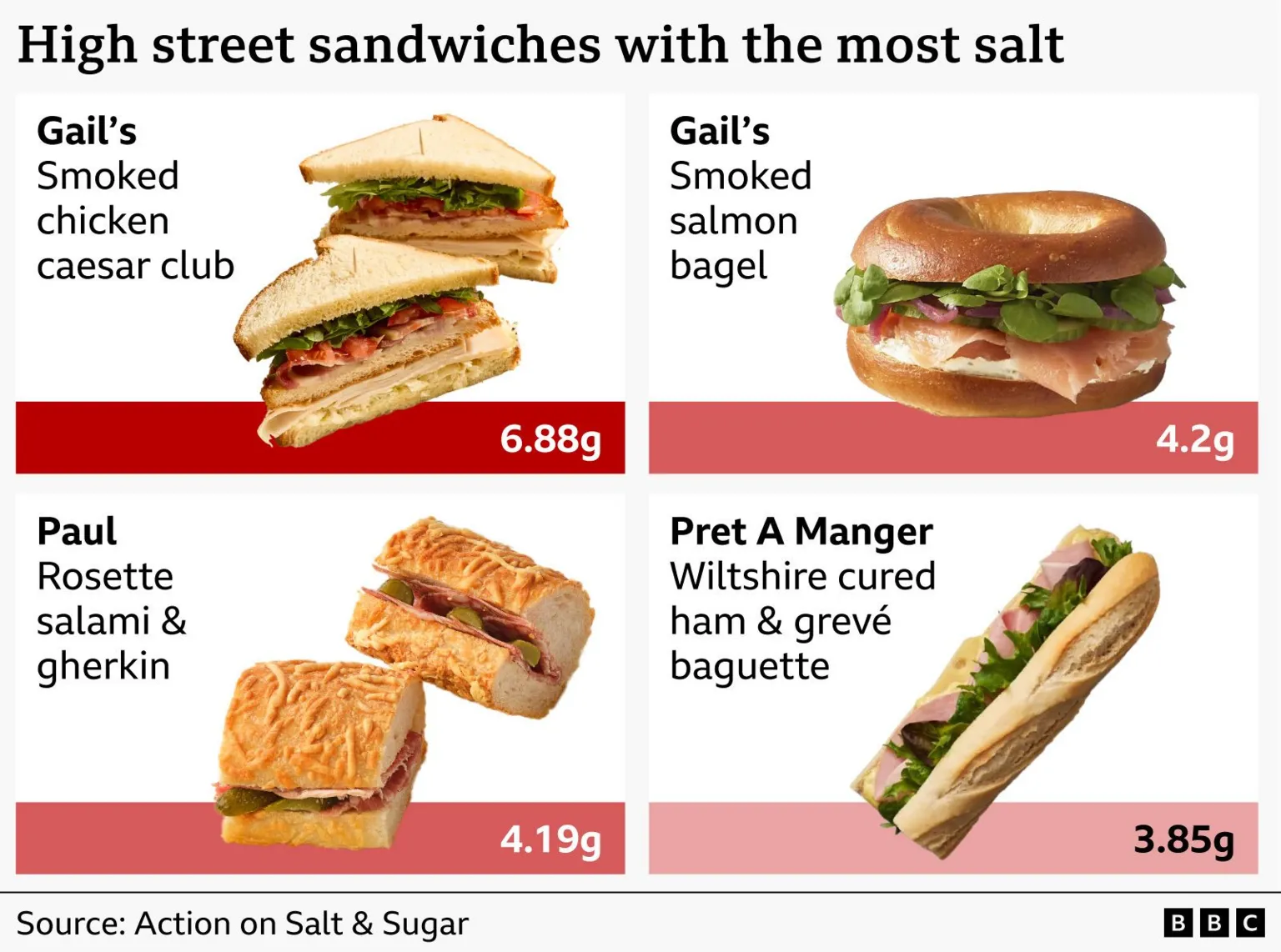
This week, it was disclosed that a chicken sandwich contains as much salt as five McDonald's cheeseburgers, ranking it highest among over 500 sandwiches analysed.
The sandwich, sold by bakery chain Gail's, contains 6.88g of salt.
That amount exceeds the UK's recommended daily salt limit of 6g, as well as the World Health Organization's (WHO) 5g cap, indicating it is not a healthy choice.
Drawn by curiosity and the allure of salt, I decided to forgo my packed lunch and try it to understand the health implications of regularly consuming excessive salt.
I went out before the lunchtime rush, and my initial thoughts were "it's massive" followed quickly by "how much?" — priced at £8.90, it is an expensive sandwich.
Unwrapping it, I found a 1,000-calorie triple-decker sandwich — three slices of bread with two layers of filling. One layer contained thick-cut bacon with salad, the other smoked chicken and coleslaw.
A part of me expected to dislike it, overwhelmed by the saltiness and find it unpalatable.
However, it was excellent. The saltiness was noticeable, but the taste was satisfying, illustrating why salt is added to food.
I did not finish the sandwich, but there were plenty of volunteers in the newsroom willing to help.

Health Risks of Excess Salt Consumption
Nonetheless, the latest WHO report on salt intake was sobering. Dr Luz Maria De Regil, Director of Nutrition at WHO, stated:
"Excess salt consumption remains among the top preventable drivers of death globally"
and estimated it causes 1.7 million deaths annually.
As my body absorbs the salt from this meal, what effects does it have, and why do we consume so much salt?
Understanding Salt's Role in the Body
Chemically, table salt is sodium chloride. The human body requires some sodium, present in nearly every cell, for nerve communication and maintaining water balance.
"But the amount we need is actually very, very small in the grand scheme of things,"said Sonia Pombo, researcher at Queen Mary University of London and head of research at Action on Salt & Sugar,
"especially in comparison to the amount of salt we're actually eating."
Excess salt affects the body in multiple ways, most notably by increasing blood pressure.
Salt enters the bloodstream, drawing in extra water and increasing blood volume. This forces the heart to work harder, raising blood pressure — similar to turning up the water flow in a garden hose.
High blood pressure is known as "the silent killer" because it often goes unnoticed until it causes serious issues like ruptured blood vessels, leading to strokes or heart attacks.
Salt also stiffens blood vessels, increasing cardiovascular risk.
Beyond the cardiovascular system, excessive salt damages kidneys, which filter blood, leaches calcium from bones making them more fragile, and has been linked to vascular dementia, stomach cancer, and emerging evidence suggests it alters the immune system.
Suddenly, my lunch seemed less appealing, though a single sandwich is unlikely to cause immediate harm.

"Having a one-off, high-salt meal isn't going to impact your long-term health,"Pombo explained,
"because what salt does is it very gradually and silently raises your blood pressure over the course of your lifetime."
Salt Consumption in the UK
I consider myself to generally eat healthily, but data on salt intake is concerning, indicating I likely consume more than 6g daily.
The UK National Diet and Nutrition Survey measures salt intake by monitoring 24-hour urine samples.
The latest data from 2019 shows men consume an average of 9.2g of salt daily, and women 7.6g. The difference partly reflects men eating larger quantities of food.
These figures have not improved since 2008.
Pombo dismissed the idea that salt can be effectively eliminated through sweating or drinking water, stating:
"You can't sweat it all out unless you're a super athlete training all the time, or flush it out by drinking plenty of water."
A diet rich in fruits and vegetables, rather than ultra-processed foods, provides potassium which can mitigate some effects of salt.
"But that doesn't make it OK,"Pombo emphasized,
"one doesn't cancel out the other."
Sources of Salt in Our Diet
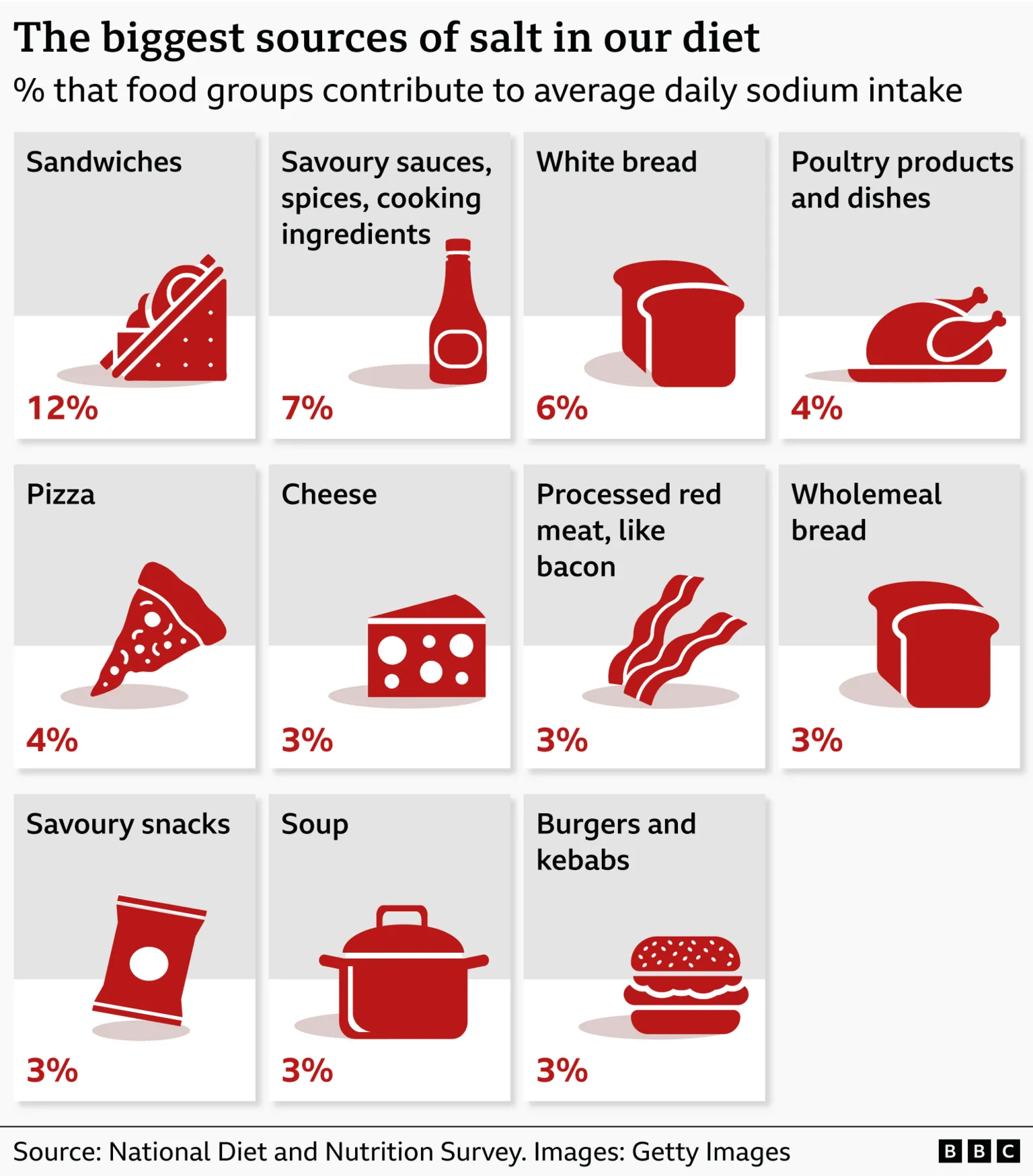
Since daily salt intake matters most, where does it come from?
Most salt is already present in foods rather than added at the table, although I maintain that adding salt to fish and chips is essential.
"It's in pretty much everything,"Pombo said, noting that bread appears prominently because of its widespread consumption.

We can make healthier choices by selecting foods with lower salt content and reading labels carefully. However, because salt is so prevalent, campaigners argue that food manufacturers bear responsibility for reducing salt levels.
Salt also helps preserve food by inhibiting bacterial growth.
"The rest is all to maintain the cycle of profit,"said Professor Francesco Cappuccio from the University of Warwick, who insists,
"salt can be taken out"but manufacturers avoid it because salt is "so cheap."
He added:
"When you go to a pub and you get your salted peanuts on the counter, it's not by chance,"
"you buy an extra pint later."
He described salt as a flavor enhancer that masks poor-quality food, allowing it to be marketed effectively.
Industry Responses and Future Choices
We contacted Gail's regarding the salt content of its products but received no response.
A spokesperson for the Food and Drink Federation stated its members' products contain "nearly a third less salt" than in 2015 and highlighted the industry's "significant investment in innovation to develop healthier products."
Kate Nicholls, chair of UKHospitality, said:
"Hospitality venues invest significantly in nutrition and healthy eating to give customers the best possible choices when going out for a meal."
"The range and choice of food we offer is why customers choose to eat out of home and building healthy choices into that has been a priority."
Conclusion: Occasional Treat or Regular Habit?
Will I return to the bakery for another chicken Caesar sandwich? I believe it should be an occasional indulgence, and I will likely return to packed lunches for regular meals.